By Jahidul Islam Refat, Engineer, Operation (Muspana)
Street lighting plays a vital role in shaping the safety, connectivity, and overall quality of life in both urban and rural areas. Well-lit roads ensure smooth movement of pedestrians and vehicles at night, reduce accidents, and contribute to social stability. With advancements in technology, street lights have evolved beyond basic illumination to become symbols of urban beauty, energy efficiency, and environmental responsibility.
Why Street Lighting Matters
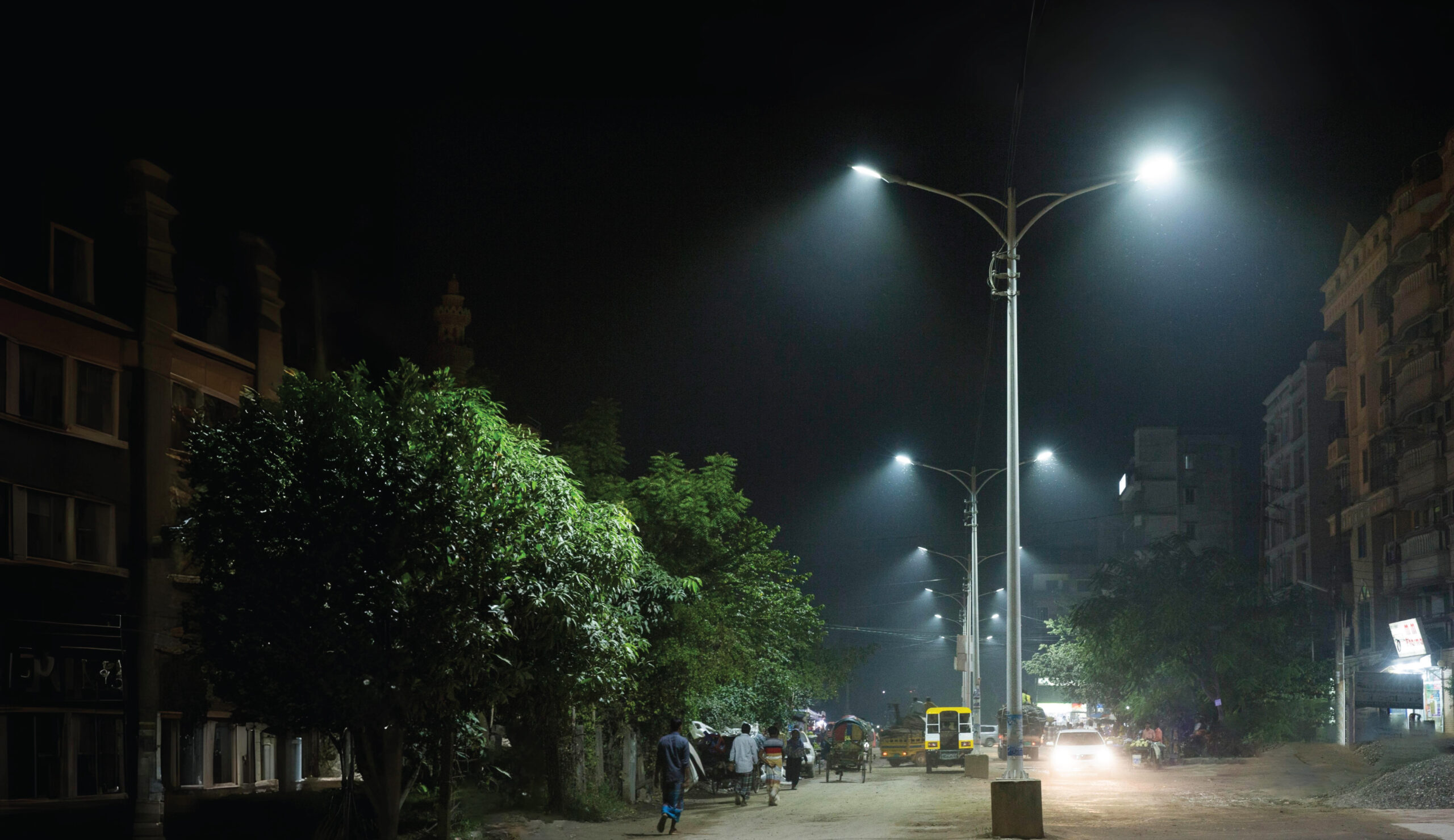
Streetlights reflect a community’s commitment to public safety and service quality.
Enhancing Public Safety
Adequate street lighting allows pedestrians and drivers to navigate roads clearly, significantly reducing the risk of accidents. Poorly lit areas are more prone to criminal activity, while proper lighting acts as a strong deterrent against theft, vandalism, and other crimes.
Supporting Social and Economic Activities
Night-time economic activities such as shops, markets, transportation, and services rely heavily on proper street lighting. Well-lit streets extend business hours, boost commercial activity, and contribute to local economic growth.
Improving Urban Aesthetics and Environment
Planned and modern lighting enhances the visual appeal of cities and neighborhoods. The adoption of LED and solar street lights has made urban lighting more attractive while promoting energy efficiency and environmental sustainability.
Types of Street Lights
Street lights can be classified based on technology, energy efficiency, and application:
-
High-Pressure Sodium (HPS) Lights
Produce yellowish light and were widely used in the past, but are now being phased out due to high energy consumption. -
LED Street Lights
Energy-efficient, long-lasting, and capable of providing bright, uniform illumination. LEDs are now the most widely used street lighting solution worldwide. -
Solar Street Lights
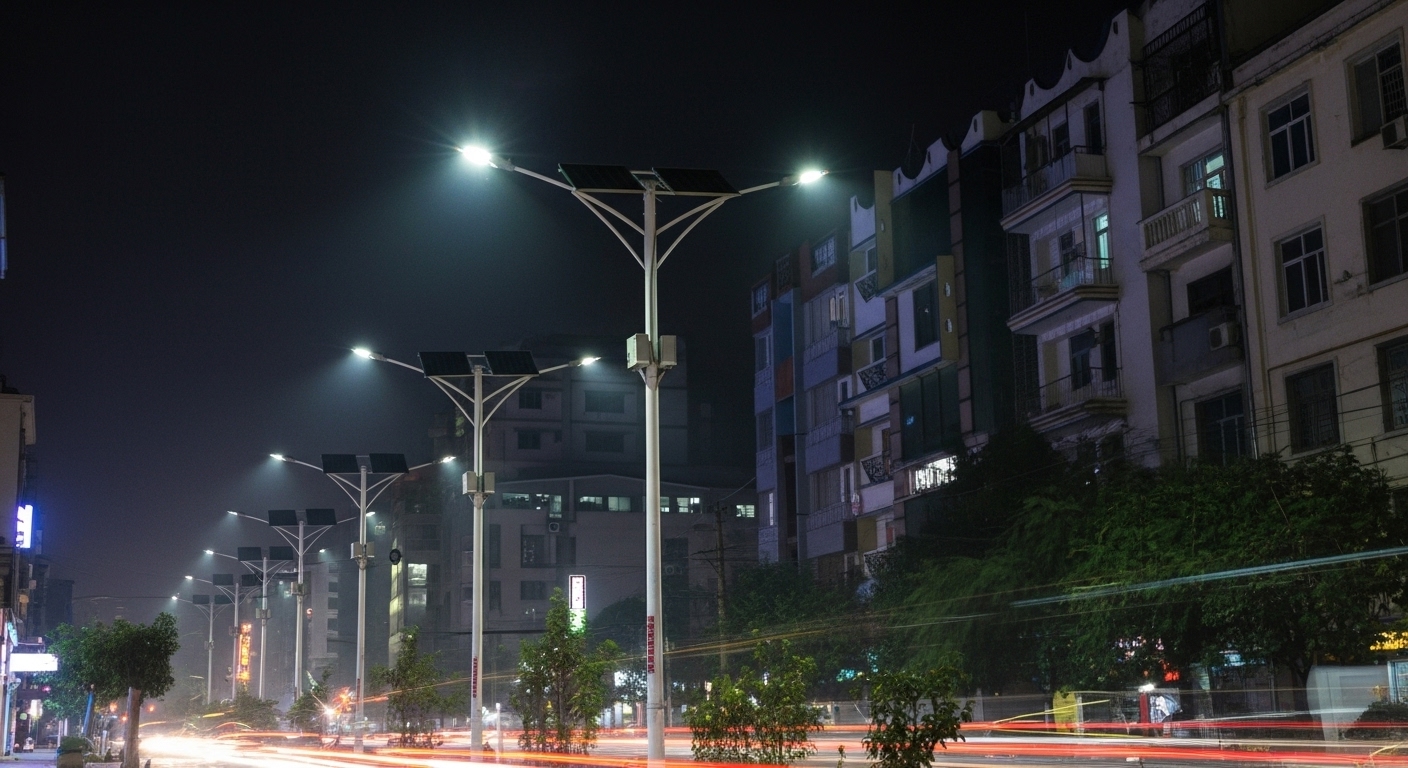
Powered by solar energy, these lights are eco-friendly and highly effective in remote or off-grid areas. -
Metal Halide Lights
Provide bright white light but consume more power, limiting their use to specific locations.
Key Components of a Street Lighting System
A complete street lighting system consists of several essential components:
-
Lamp or LED module for illumination
-
Pole to mount the light at the required height
-
Arm bracket to position the light at an optimal angle
-
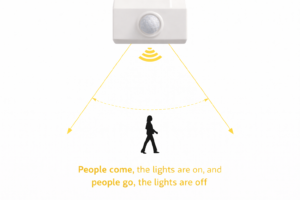
Photocell or timer sensor for automatic ON/OFF operation
-
Driver or ballast for power regulation
-
Cables and safety accessories for secure connections
-
Solar panel and battery (for solar systems) to store energy during the day
Street Light Installation Process
Installing street lights requires careful planning and technical execution:
-
Survey and Planning – Determining pole height, spacing, and lighting coverage
-
Foundation Construction – Preparing a strong base for pole installation
-
Electrical Wiring – Installing underground or overhead cables safely
-
Light Installation – Fitting lights, brackets, sensors, and accessories
-
Testing and Commissioning – Ensuring proper functionality and performance
Maintenance and Upkeep
Regular maintenance is essential to ensure long-term performance:
-
Replacing faulty bulbs or LED modules
-
Cleaning light covers and lenses
-
Repairing cables, sensors, or electrical connections
-
Cleaning solar panels
-
Checking battery health in solar systems
Advantages of LED Street Lighting
LED street lights offer several key benefits:
-
High energy efficiency
-
Long lifespan (over 50,000 hours)
-
Environmentally friendly
-
Bright and clear illumination
-
Low maintenance requirements
-
Improved public safety and visibility
Challenges in Street Lighting Management
Despite its benefits, street lighting systems face challenges such as theft of cables or batteries, budget constraints, damage from natural disasters, irregular maintenance, and sensor malfunctions that cause lights to turn on or off at incorrect times.
Conclusion
Street lighting is an essential element of modern society, supporting safety, transportation, urban development, and economic growth. With the adoption of LED and solar technologies, street lighting has become more efficient, sustainable, and environmentally friendly. Through proper planning, professional installation, and regular maintenance, it is possible to ensure reliable and high-quality lighting in both cities and rural areas. Ultimately, street lights help build a safer, brighter, and more connected future for everyone.