By Priya Acharjee, System Engineer, Muspana
Water is at the heart of agriculture, livelihoods, and community development. In many rural and off-grid regions, however, access to reliable electricity remains a challenge. This is where solar pump systems are transforming lives by combining water security with clean, renewable energy.
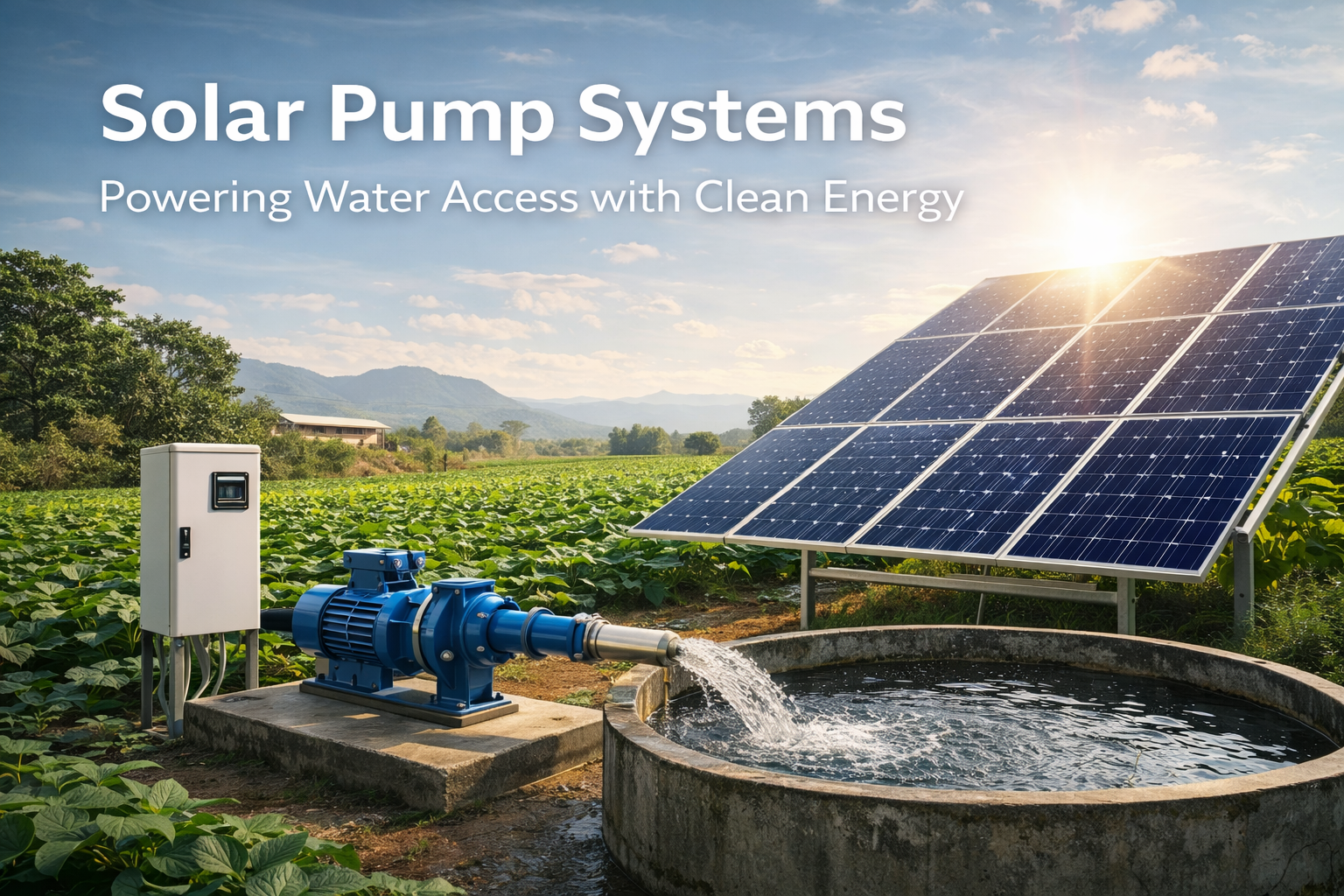
A solar pump is a water pumping system powered by electricity generated from solar photovoltaic (PV) panels. Instead of depending on grid electricity or diesel fuel, solar pumps use sunlight as their primary energy source. This makes them especially suitable for agricultural irrigation, drinking water supply, livestock watering, and community water distribution, particularly in remote and rural areas.
How a Solar Pump Works
The working principle of a solar pump system is simple yet highly effective. When sunlight falls on the solar PV modules, the panels convert solar radiation into direct current (DC) electricity. This power is then sent to a pump controller, which acts as the brain of the system.
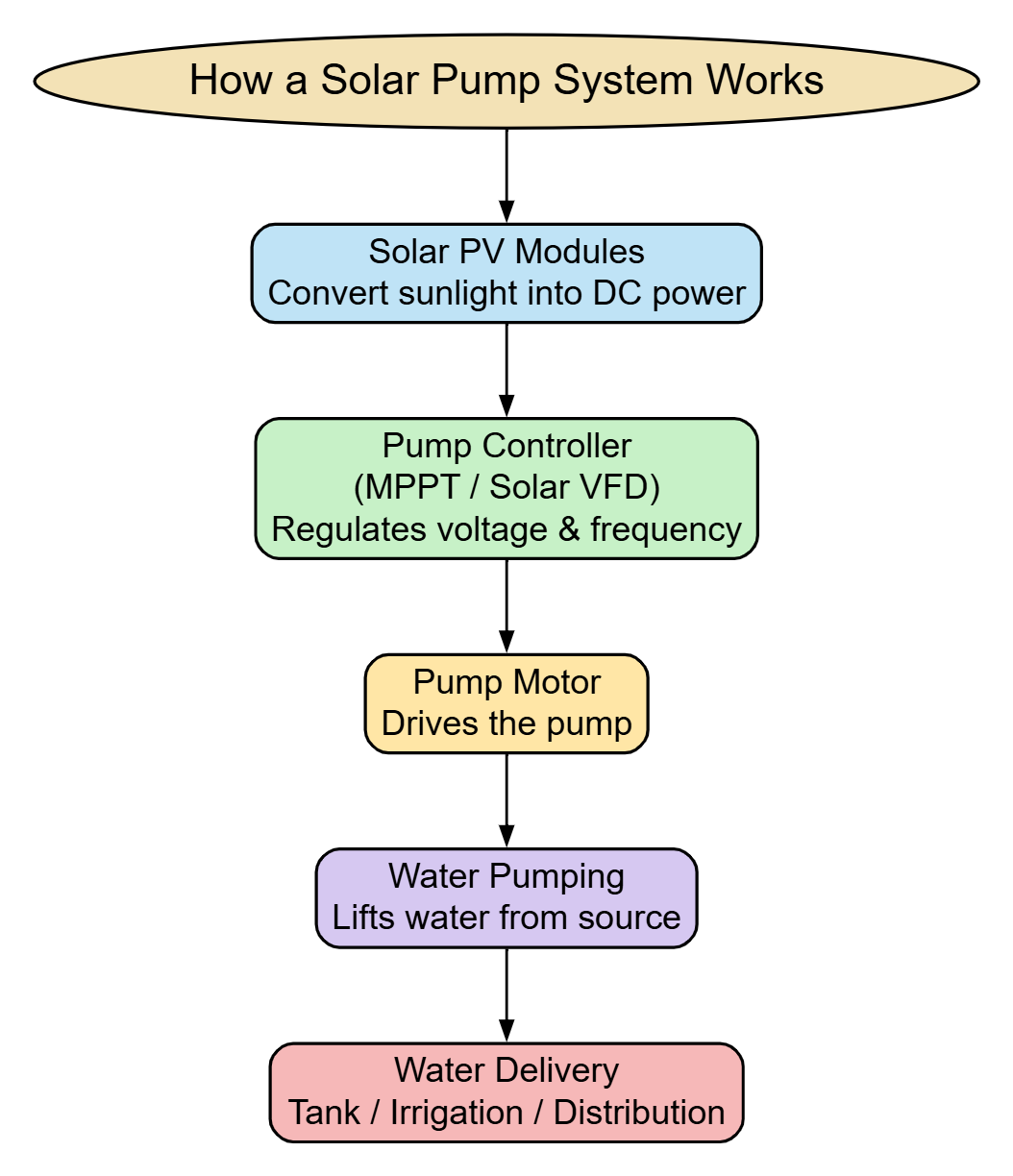
The controller continuously regulates voltage, current, and frequency to match the pump motor’s operating requirements. This regulation allows the system to adapt smoothly to changing sunlight levels throughout the day. Once conditioned, the power is supplied to the motor, which drives the pump to lift water from sources such as borewells, ponds, rivers, or reservoirs. The pumped water is finally delivered through pipelines to storage tanks, irrigation fields, or distribution points, ensuring a steady supply during daylight hours.
Key Components of a Solar Pump System
A complete solar pump system consists of several essential components working together. These include solar PV modules that generate electricity, a pump controller (MPPT or Solar VFD) that regulates power, the pump and motor responsible for lifting water, a mounting structure for optimal panel orientation, piping and valves for water delivery, and optional storage tanks for extended water use.

Designing a Solar Pump System
Designing a solar pump system begins with understanding the daily water requirement and available sunlight hours. From this, the required flow rate is calculated. The next step is determining the Total Dynamic Head (TDH), which includes static head, drawdown, delivery height, and friction losses.
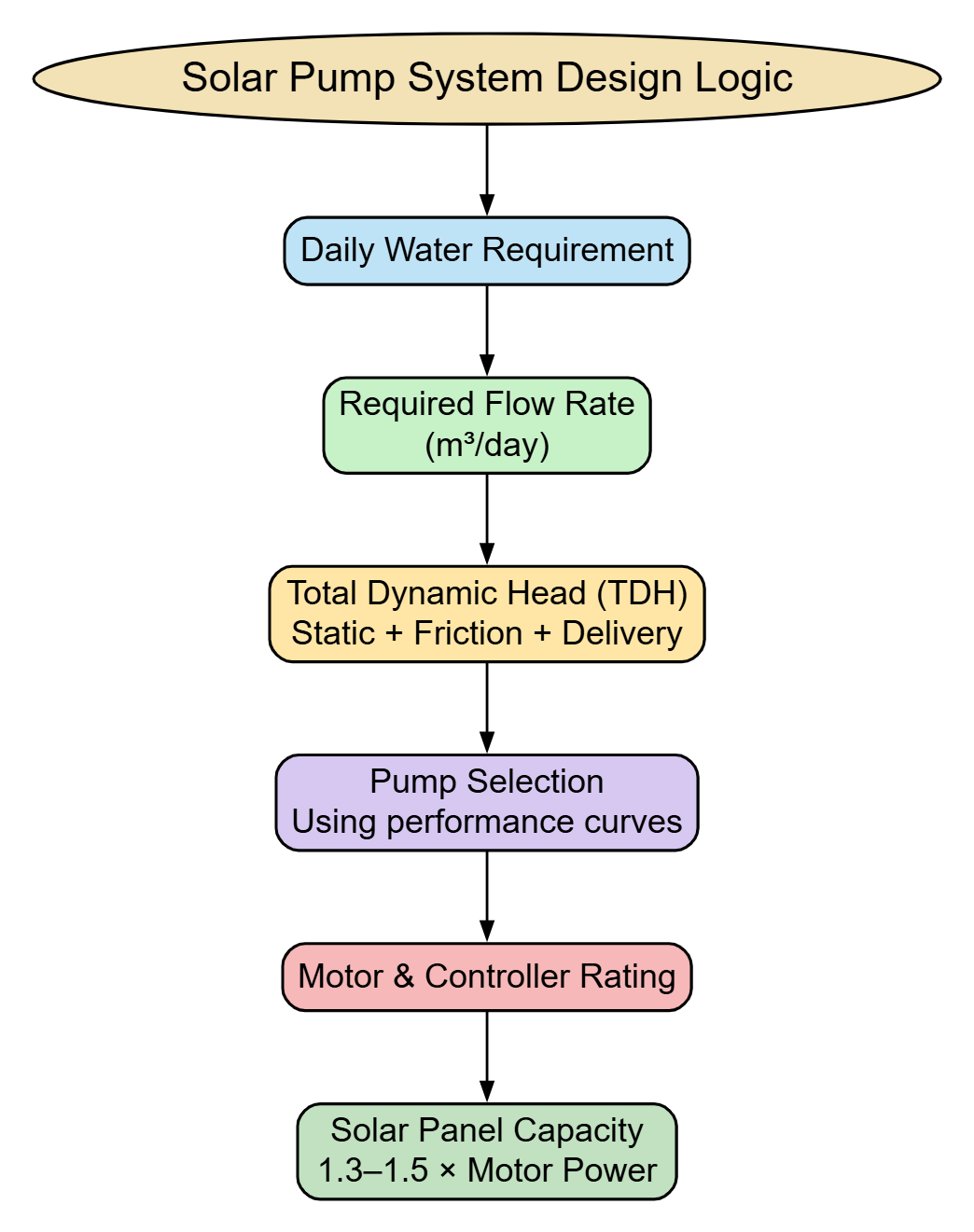
Once flow rate and TDH are known, an appropriate pump is selected using standard pump performance curves. The required hydraulic power is then calculated, followed by adjustments for pump and motor efficiency. This defines the motor and controller rating, which ultimately determines the solar panel capacity needed. In practical designs, the solar array size is typically 1.3 to 1.5 times the motor power, ensuring reliable operation under variable solar conditions.
A Sustainable Solution for the Future
Solar pump systems offer a clean, cost-effective, and reliable alternative to conventional water pumping. By eliminating fuel costs and reducing carbon emissions, they support sustainable agriculture, strengthen rural resilience, and contribute to long-term water security. With proper design and quality components, solar pumps become a powerful tool for sustainable development.