
– By Jahidul Islam Refat, Engineer (Muspana)
Ensuring worker safety in the construction industry has become a critically important issue in modern times, particularly when work is carried out at height where the risk of accidents is significantly higher. To address these risks, the use of safety nets has emerged as an effective and essential safety measure.
In today’s blog, we will discuss what safety nets are, why they are important, where they are used, and how they contribute to preventing workplace accidents, saving lives, and ensuring a safe working environment.
What is Safety Net?
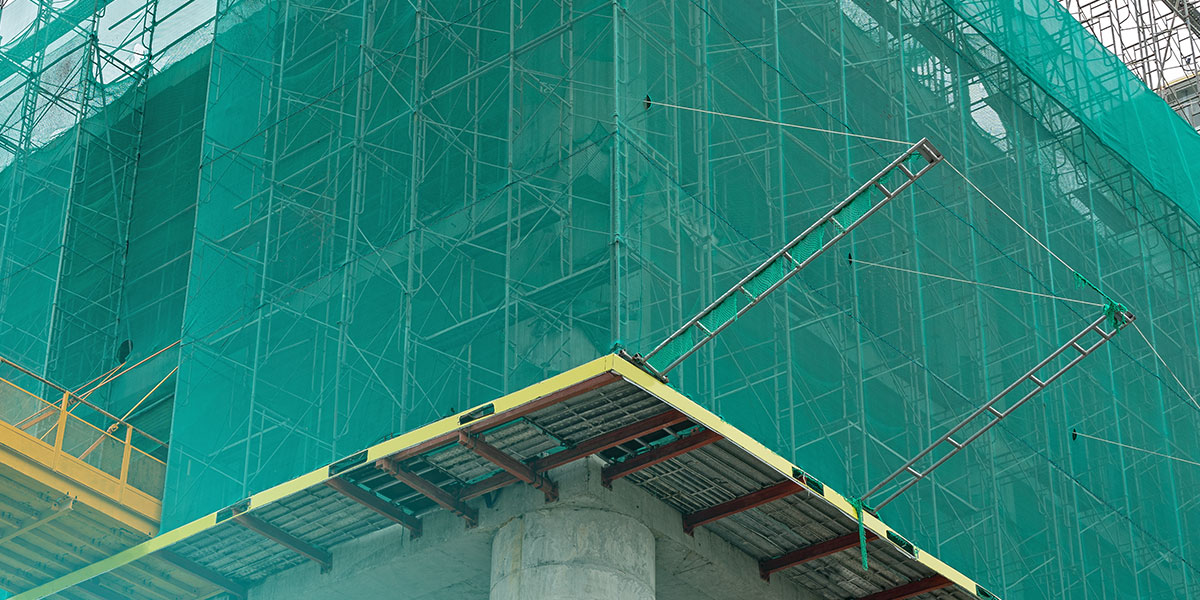
A safety net is a specially designed, high-strength net that is installed below working areas in construction buildings, bridges, industrial structures, or other elevated locations. In the event of an accidental fall, the net helps protect workers from serious injury and significantly reduces the risk of fatal accidents.

Why use Safety Nets?
The main reasons for using safety nets include:
-
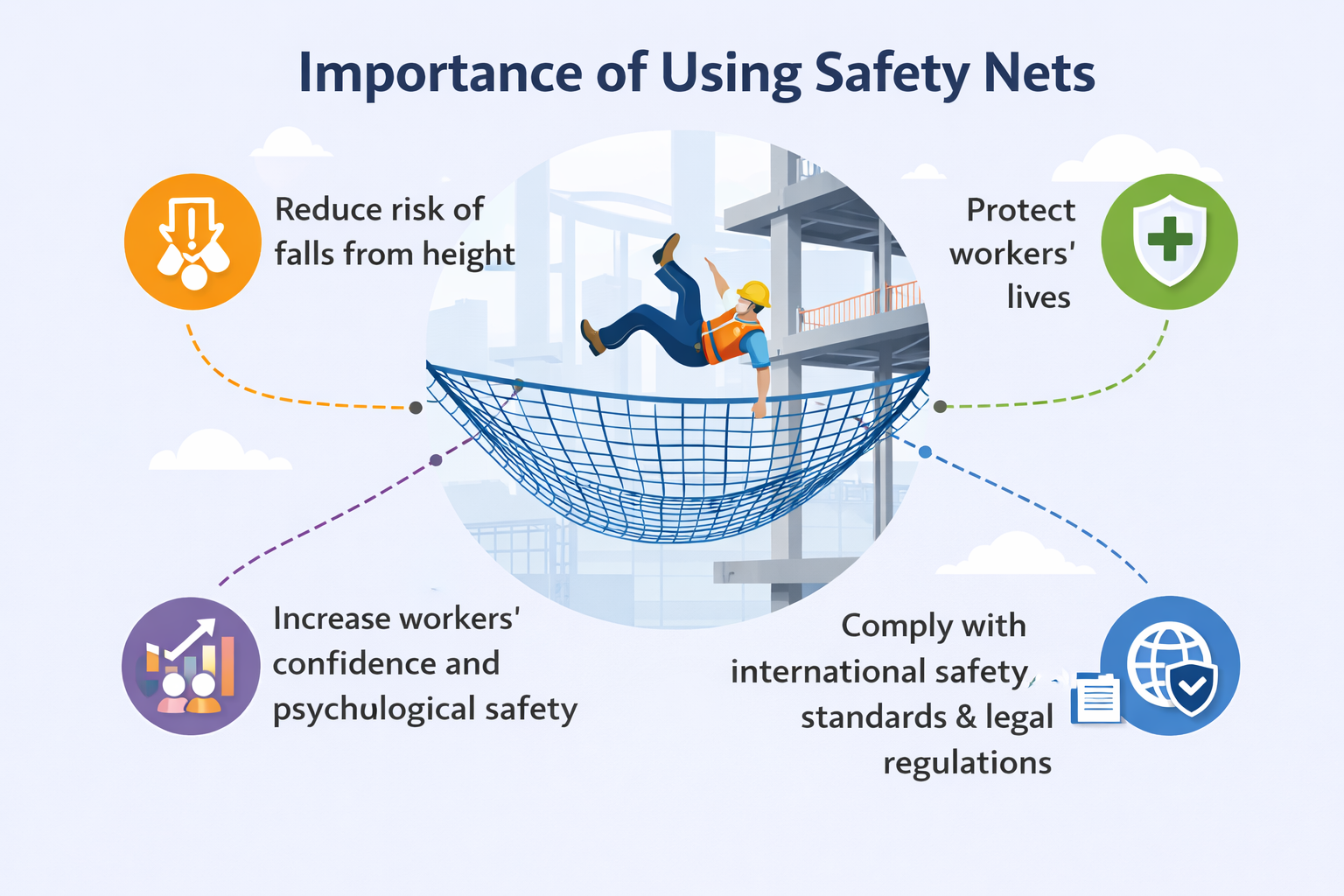
Reducing the risk of falls from height
-
Ensuring the protection of workers’ lives
-
Minimizing work stoppages caused by accidents
-
Increasing workers’ confidence and psychological safety
-
Complying with international safety standards and legal regulations
Application of Safety Nets
Safety nets are commonly used in the following areas:
-
High-rise building construction
-
Bridge and flyover construction
-
Industrial plants and factories
-
Steel structures and shipyards
-
Maintenance and repair works
Safety Net Installation Requirements
The following points must be strictly followed during the installation of safety nets:
-
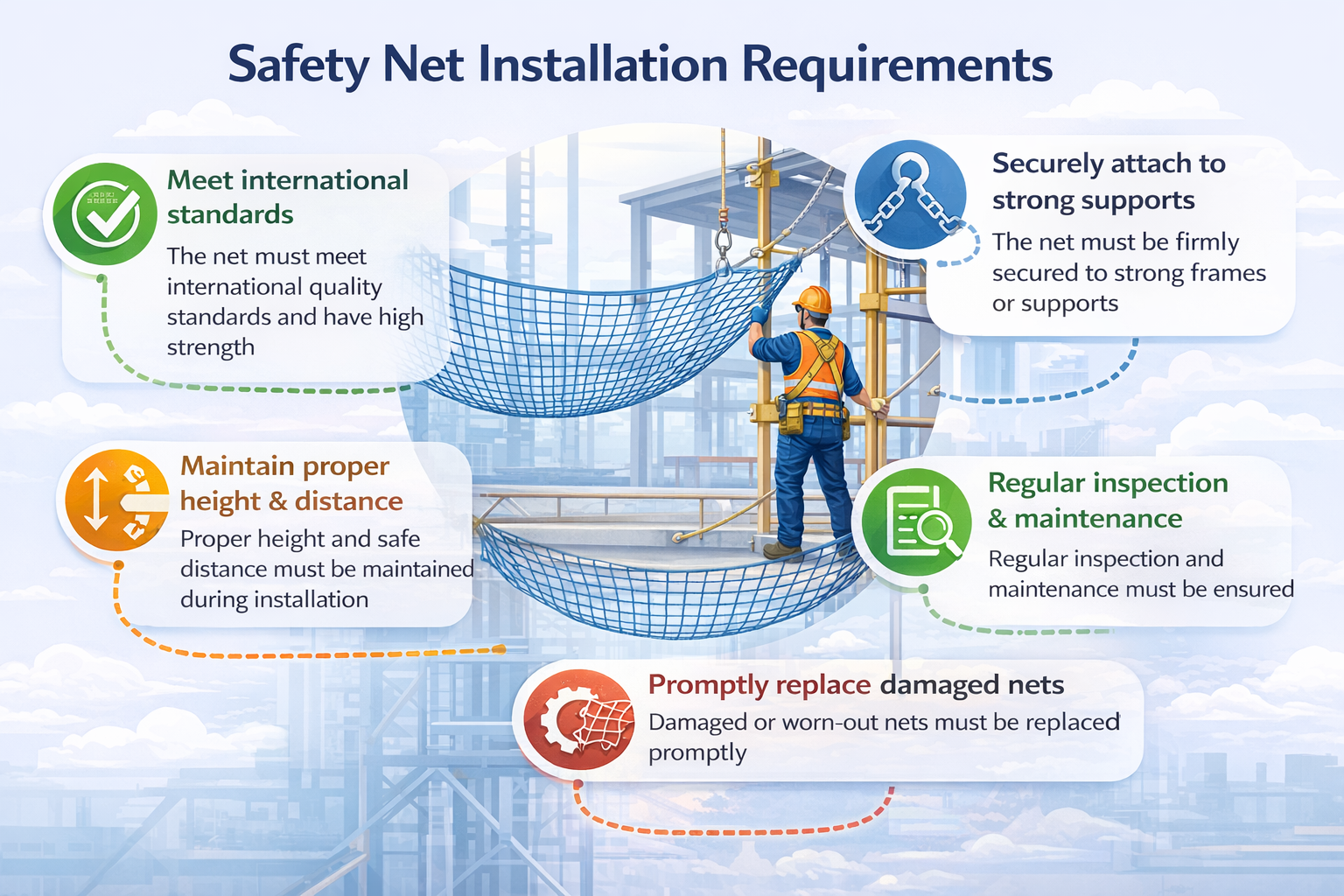
The net must meet international quality standards and have high strength
-
Proper height and safe distance must be maintained during installation
-
The net must be firmly secured to strong frames or supports
-
Regular inspection and maintenance must be ensured
-
Damaged or worn-out nets must be replaced promptly
Benefits of Using Safety Nets
The use of safety nets results in:
-
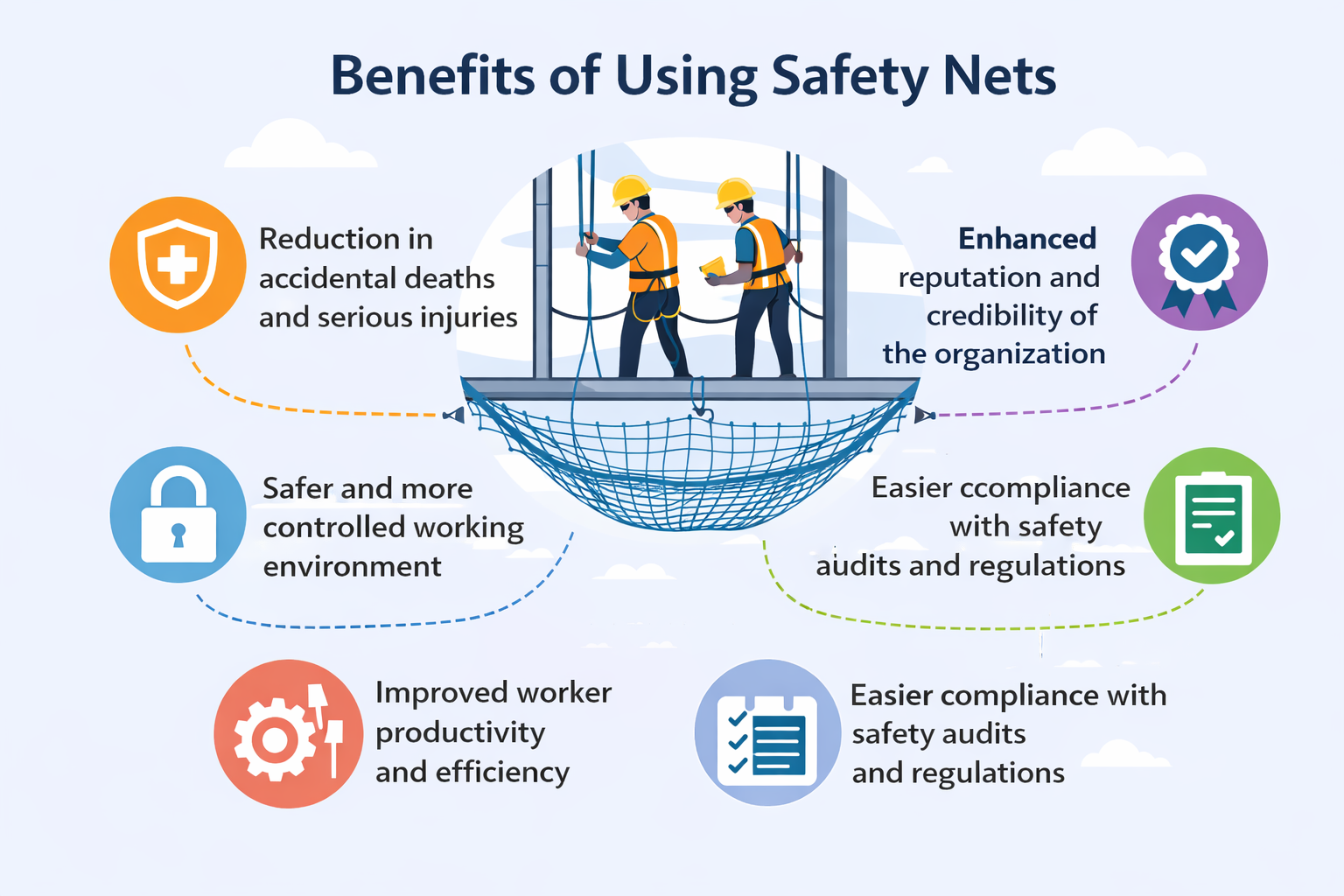
Reduction in accidental deaths and serious injuries
-
A safer and more controlled working environment
-
Enhanced reputation and credibility of the organization
-
Easier compliance with safety audits and regulations
-
Improved worker productivity and efficiency
The use of safety nets in the construction and industrial sectors is a highly effective safety practice. It not only protects workers’ lives but also reflects an organization’s responsibility and professionalism. Therefore, the use of quality safety nets and their proper maintenance are essential for all work carried out at height.