– By Md. Kamrul Hassan, Procurement Officer (Muspana)
Bangladesh is an agriculture-based country where the efficient use of water is essential for sustainable farming. With increasing population pressure, climate change, irregular rainfall, and water scarcity during dry seasons, traditional irrigation methods are becoming less effective. Drip irrigation is a modern, water-efficient technology that can help Bangladesh’s agricultural sector move forward sustainably. In today’s blog, we will discuss drip irrigation and explore how it can help improve agricultural productivity and water management in Bangladesh.
What is Drip Irrigation?
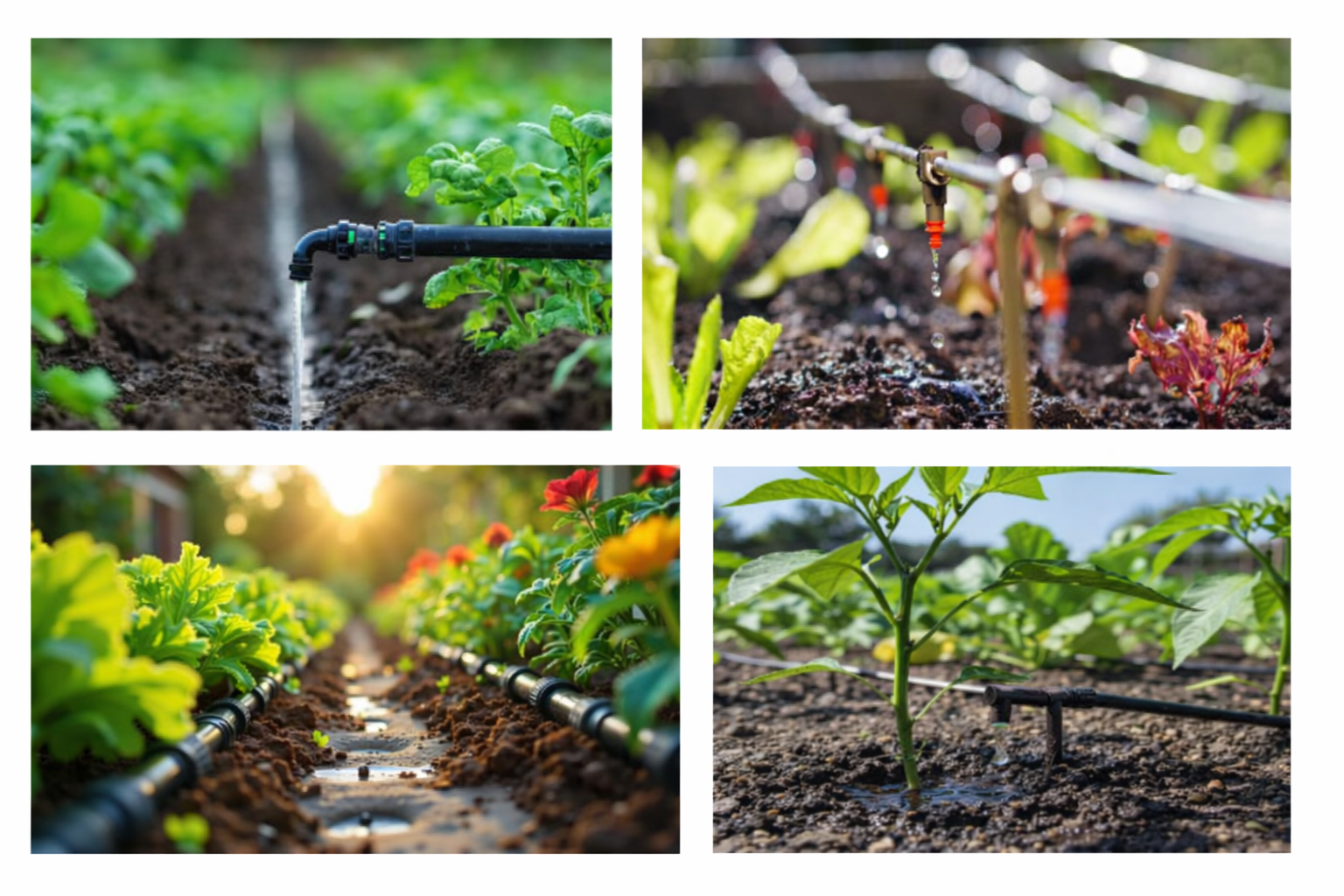
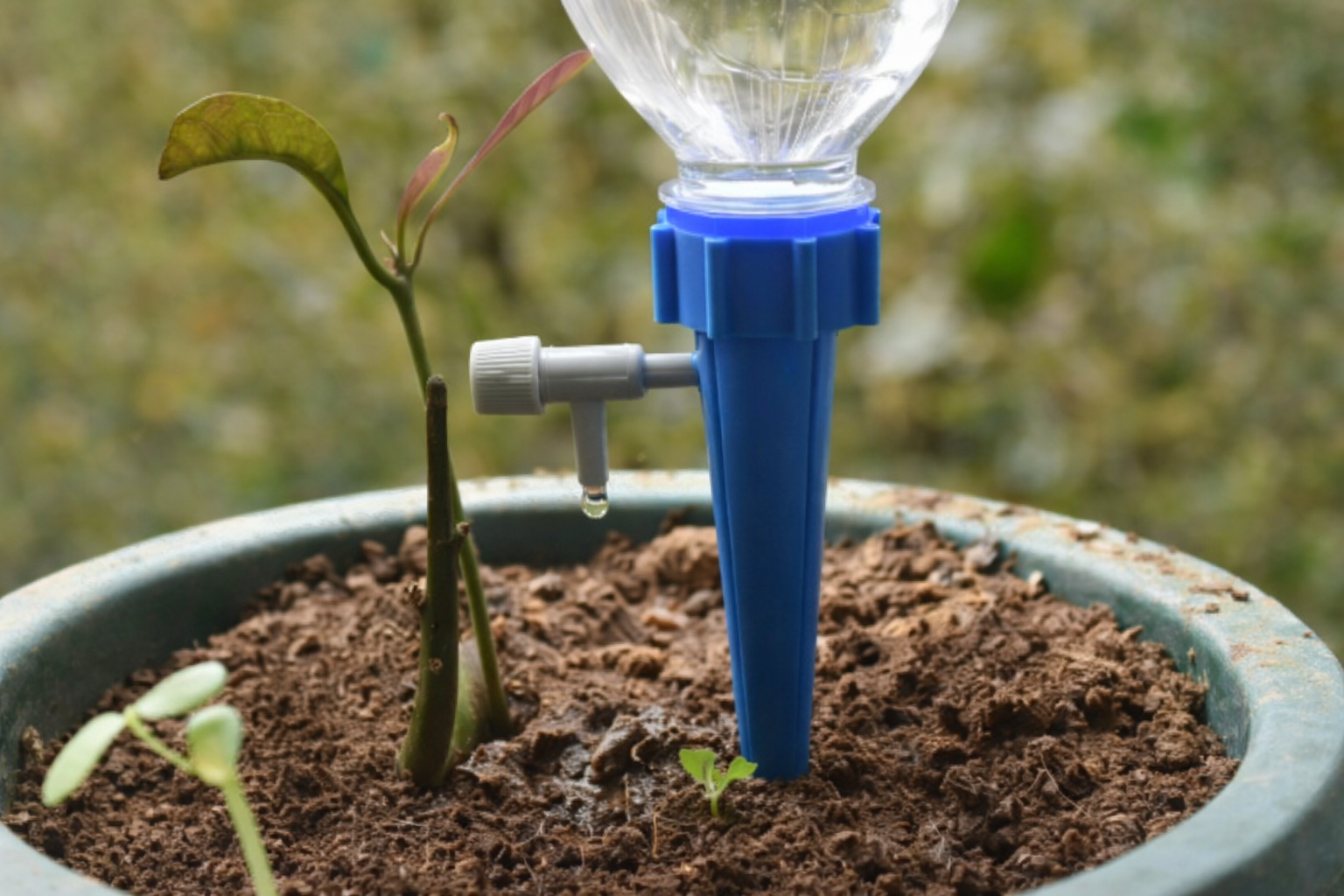
Drip irrigation is a method of irrigation where water is supplied slowly and directly to the root zone of plants through a network of pipes, tubes, and emitters. Instead of flooding the entire field, water is delivered only where it is needed, which reduces water wastage and increases efficiency.
How it Works?
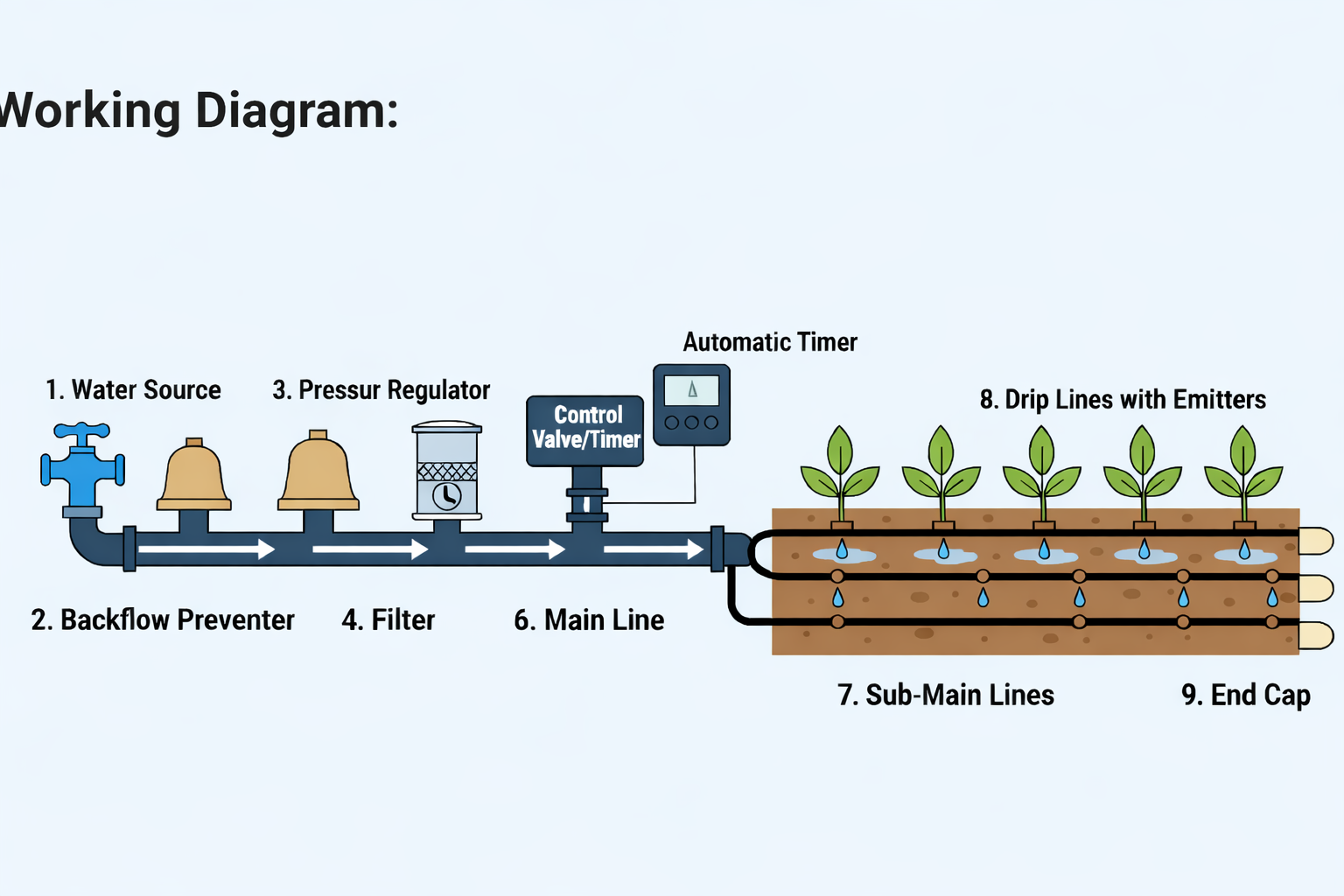
In drip irrigation, water from a pump or storage tank passes through a filtration system and flows through mainline and lateral pipes. Small devices called emitters release water drop by drop near the plant roots. This system operates under low pressure and ensures uniform distribution of water.
Why Drip Irrigation Is Essential for Bangladesh?
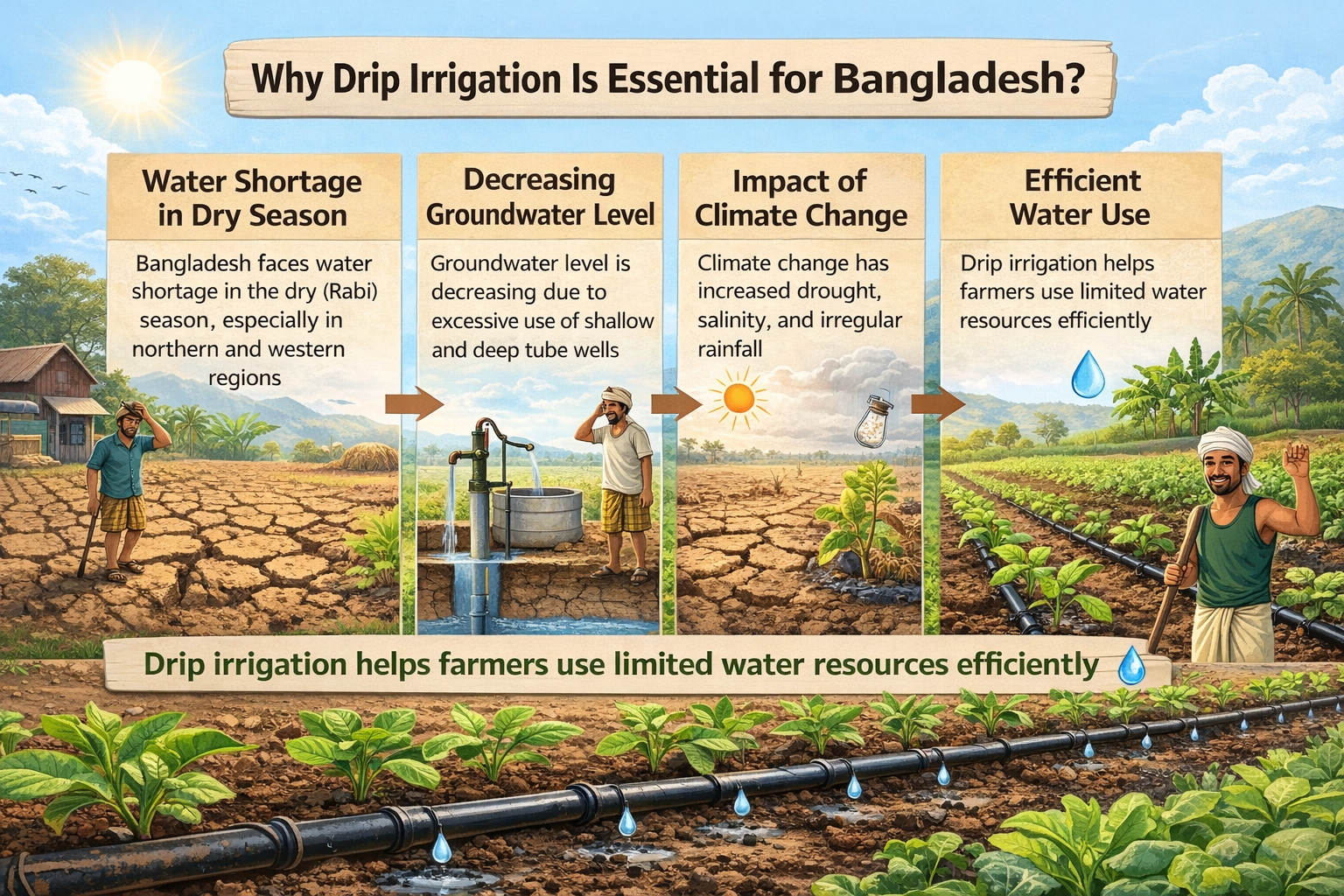
- Bangladesh faces water shortage in the dry (Rabi) season, especially in northern and western regions
- Groundwater level is decreasing due to excessive use of shallow and deep tube wells
- Climate change has increased drought, salinity, and irregular rainfall
- Drip irrigation helps farmers use limited water resources efficiently
Advantages in Bangladesh Perspective
- Saves 40–60% water compared to flood irrigation
- Increases crop yield and improves quality
- Reduces electricity and diesel cost for pumping water
- Minimize weed growth and soil erosion
- Very effective in saline-prone coastal areas
- Suitable for small-scale and homestead farming
- Enables fertigation, reducing fertilizer waste
Crops Suitable for Drip Irrigation in Bangladesh
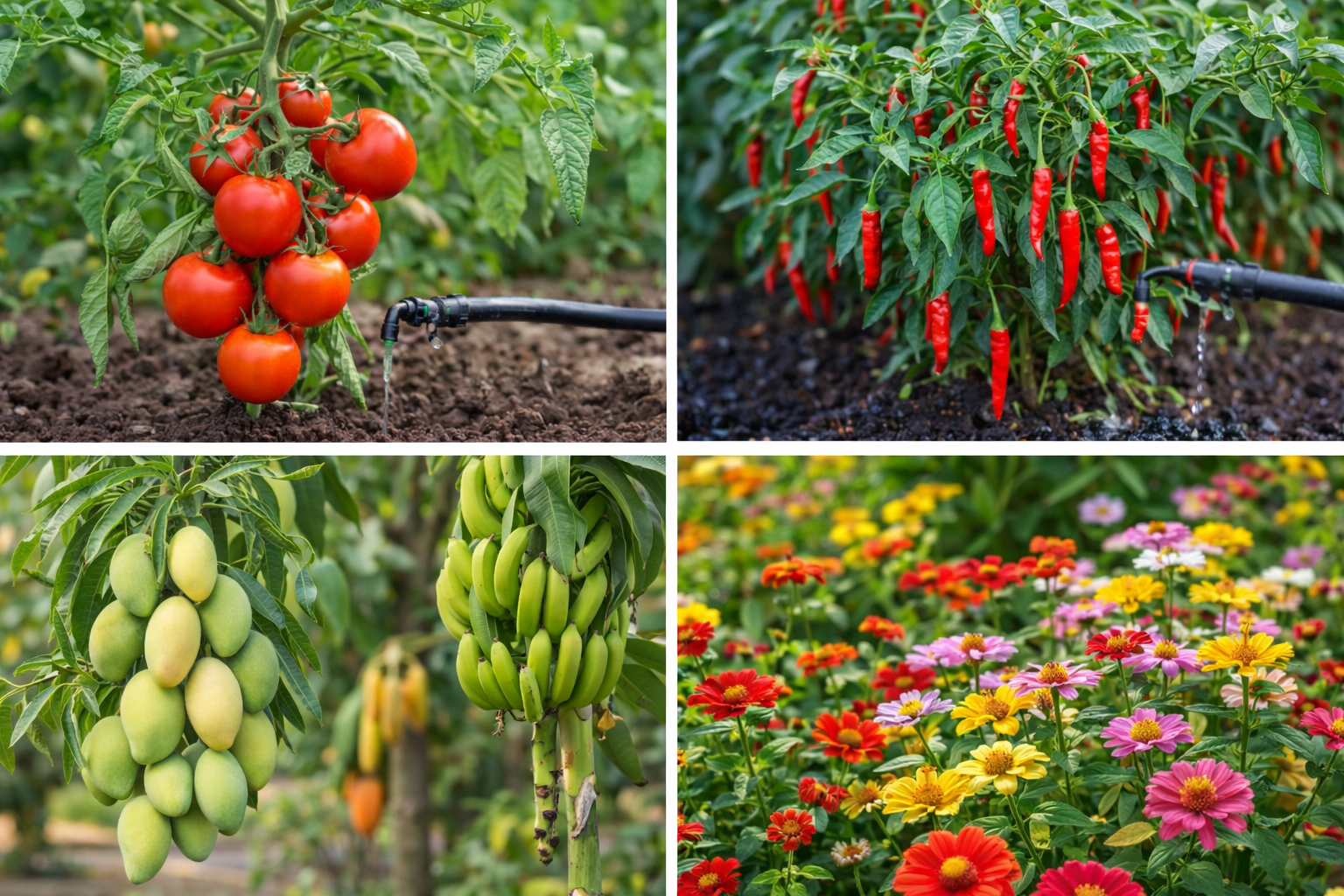
Drip irrigation is suitable for high-value crops such as vegetables (tomato, chili, cucumber, brinjal), fruits (mango, banana, papaya), flowers, spices, and orchard crops. It is also widely used in greenhouses and rooftop gardening in urban areas.
Limitations
- Initial installation cost is high for small farmers
- Requires technical knowledge and regular maintenance
- Emitters may get clogged if filtration is not properly maintained
Government Support and Future Scope
The Government of Bangladesh and various NGOs are promoting drip irrigation through subsidies, training programs, and pilot projects. With proper awareness, technical support, and cost reduction, drip irrigation has great potential to ensure water conservation and food security in Bangladesh.
In the context of Bangladesh, drip irrigation is a sustainable and climate-smart irrigation solution. It helps conserve water, reduce production costs, and increase agricultural productivity. Adopting drip irrigation can play a key role in achieving sustainable agriculture and long-term food security in the country.