
–By Md. Majedur Rahman, Senior Engineer (Muspana)
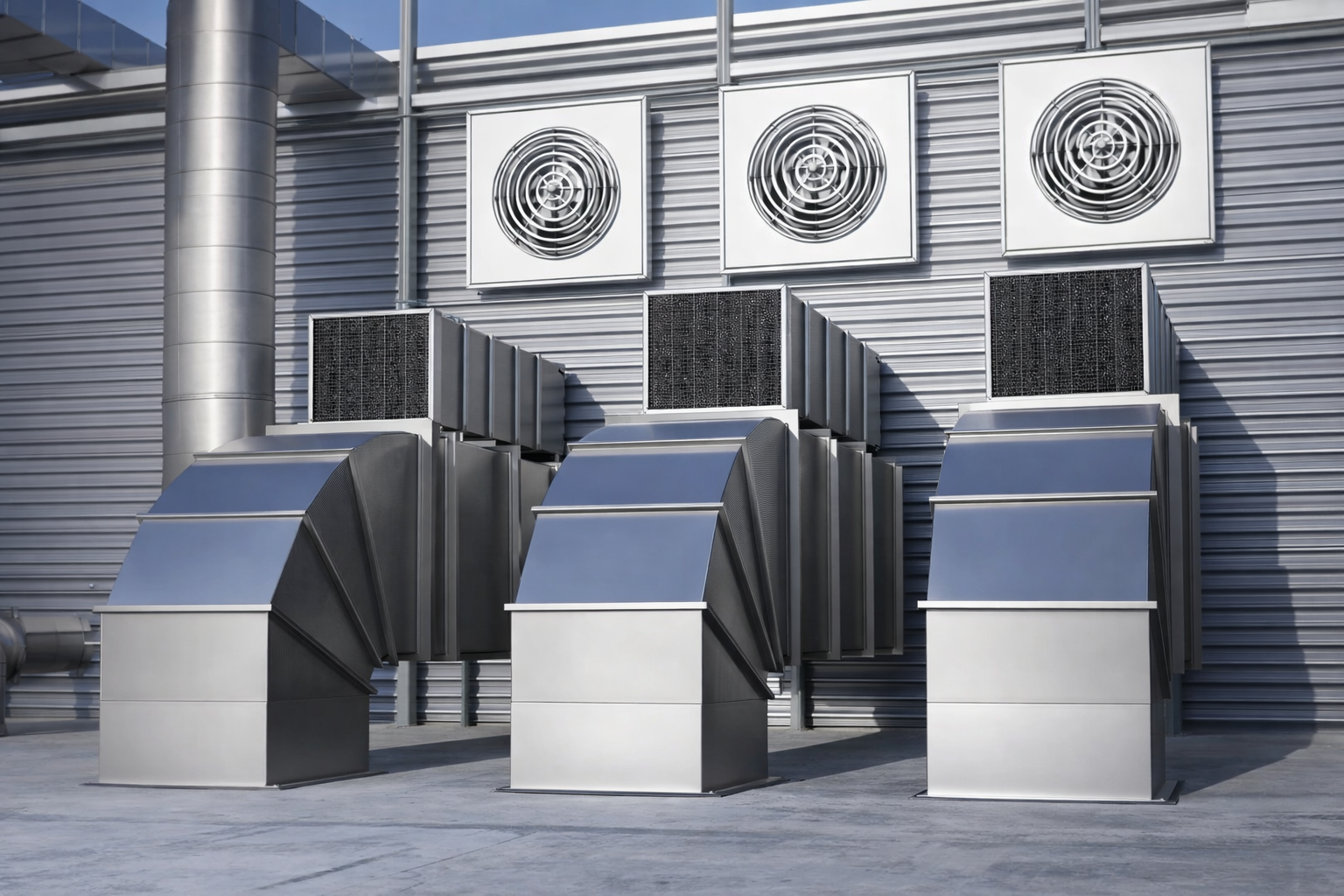
In an HVAC (Heating, Ventilation, and Air Conditioning) system, ducts act as the “respiratory system” of a building. They transport conditioned air (heated or cooled) throughout the space. An efficient duct system is essential for the overall performance of an HVAC system.
In this article, we discuss the purpose of HVAC duct systems, their types, sizing and layout considerations, insulation requirements, and essential maintenance practices to understand how duct design directly impacts HVAC system performance.
1. Purpose of the Duct System
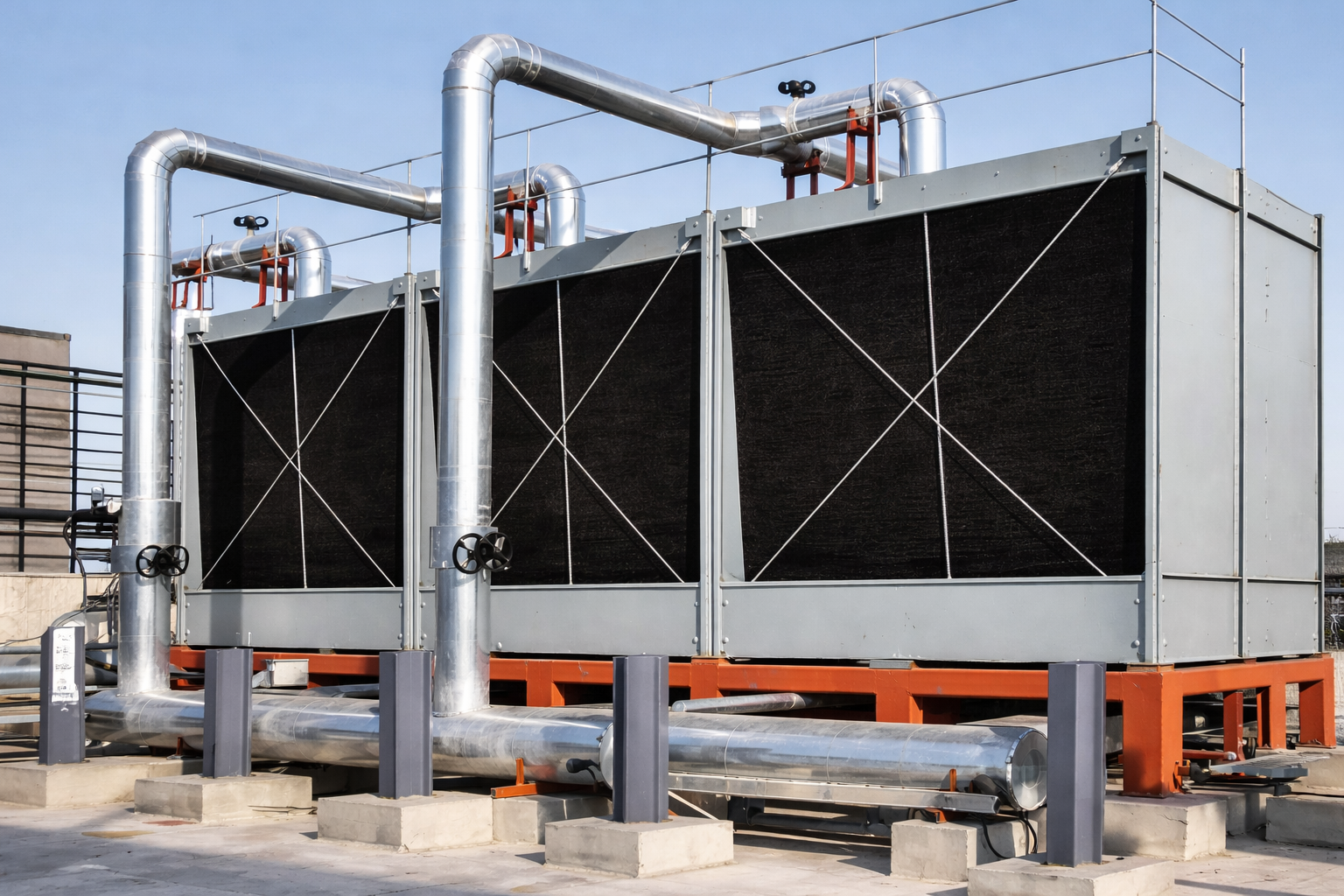
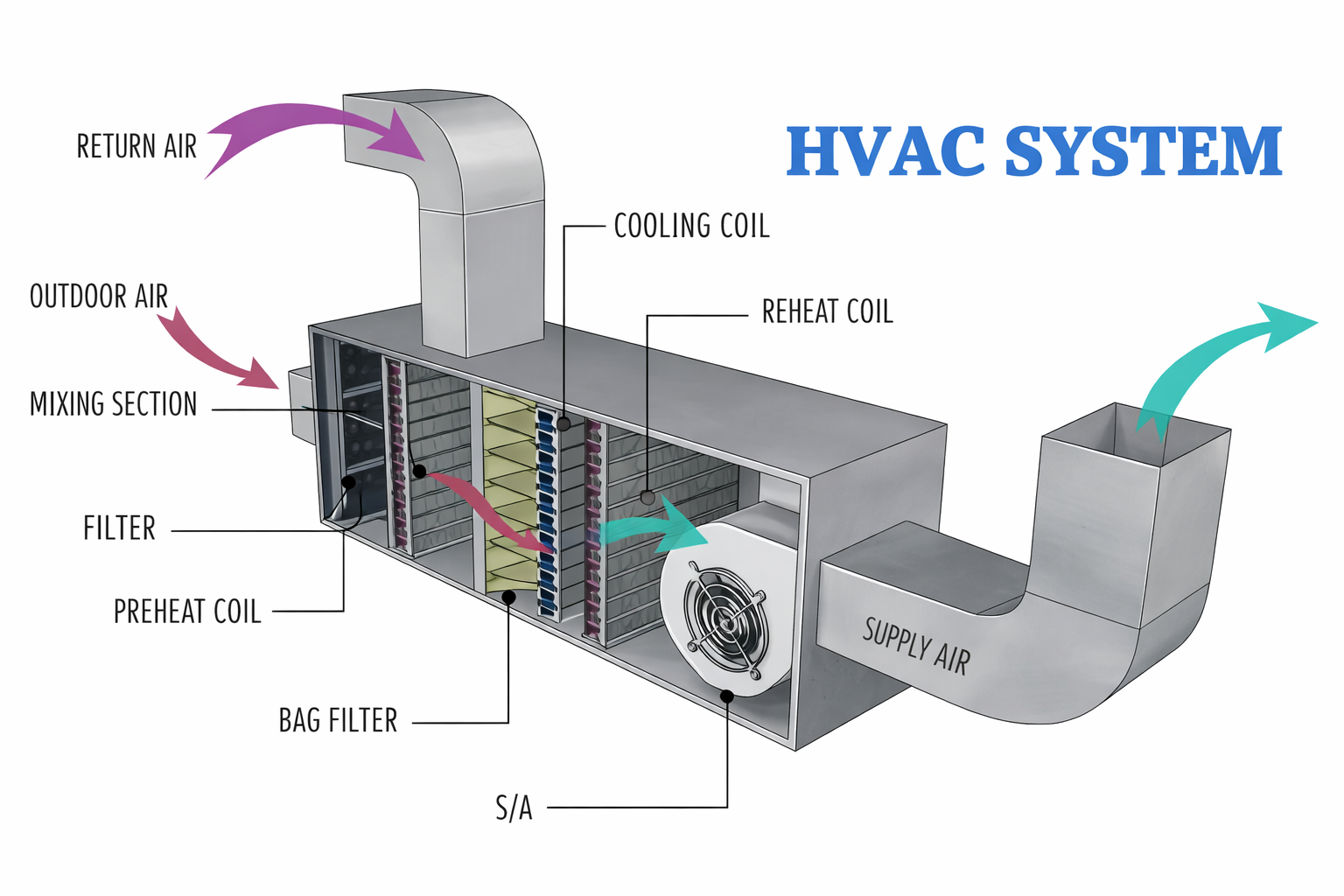
The primary purpose of a duct system is to efficiently deliver air produced by the HVAC unit to each room and return indoor air back to the unit for reconditioning.
It consists of two main parts:
a) Supply Ducts
These ducts carry conditioned air (cool or warm) from the blower to various outlets or vents in different rooms.
b) Return Ducts
These ducts draw stale indoor air back to the HVAC unit so it can be reheated or recooled and redistributed through the system.
2. Types of Ducts (Based on Material)
Ducts are made from different materials, each with its own advantages and limitations:
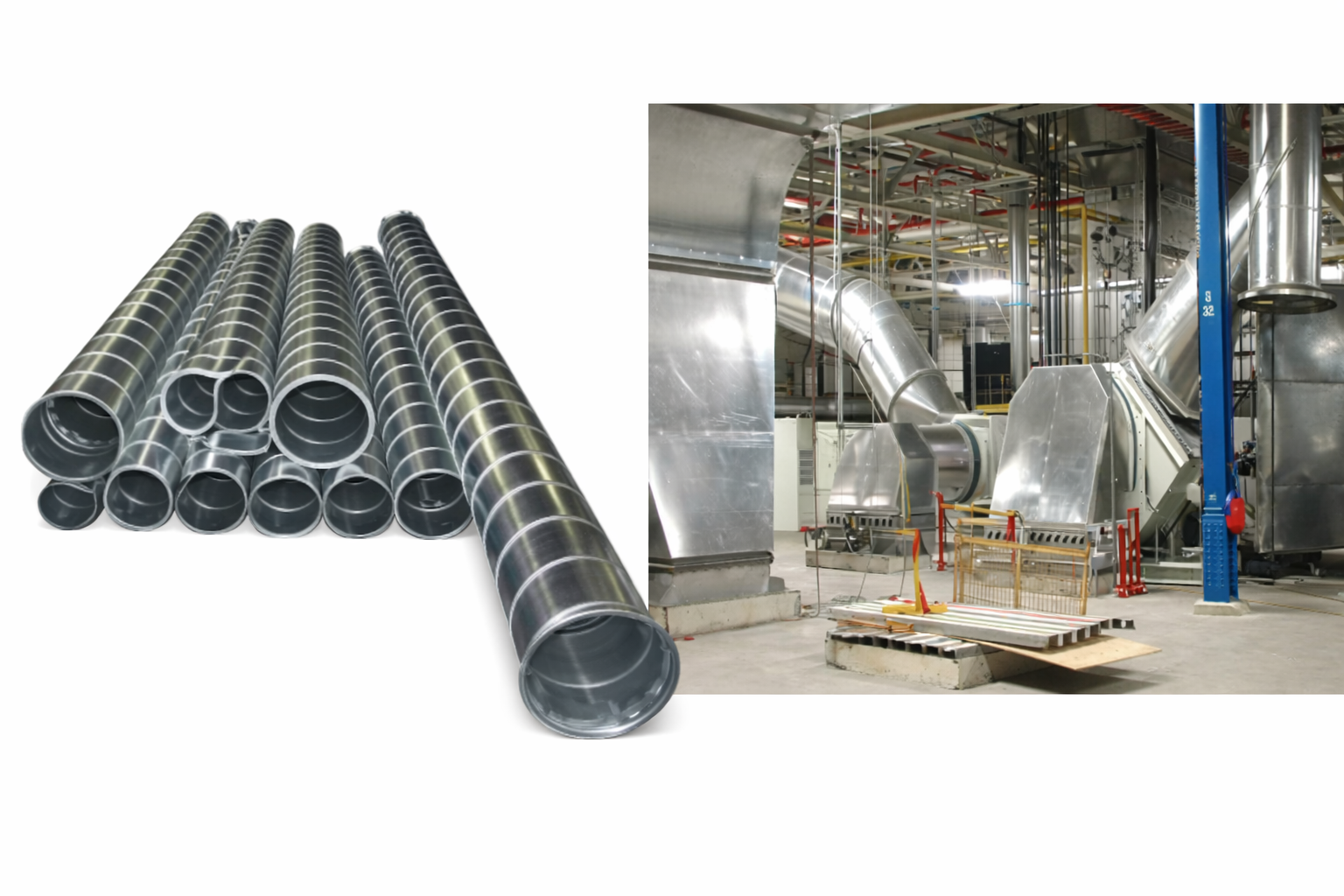
a) Sheet Metal Ducts
Typically made of galvanized steel or aluminum. They are highly durable, easy to clean, and have minimal air leakage. This is the most common and effective type of duct.
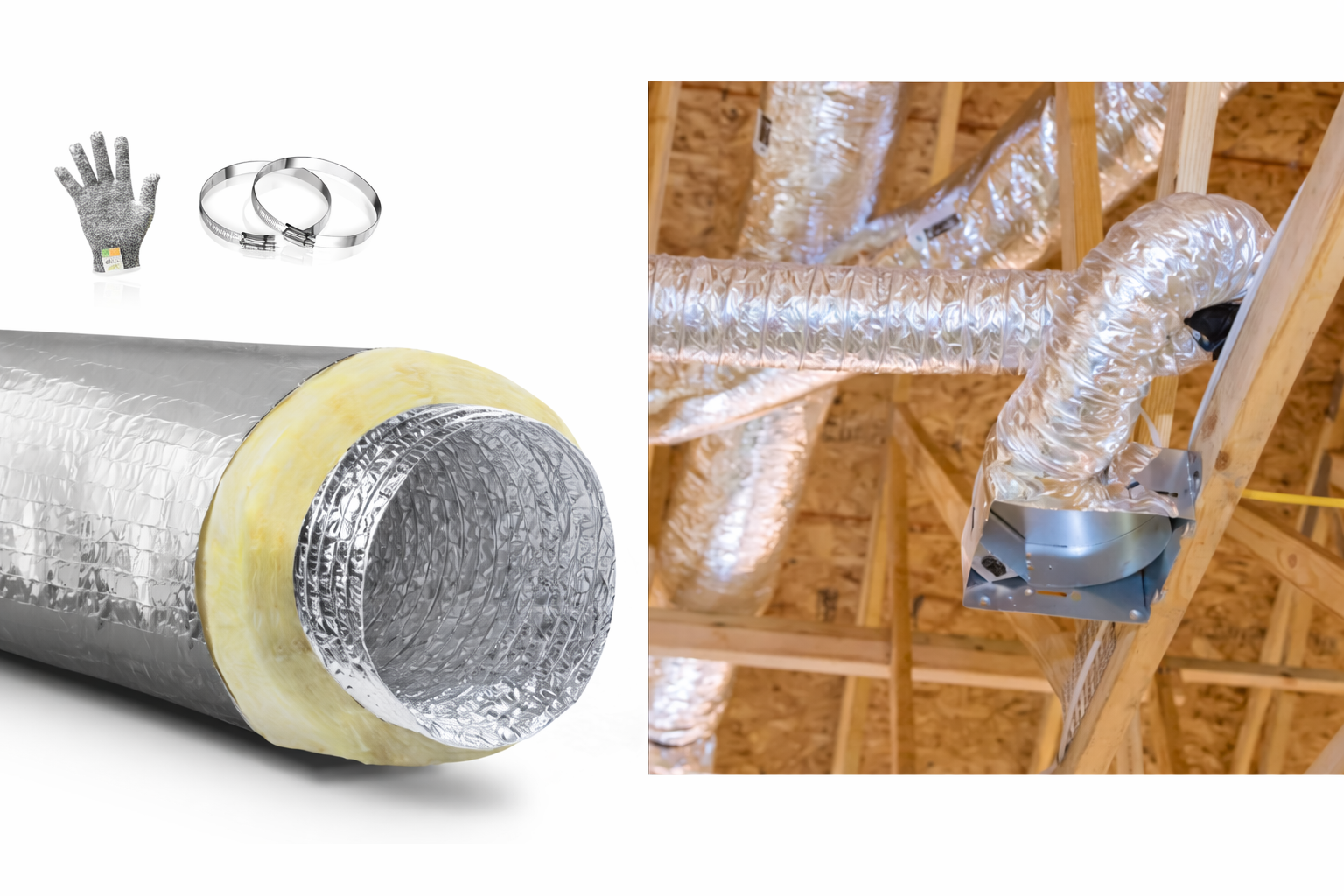
b) Flexible Ducts
Made with a flexible plastic outer layer supported by an internal metal wire coil. They are easy to install and suitable for tight or irregular spaces such as attics. However, excessive bending can reduce airflow.
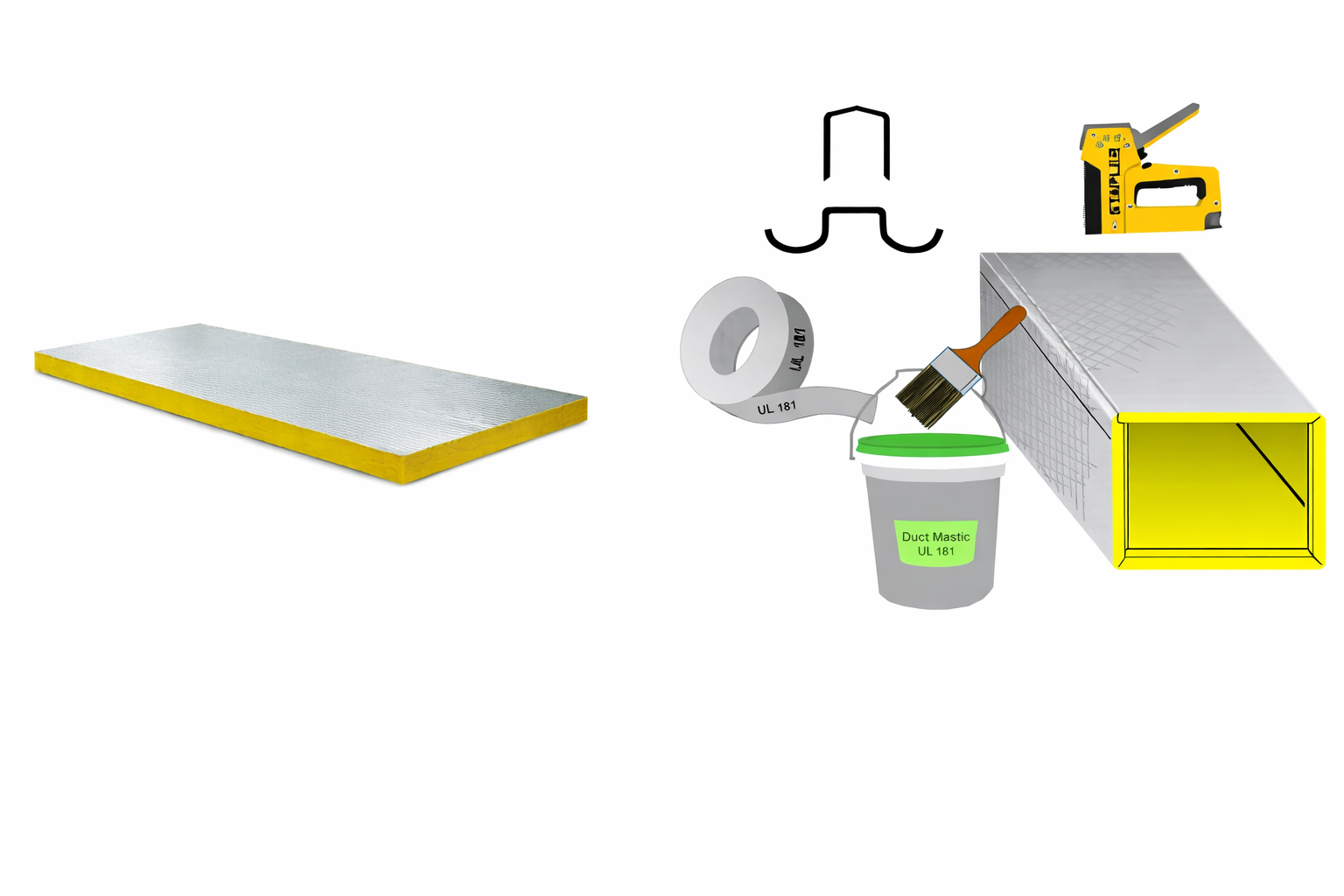
c) Fiberboard Ducts
Constructed from compressed fiberglass and covered with aluminum foil. They offer built-in insulation but are porous, difficult to clean, and not suitable for humid environments.
3. Duct Size and Design (Sizing)
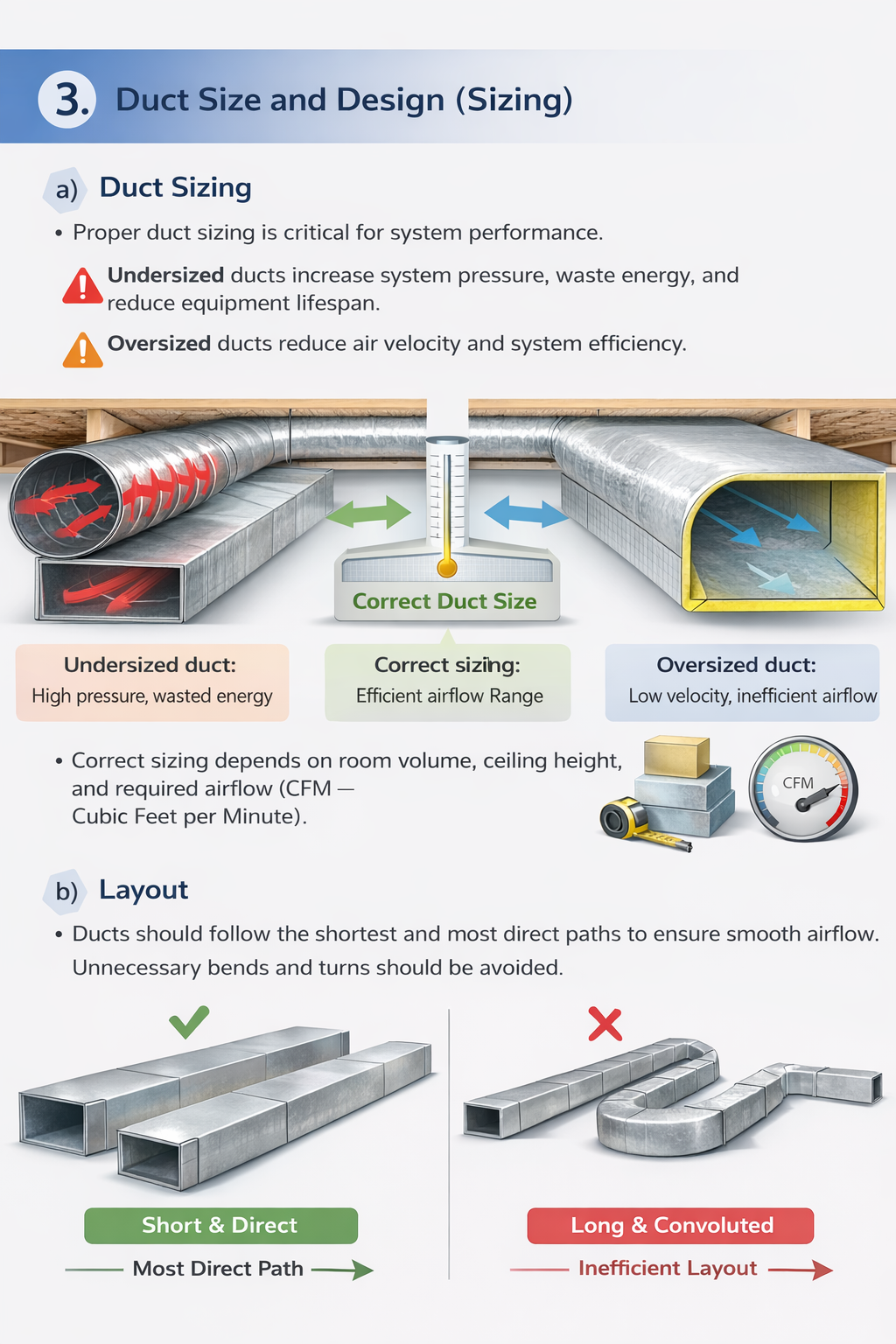
a) Duct Sizing
Proper duct sizing is critical for system performance.
-
Undersized ducts increase system pressure, waste energy, and reduce equipment lifespan.
-
Oversized ducts reduce air velocity and system efficiency.
Correct sizing depends on room volume, ceiling height, and required airflow (CFM – Cubic Feet per Minute).
b) Layout
Ducts should follow the shortest and most direct paths to ensure smooth airflow. Unnecessary bends and turns should be avoided.
4. Insulation
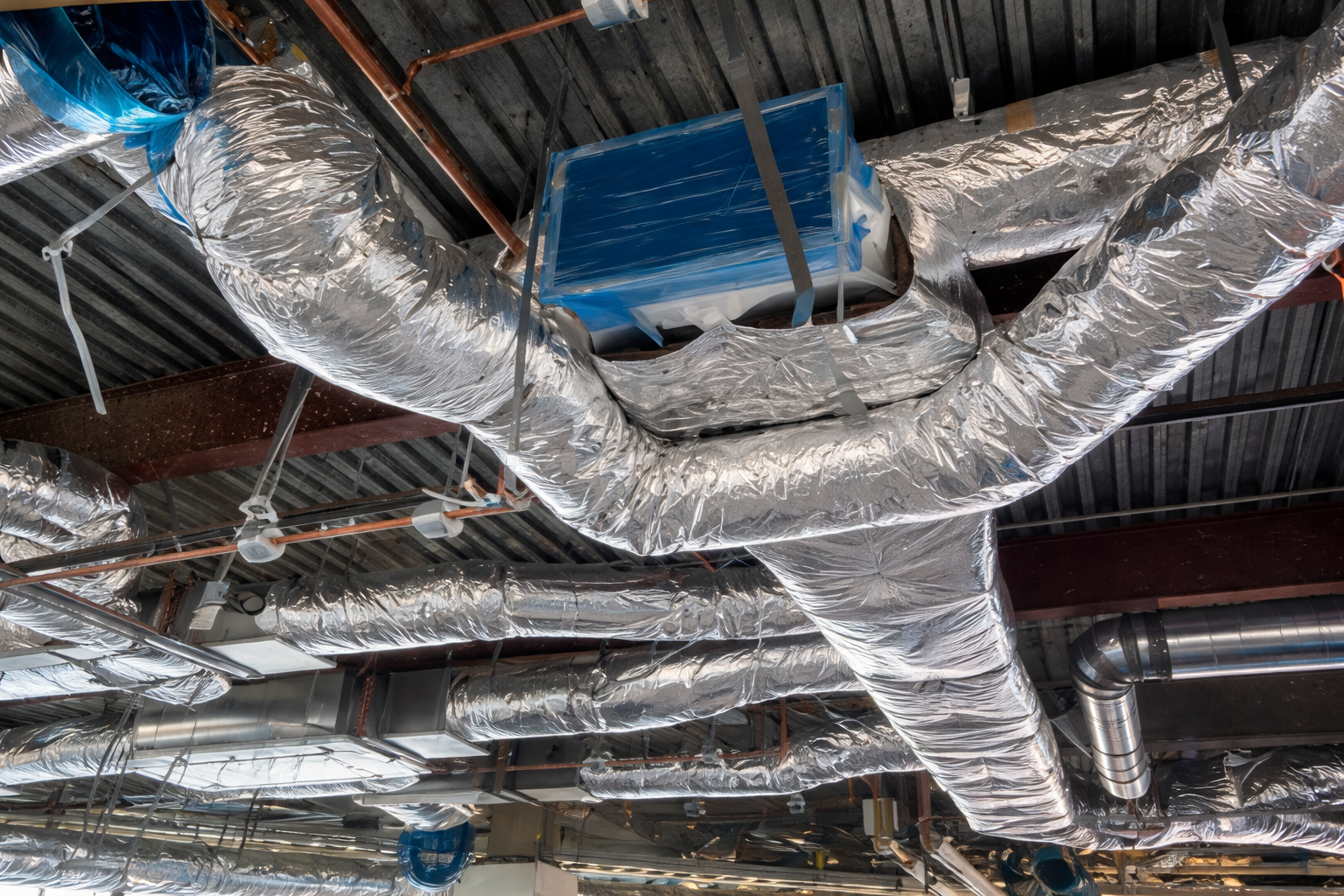
Duct insulation is essential for improving energy efficiency.
It prevents heat loss or gains during air movement, ensuring that cool air in summer and warm air in winter maintains its temperature while passing through the ducts.
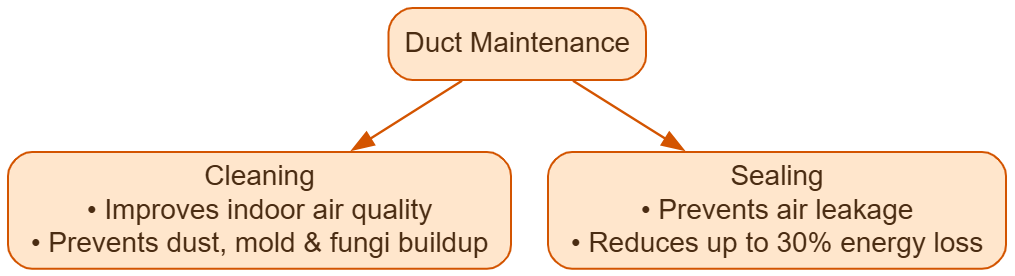
5. Duct Maintenance
a) Cleaning
Regular duct cleaning is important for maintaining healthy indoor air quality. Dust, mold, and fungi can accumulate inside ducts over time.
b) Sealing
Small cracks or leaks in duct systems can cause up to 30% energy loss.
Therefore, regular inspection and proper sealing of ducts are necessary.
In summary, a well-designed, properly installed, and regularly maintained duct system plays a crucial role in HVAC performance. It ensures efficient airflow, reduces energy loss, and helps maintain comfortable indoor temperatures throughout the year. Most importantly, a good duct system improves indoor air quality, creating a healthier and more comfortable living environment.