By Md. Majedur Rahman, Senior Engineer, Operation (Muspana)
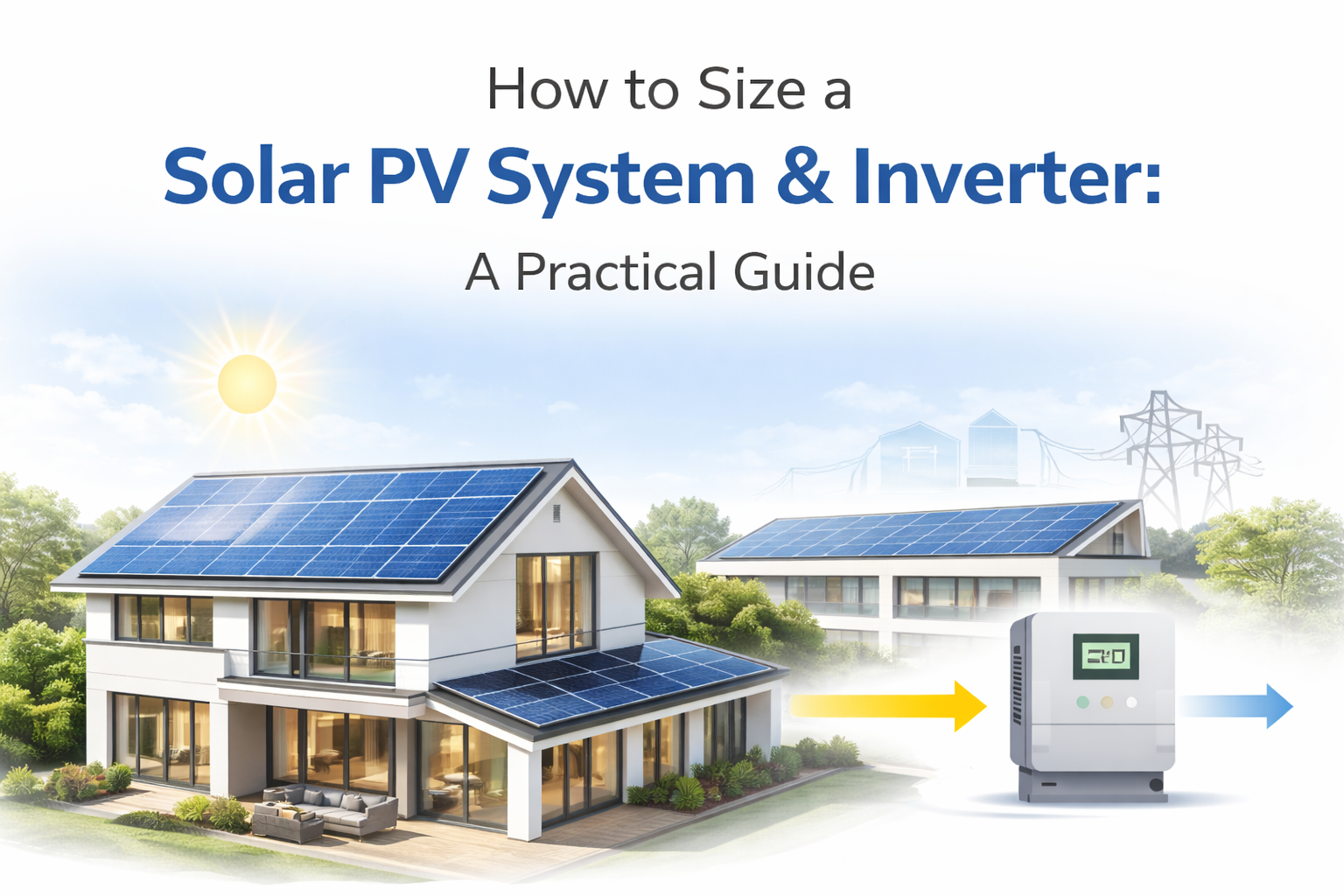
Installing a solar PV system is a smart investment, but its success depends largely on one key factor: proper system sizing. A well-sized solar PV system and inverter ensure reliable performance, maximum energy savings, and long-term safety. Oversized systems increase unnecessary costs, while undersized systems lead to power shortages and equipment stress.
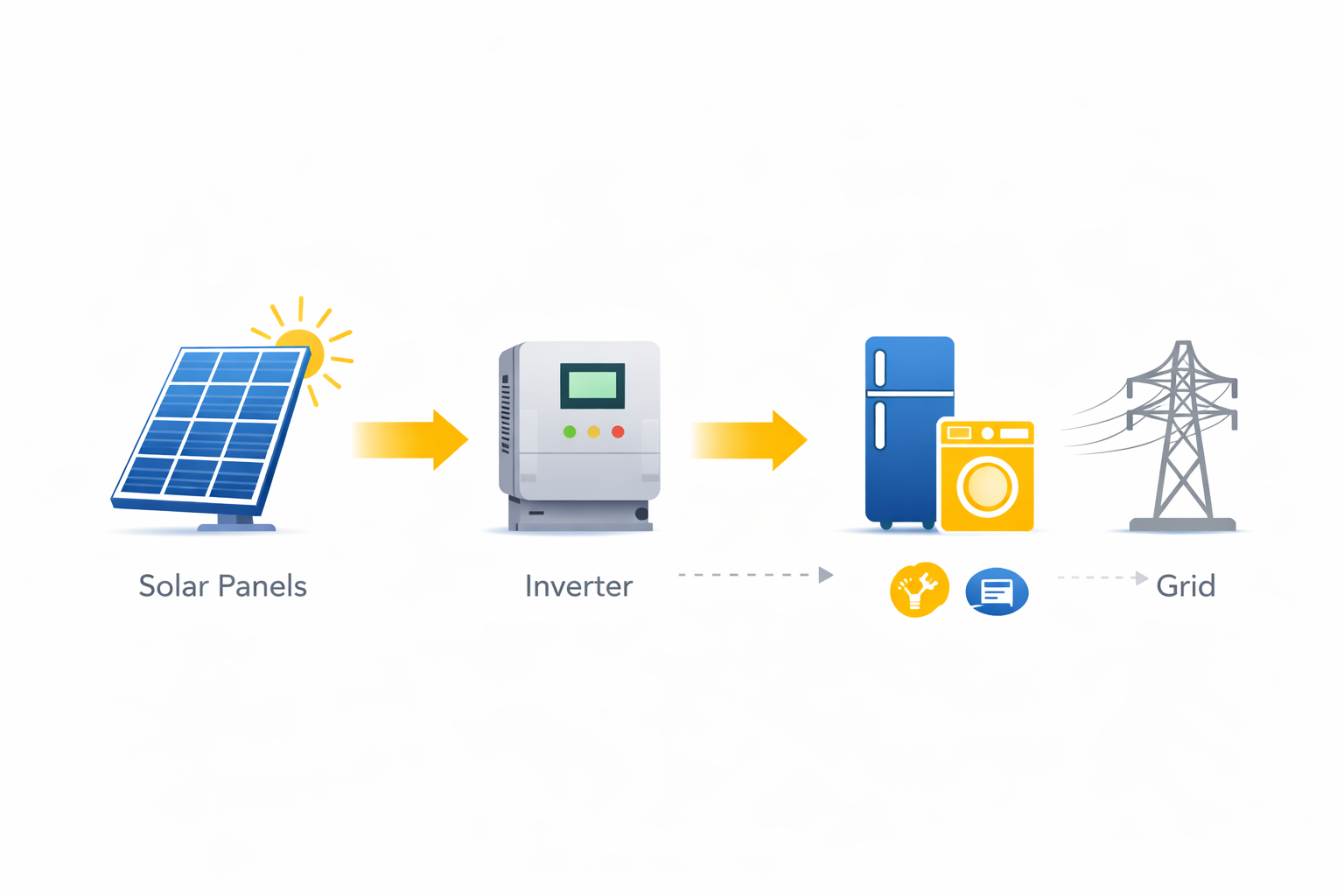
This guide explains how to size a solar PV system and inverter in a clear and practical way.
Step 1: Calculate Your Energy Requirement
The first step in solar system design is understanding how much electricity you use.
List all the electrical appliances you plan to run on solar. For each appliance, note:
-
Power rating (watts)
-
Average daily usage (hours)
Multiply power by usage time to calculate daily energy consumption in watt-hours (Wh). Adding all appliances together gives the total daily energy demand, usually expressed in kilowatt-hours (kWh).
It is also important to identify appliances with high starting power, such as pumps, refrigerators, and air conditioners. These loads influence inverter selection.
Step 2: Select the Right Inverter Size
The inverter converts DC electricity from solar panels into usable AC power.
A good rule of thumb is to choose an inverter with a capacity 25–30% higher than the maximum connected load. This ensures smooth operation and allows for future load expansion.
In addition to continuous power rating, the inverter must handle surge power, especially when motor-based appliances start. The inverter type should also match the system design, whether grid-tied, off-grid, or hybrid.
Step 3: Understand Available Sunlight
Solar panel output depends on sunlight availability, commonly expressed as peak sun hours.
Peak sun hours represent the average daily duration when sunlight is strong enough to generate maximum power. Regions with higher sun hours require smaller systems for the same energy output, while lower sun hours require larger panel capacity.
Step 4: Size the Solar PV Array
Once daily energy demand and peak sun hours are known, the required solar panel capacity can be calculated.
To account for real-world losses such as temperature effects, dust, wiring losses, and inverter inefficiency, designers typically apply a safety factor of 20–30%.
The total required solar capacity is then divided by the wattage of a single panel to determine how many panels are needed. The final number should always be rounded up to ensure adequate power generation.
Step 5: Consider Other System Components
For off-grid or hybrid systems, additional components must be properly sized:
-
Battery capacity for backup duration
-
Charge controllers to regulate charging
-
Cables, breakers, and protection devices for system safety
Correct sizing of these components ensures system reliability and long service life.

Conclusion
Sizing a solar PV system and inverter correctly is essential for performance, safety, and return on investment. A well-designed system delivers consistent energy, avoids overloading, and makes the most of available solar resources. With proper planning and professional execution, solar power becomes a dependable and sustainable energy solution.
At Muspana, we believe every efficient solar system begins with intelligent design.