By Md. Tanvir Siraj, AGM, Engineering & Innovation (Muspana)
An Intelligent Traffic System (ITS) is a modern, technology-driven approach to managing road transportation. Its main purpose is to reduce traffic congestion, improve road safety, and make transportation more efficient for both commuters and managers. Instead of relying only on human traffic police or manual signals, an ITS uses sensors, cameras, communication networks, and software to monitor traffic conditions in real time and make smart decisions automatically.
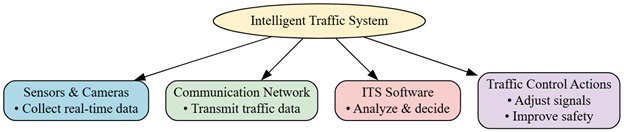
ITS Function Map
In most cities, traffic problems occur because traditional systems cannot respond quickly to changing conditions. A regular traffic signal follows a fixed timer, even if one road is empty while another is overcrowded. Similarly, when accidents or roadblocks occur, traffic management teams often learn about it too late, causing long delays. An ITS solves these problems by continuously collecting real-time data from the roads and using that information to adjust traffic flow instantly.
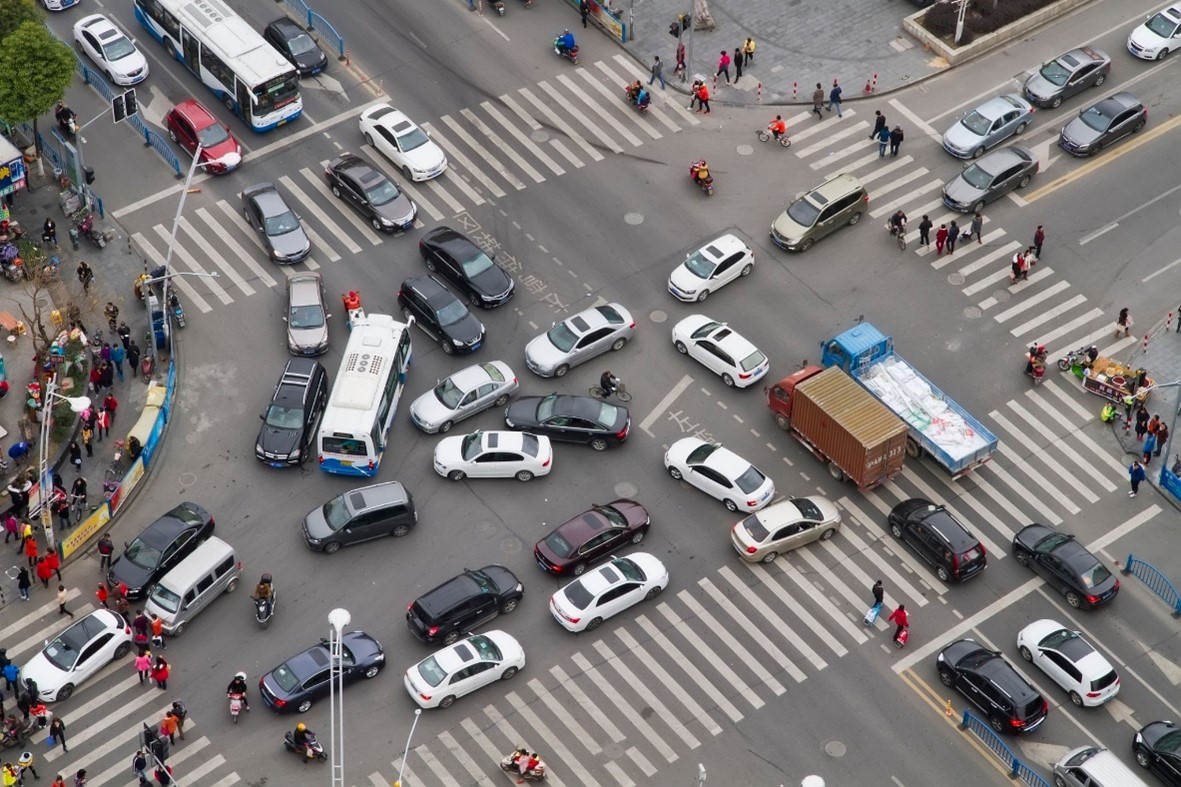
Gridlock at the Crossroads, a Common Scenario in Dhaka City
An ITS works through several key components. The first component is data collection, which happens through sensors, roadside units, traffic cameras, GPS devices, and even connected vehicles. These devices measure vehicle speed, traffic volume, road temperature, weather conditions, and incidents like accidents or sudden stops. This information is sent to a central traffic control center.
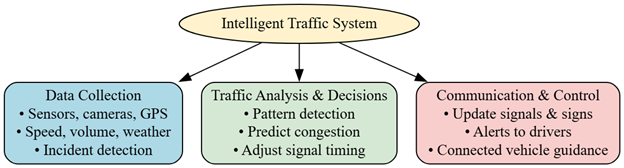 ITS Key Components
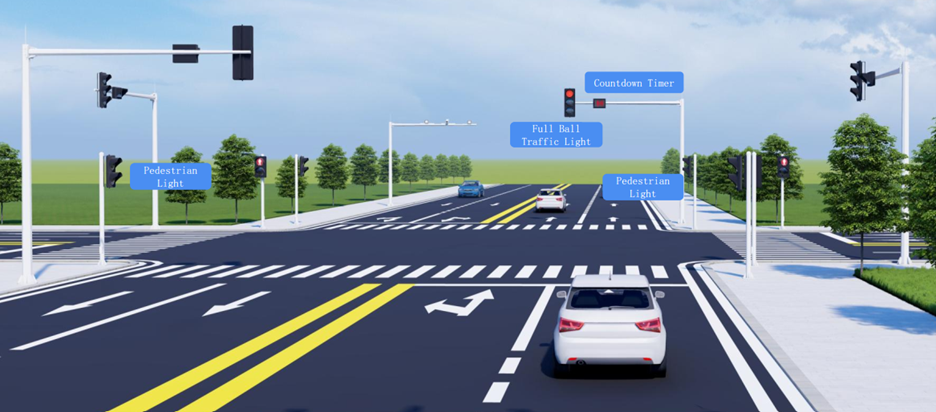
The second component is traffic analysis and decision-making. The collected data is processed using software that can understand patterns and predict traffic behavior. For example, if the system detects heavy congestion building up at a particular intersection, it can automatically increase the green-light duration on that side to reduce the queue. Similarly, if a road becomes empty late at night, the system can shorten the signal cycle to save time and reduce fuel consumption.
The third component is communication and control. Once decisions are made, the ITS sends instructions to traffic signals, digital road signs, and other devices. Drivers may see messages on electronic boards showing instructions such as “Accident Ahead,” “Slow Down,” or “Use Alternate Route.” These dynamic updates help prevent secondary accidents and keep traffic moving smoothly. In advanced cities, ITS can also communicate directly with connected vehicles, providing alerts or navigation guidance.
Another important function of ITS is incident management. When the system detects an accident, stalled vehicle, or hazardous condition, it immediately notifies the traffic control center. The system can also alert emergency services, helping them respond more quickly. At the same time, the ITS adjusts nearby traffic signals to reduce congestion around the incident site.
ITS also plays a vital role in public transportation management. It can track buses in real time, provide arrival information at bus stops, and optimize routes based on demand. This improves reliability and encourages more people to use public transport, reducing road congestion.
A major advantage of ITS is improved safety. By monitoring speed violations, detecting red-light running, and managing pedestrian crossings, the system reduces the chance of accidents. Similarly, weather sensors can warn drivers about slippery roads or low visibility.
Energy efficiency is another benefit. By preventing unnecessary stopping and idling, ITS helps reduce fuel consumption and carbon emissions. This makes the transportation system more environmentally friendly.

Key Benefits of ITS
An Intelligent Traffic System acts as the “brain” of a city’s road network. It integrates multiple technologies to monitor, analyze, and manage transportation in real time. By improving safety, reducing congestion, and saving time, ITS creates a smoother and more efficient travel experience for everyone.