
–By Md. Nur Nabi, Senior Civil Engineer (Muspana)
Safety nets are a crucial fall-protection system in construction and industrial sites, designed to prevent fatal falls and reduce injury severity. In this article, we briefly explain the key design criteria, load capacity, and safety standards that ensure effective and reliable safety net performance.
1. Purpose of Safety Net Design
Safety nets are designed to:
- Prevent fatal falls of workers and tools
- Absorb impact energy safely
- Reduce injury severity during accidental falls
- Comply with occupational safety standards

2. Design Criteria of Safety Nets
2.1 Material Properties
Safety nets are typically made from:
- Polypropylene (PP)
- Nylon (PA)
- Polyethylene (HDPE)
Key material requirements:
- High tensile strength
- UV resistance
- Abrasion resistance
- Weather and moisture resistance
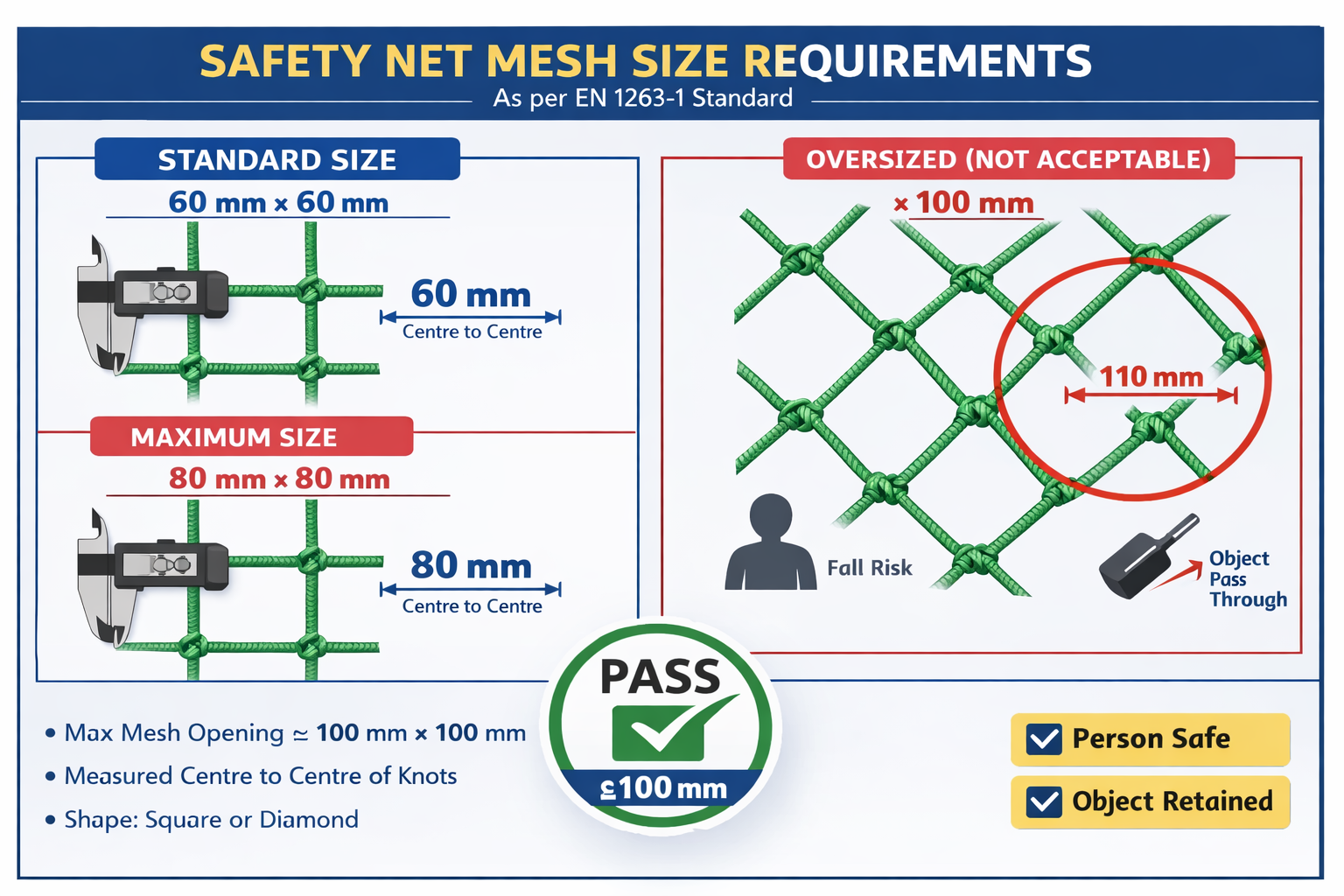
2.2 Mesh Size
Bangladesh Site Practice (PWD / high rise) mesh sizes:
EN 1263 certified net
- 60 × 60 mm (Recommended mesh)
- 80 × 80 mm (Alternate acceptable size)
- 100 × 100 mm (Maximum mesh opening)
Design consideration:
- Smaller mesh = higher load distribution and safety
- Mesh opening must prevent body or head penetration
2.3 Rope Diameter
Common rope diameters:
- 6 mm – light duty
- 8 mm – medium duty
- 10–12 mm – heavy duty / fall arrest
Larger diameter increases:
- Breaking strength
- Energy absorption capacity
2.4 Net Type & Knot System
- Knotted nets → Higher friction, stable structure
- Knotless nets → Better energy absorption, lighter weight
2.5 Edge Rope & Border Strength
Border rope strength should be ≥ 2 times the net mesh rope
Prevents tearing during sudden impact
3. Load Capacity Analysis
3.1 Design Load
Safety nets are designed for:
- Minimum 100–150 kg live load (single person)
- Additional dynamic impact factor applied
3.2 Load Capacity Summary Table
| Component | Required Strength | Factor of Safety | Remarks |
|
Twine |
≥ 4.5 mm Ø |
3 |
Personnel net |
|
Border rope |
≥ 30 kN |
4 |
All nets |
| Anchor | ≥ 6 kN |
2–2.5 |
Spacing ≤ 2.5 m |
| Impact load | ~4 kN (example) |
– |
Based on 100 kg fall, 6 m height |
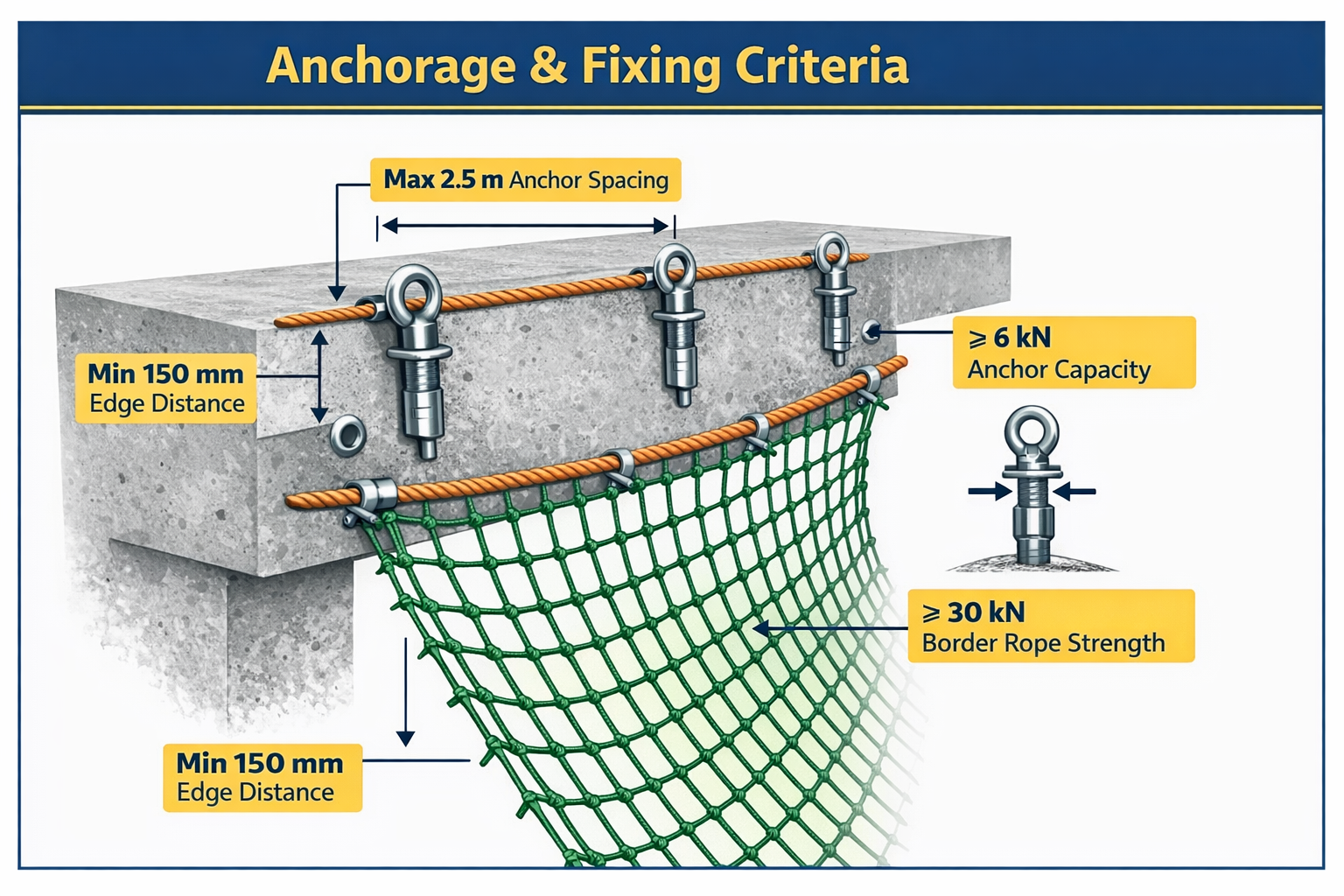
4. Anchorage & Fixing Criteria
4.1 Anchor Strength
- Each anchorage point should resist ≥ 6 kN
- Fixing interval: ≤ 2.5 m
4.2 Fixing Components
- Galvanized steel hooks
- Shackles / carabiners
- MS or SS support cables
5. Safety Factors
- Design safety factor: Minimum 4 to 6 times the expected working load
Example:
- Working load = 150 kg
- Design capacity ≥ 600–900 kg
6. Standards & Compliance
Common international references:
- EN 1263-1 / EN 1263-2 (Safety nets)
- OSHA 1926.502
- ISO 18000 series
7. Inspection & Rejection Criteria
Mandatory inspection:
- Before installation
- Weekly visual check
- After any fall arrest
Reject if:
- Cut or frayed strands
- UV brittleness
- Broken border rope
- Deformation greater than 40%
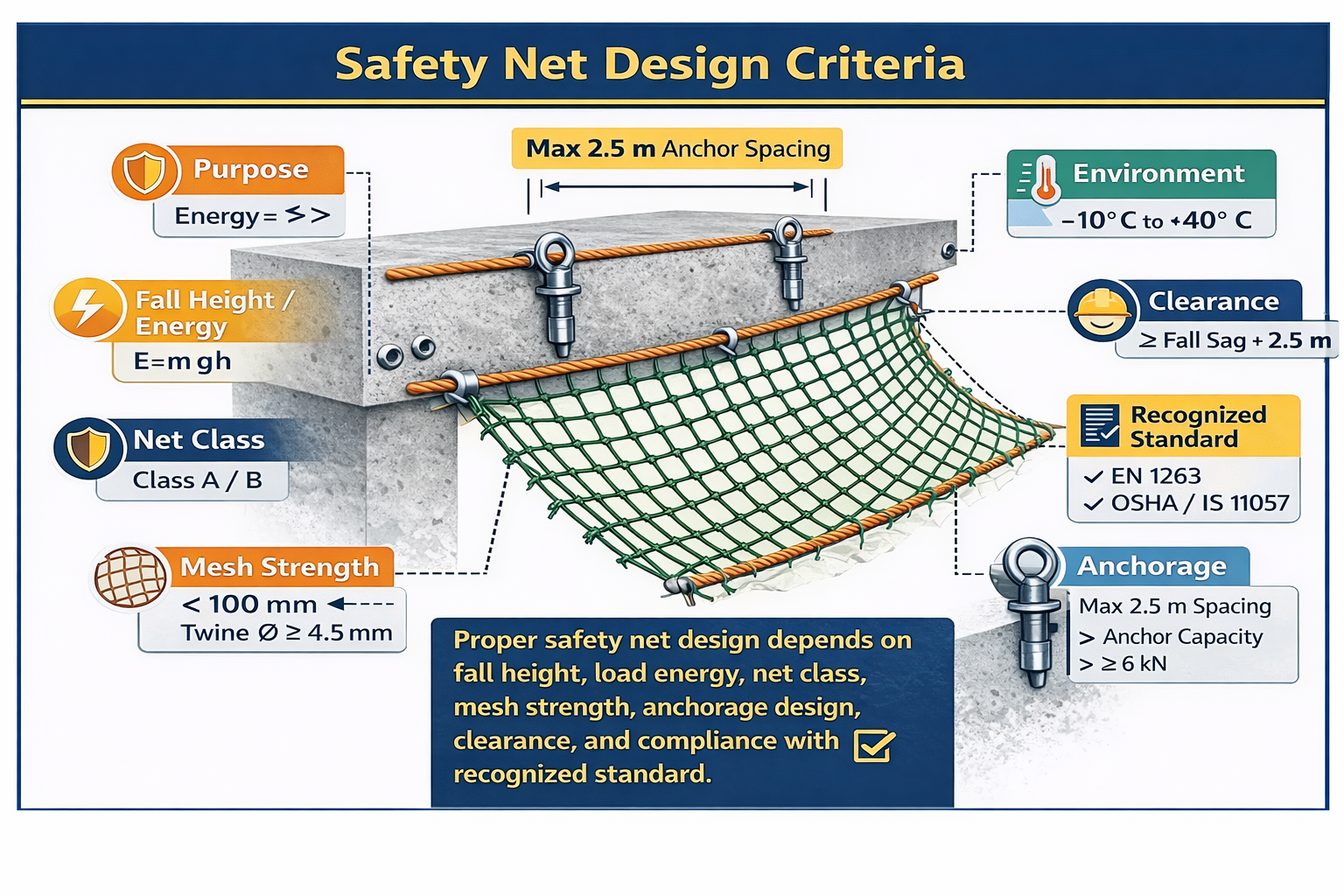
A well-designed safety net can save lives, reduce accidents, and ensure legal compliance
on construction sites.