By Mahmudul Hasan, Deputy Manager, Project Management (Muspana)
As the world moves toward sustainable and renewable energy solutions, solar-powered water pumps have emerged as one of the most reliable and eco-friendly methods for water extraction in agriculture, rural areas, and industrial applications. At the heart of every solar-powered pump system is the solar pump controller, which ensures the efficient and reliable operation of the pump while protecting it from damage.
In this blog, we’ll dive into the role of the solar pump controller, its functions, types, and how it works to optimize solar-powered water systems.
What Is a Solar Pump Controller?
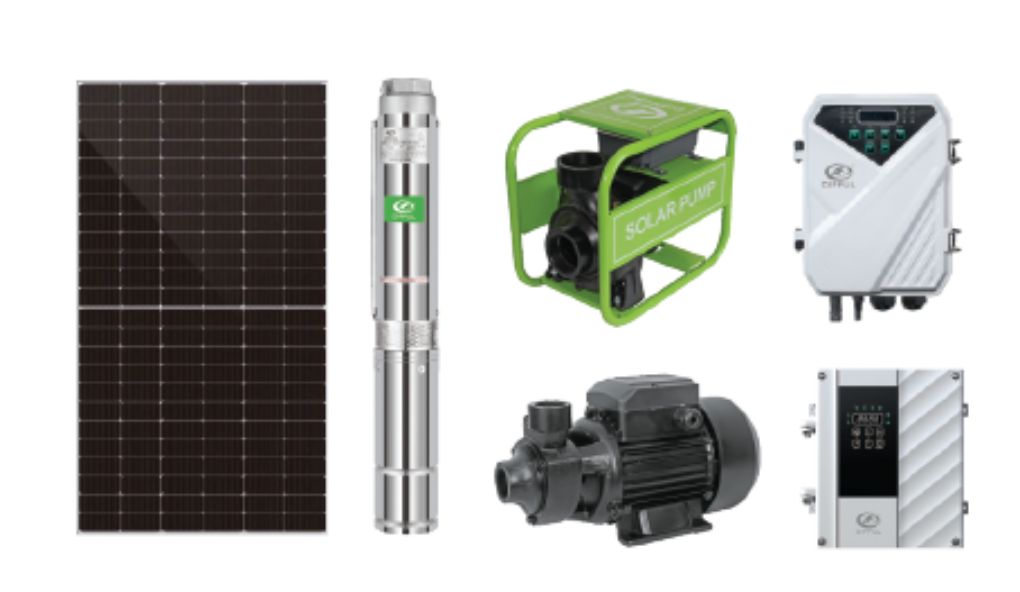
A solar pump controller is an electronic device that regulates the operation of a solar water pump. Acting as an interface between the solar panels and the water pump, it ensures that the pump operates efficiently by using solar energy and prevents damage caused by electrical issues, dry-running, or other system failures. The controller allows the system to respond automatically to changes in sunlight and water levels, making it crucial for uninterrupted water supply.
Key Functions of a Solar Pump Controller
The solar pump controller performs several critical functions to ensure the smooth and efficient operation of the system:
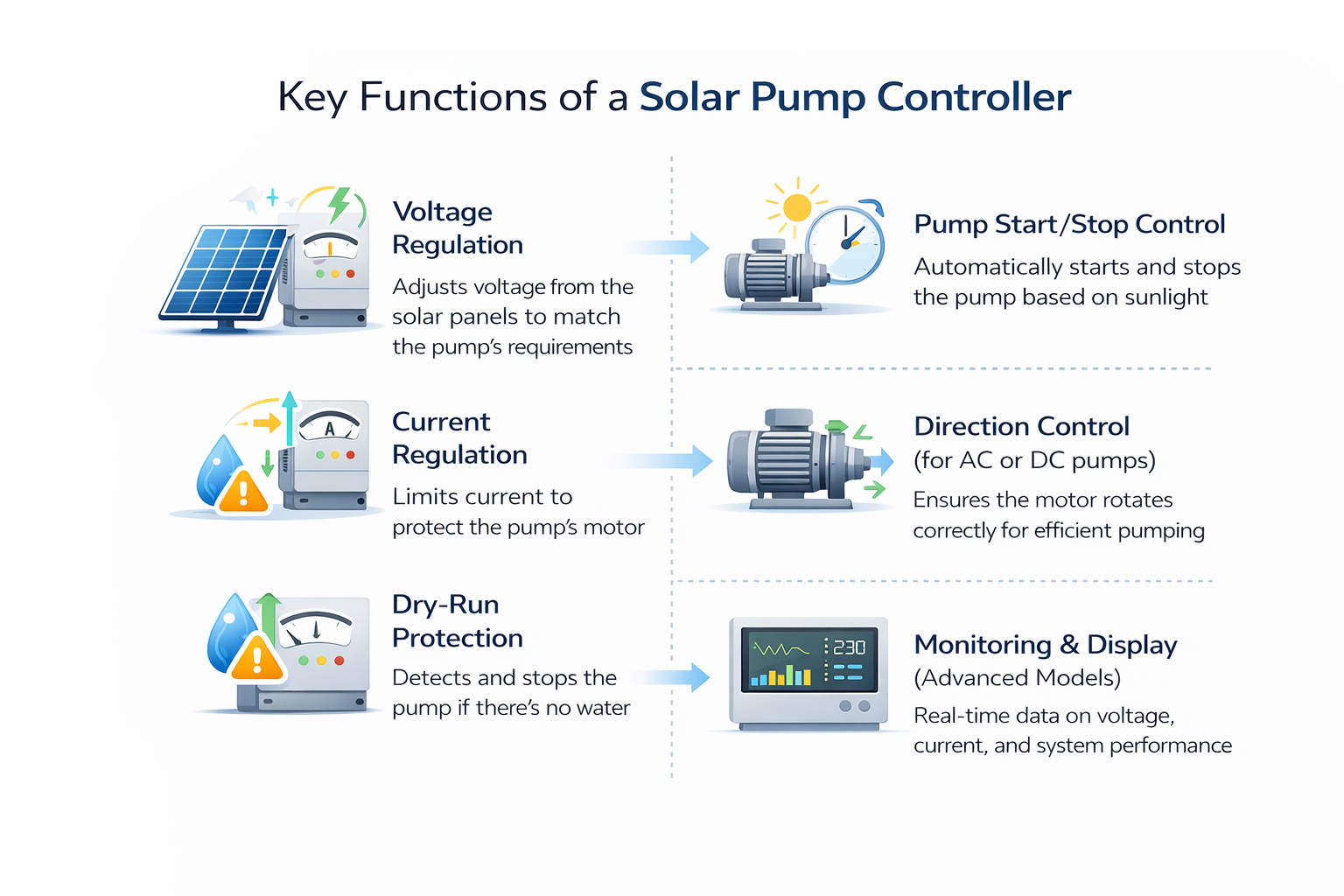
1. Voltage Regulation
The controller adjusts the voltage from the solar panels to match the requirements of the pump. This prevents over-voltage or under-voltage conditions, which could potentially damage the motor.
2. Current Regulation
Excessive current can damage the pump’s motor. The controller limits the current supplied to the pump, providing an additional layer of protection.
3. Dry-Run Protection
This function detects when the water source is empty or when the pump is running without water. In such cases, the controller stops the pump to prevent motor damage.
4. Pump Start/Stop Control
The controller automatically starts the pump when sunlight is available and stops it during low sunlight or at night. This feature ensures that the pump operates only when it’s needed, conserving energy.
5. Direction Control (for AC or DC pumps)
For both AC and DC pumps, the controller ensures the motor rotates in the correct direction to operate the pump efficiently.
6. Monitoring & Display (Advanced Models)
Some controllers come with built-in displays that show real-time data on voltage, current, power output, and system health, helping users keep track of system performance.
Types of Solar Pump Controllers
There are several types of solar pump controllers designed for different types of pumps and system setups:
1. DC Pump Controllers
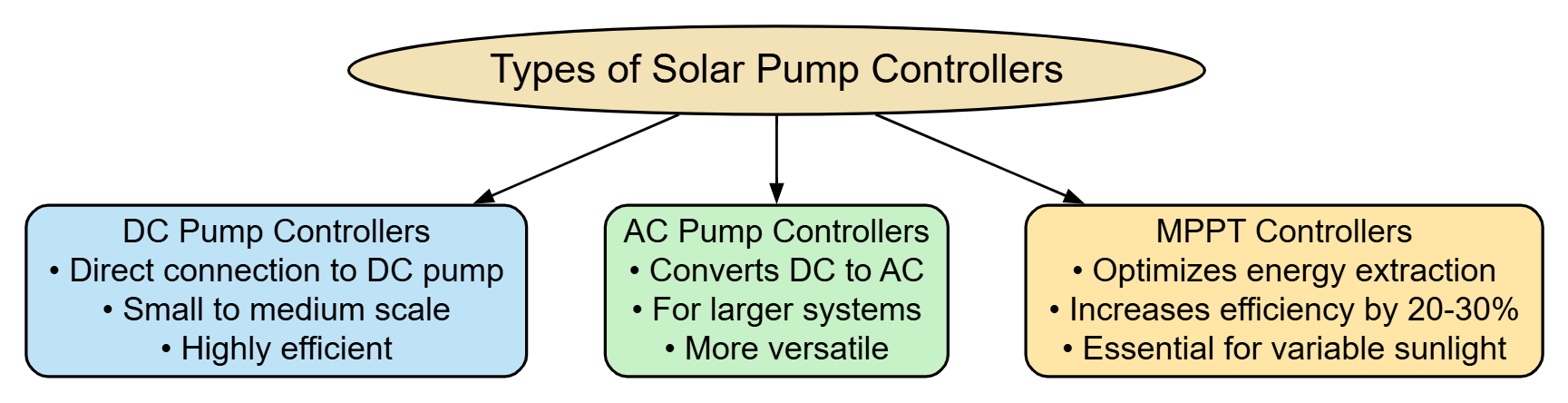
Used for DC solar pumps, these controllers directly connect the solar panels to the DC pump. They are commonly used for small to medium-scale water pumping applications (up to 5 kW) and are highly efficient with fewer losses.
2. AC Pump Controllers
For AC solar pumps, these controllers convert DC from the solar panels into AC power to run the pump. AC pumps are generally used for larger systems.
3. MPPT (Maximum Power Point Tracking) Controllers
MPPT controllers optimize the power extracted from solar panels, especially under varying sunlight conditions. They increase system efficiency by 20-30% compared to conventional controllers. MPPT is essential for systems with variable sunlight or where maximizing energy output is critical.
How Does a Solar Pump Controller Work?
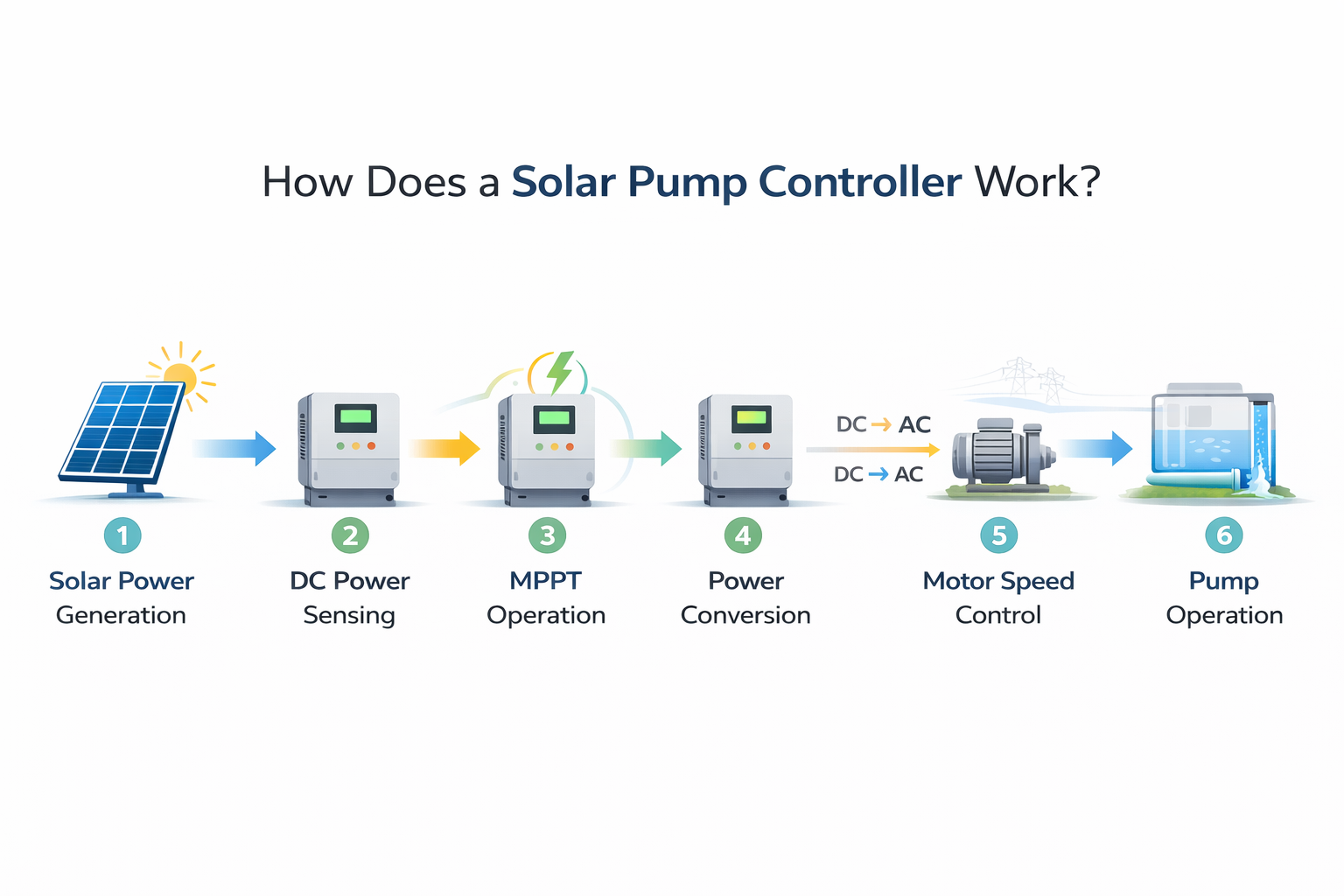
The working principle of a solar pump controller is quite straightforward. Here’s a step-by-step explanation:
Step 1: Solar Power Generation
Solar panels produce DC voltage and current from sunlight. The output fluctuates depending on sunlight intensity and time of day.
Step 2: DC Power Sensing
The controller continuously measures the voltage and current generated by the solar panels.
Step 3: MPPT Operation
For systems with MPPT controllers, the MPPT algorithm adjusts the operating voltage to extract the maximum power from the panels. This ensures that the pump receives the most efficient use of available solar energy.
Step 4: Power Conversion
For AC pumps, the controller converts DC power to AC power through an inverter. For DC pumps, the voltage is regulated to match the pump’s motor requirements.
Step 5: Motor Speed Control
The pump motor’s speed varies depending on the available solar energy. The controller adjusts the motor speed to ensure consistent performance, with higher speeds under full sunlight and slower speeds when sunlight is low.
Step 6: Pump Operation
The water is pumped from the source (borewell, river, or tank) to the storage or irrigation system. The controller ensures smooth operation, preventing any mechanical shock to the system.
Applications of Solar Pump Controllers
Solar pump controllers are used in a wide range of applications, including:
- Small to medium-scale water pumps for agricultural irrigation
- Shallow wells, livestock watering systems, and drip irrigation
- Remote areas without access to the national grid, providing water supply solutions in off-grid locations
The power range for these pumps is typically between 100 W and 3 kW, making them scalable for various needs.
Conclusion
A solar pump controller is a critical component in maximizing the efficiency and lifespan of a solar-powered water pump. By regulating power, protecting against damage, and ensuring smooth operation, these controllers ensure that water can be pumped reliably using solar energy, even in remote locations.
At Muspana, we offer a range of high-quality solar pump controllers designed to meet the needs of different applications. Whether you’re looking to install a system for agricultural irrigation, livestock watering, or remote water supply, we have the right solution for you.