By S.M. Montasir Mamun, Engineer (Muspana)
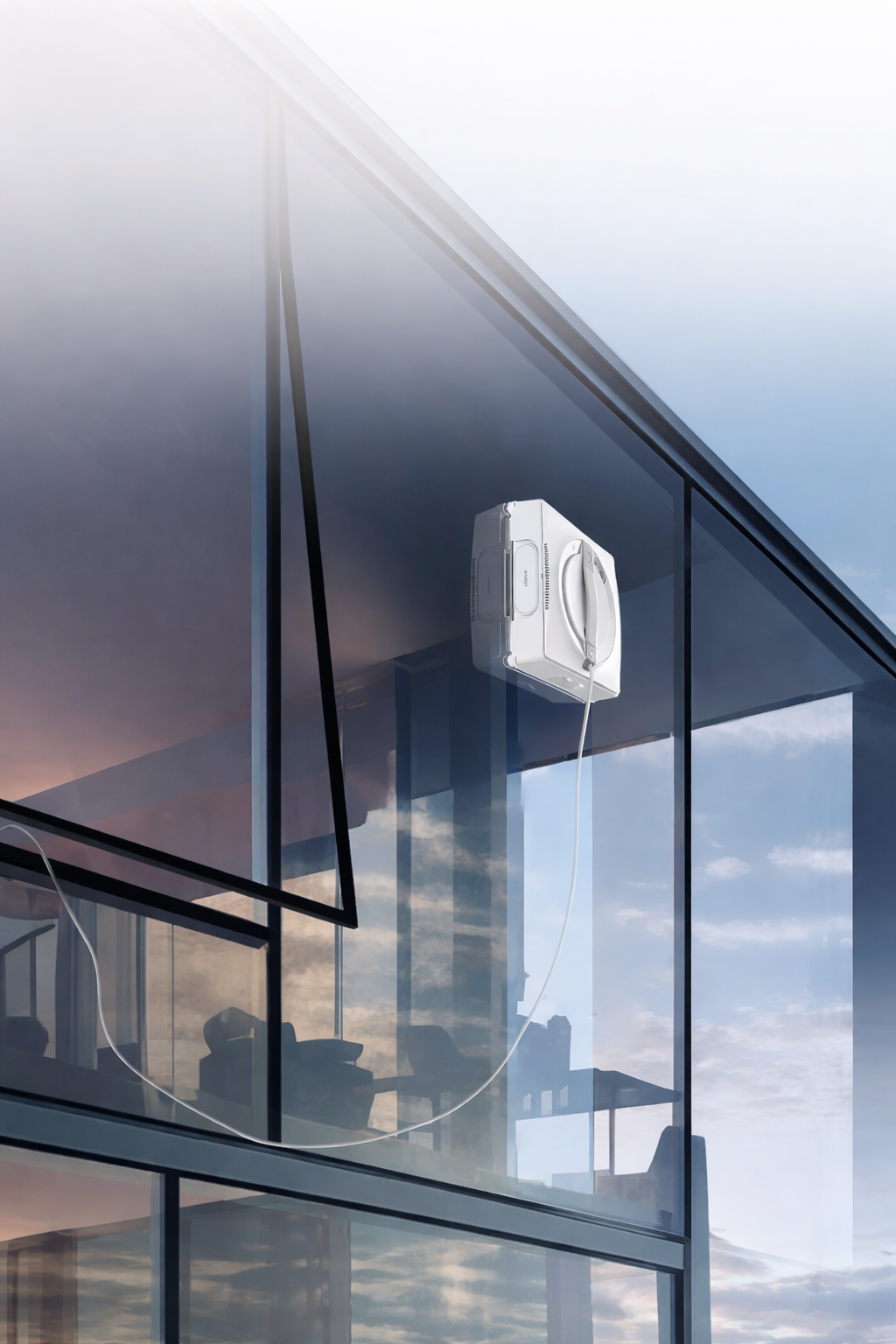
With the rapid development of technology, robots are increasingly used to make daily tasks easier and safer. One such innovation is the Window Cleaner Robot. Cleaning windows, especially in high-rise buildings, is a difficult and risky job for humans. The window cleaner robot is designed to solve this problem by providing a safe, efficient, and automatic method for cleaning glass surfaces.
This article explains the working, components, advantages, applications, and limitations of a window cleaner robot in simple terms.
What is a Window Cleaner Robot?
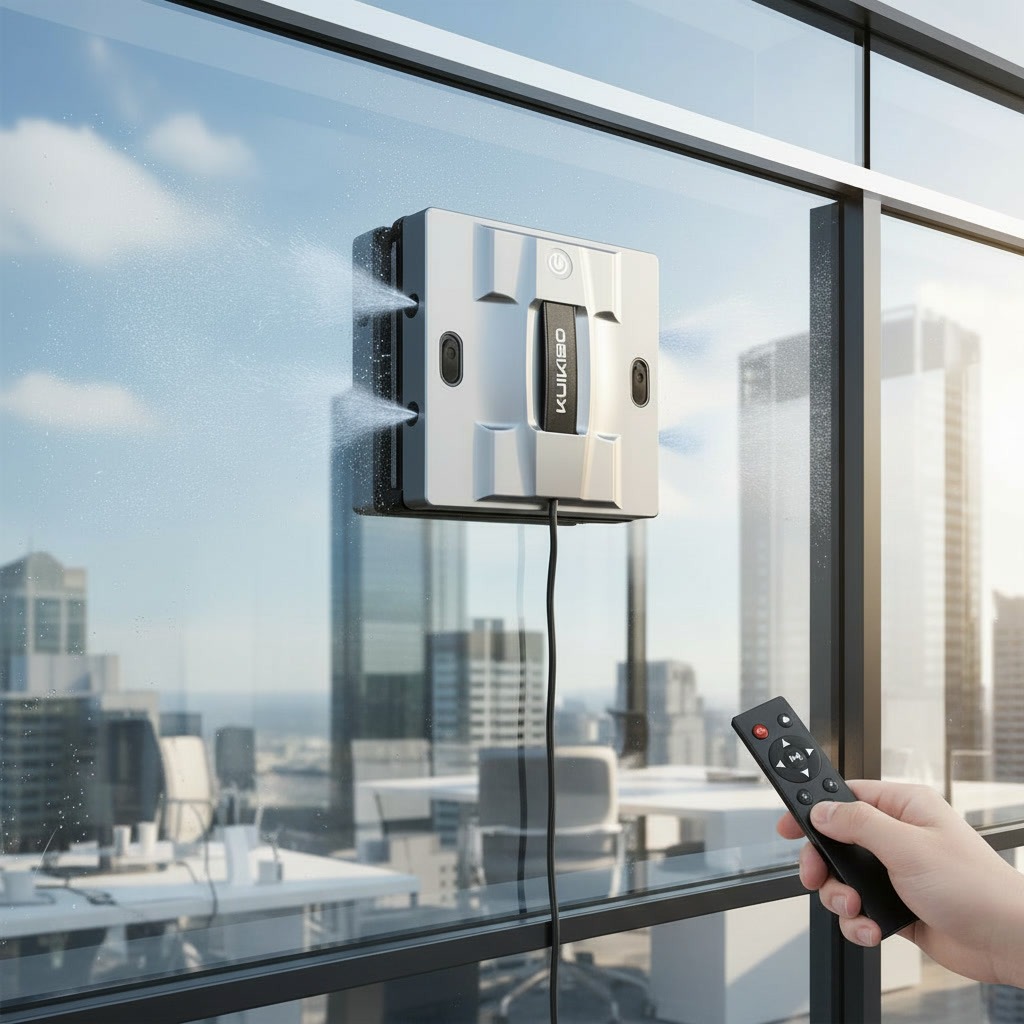
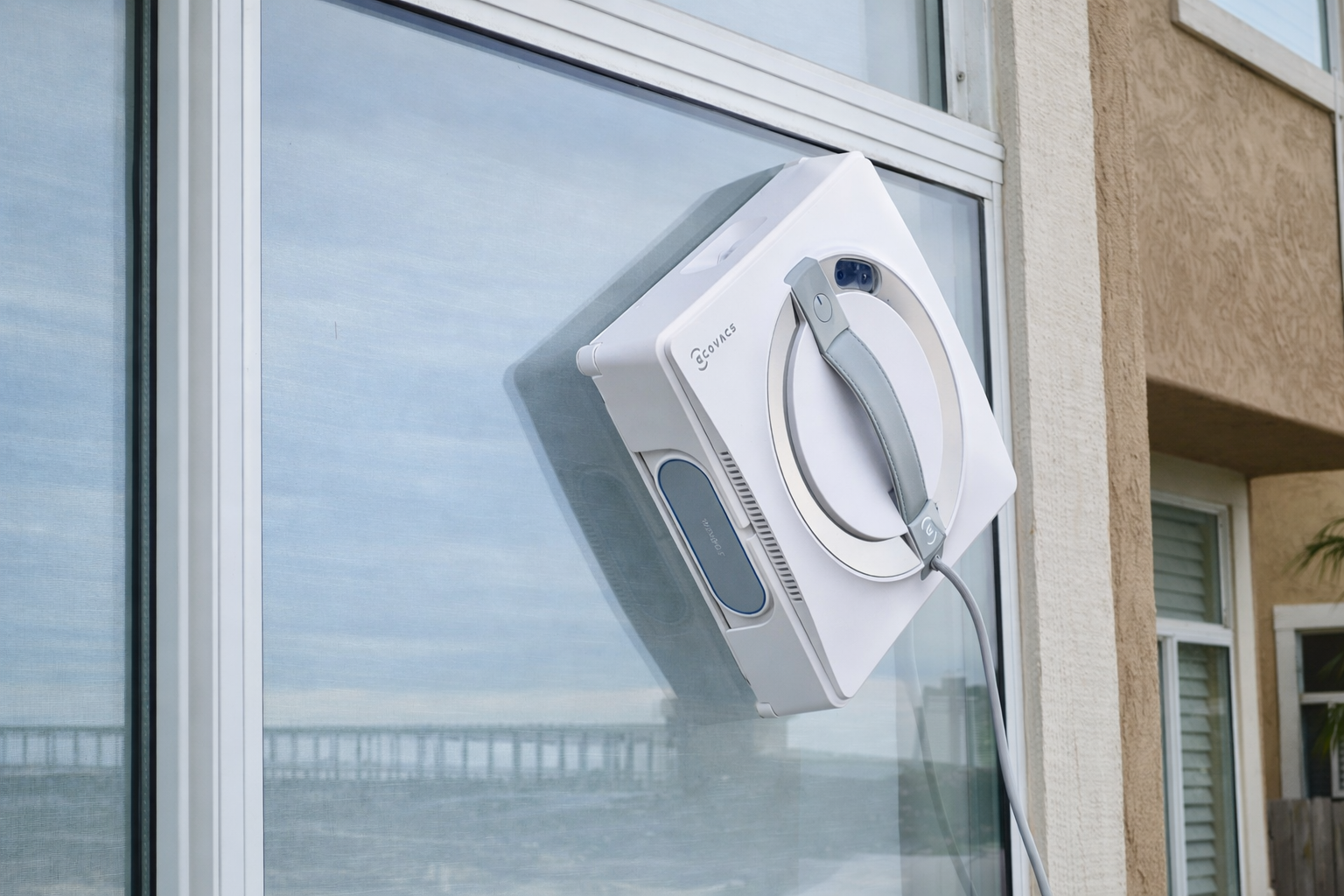
A Window Cleaner Robot is an automated device designed to clean glass surfaces such as windows, mirrors, and glass walls without human effort. It attaches itself to the glass surface using suction or magnetic force and moves smoothly while cleaning dust, dirt, and stains.
The robot can be controlled using a remote control or a mobile application, making it easy to operate. It is mainly used in homes, offices, hospitals, shopping malls, and tall buildings.
Main Components of Window Cleaner Robot
The window cleaner robot consists of the following main parts:
- Motor: The motor helps the robot move across the glass surface. It controls the direction and speed of the robot.
- Suction System: A vacuum suction system holds the robot firmly against the glass surface and prevents it from falling. Some robots use strong magnets instead.
- Cleaning Pads: Microfiber cleaning pads are attached to the bottom of the robot. These pads wipe the glass and remove dust and stains.
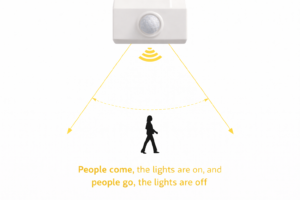
- Sensors: Sensors help the robot detect edges, frames, and obstacles. They ensure that the robot does not fall or collide with window boundaries.
- Control Unit: The control unit manages all robot functions such as movement, suction, and cleaning pattern.
- Power Supply: The robot is powered by a rechargeable battery. Some models also have a backup battery for safety.

Working Principle
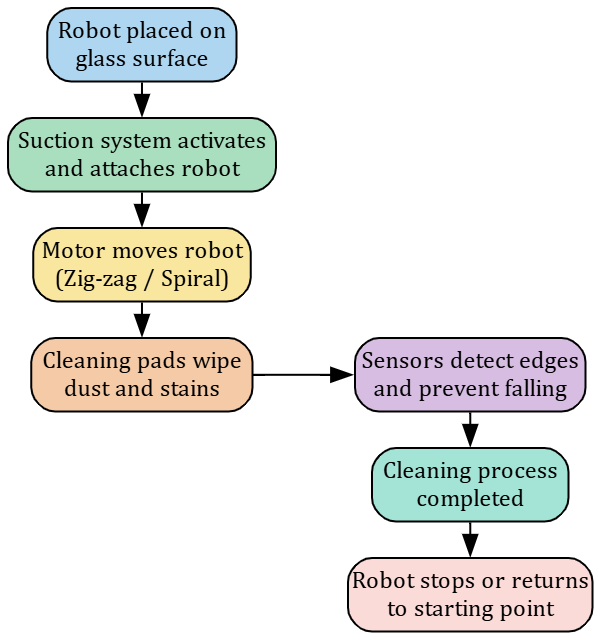
The working process of a window cleaner robot is simple, efficient, and highly automated. Once placed on a glass surface, the robot operates with minimal human involvement.
First, the robot is positioned on the window, and the suction system is activated. This creates a strong grip that securely attaches the robot to the glass surface and prevents it from falling.
Next, the motor begins to move the robot across the window in a pre-programmed cleaning pattern, commonly a zig-zag or spiral motion. As the robot moves, microfiber cleaning pads continuously wipe the glass, removing dust, dirt, and stains.
Built-in sensors play a crucial role during operation. They detect window edges, frames, and obstacles, ensuring the robot stays within the cleaning area and avoids accidental falls.
Once the cleaning cycle is complete, the robot either stops automatically or returns to its starting position. Throughout the entire process, the robot requires very little human supervision, making window cleaning safer, faster, and more convenient.
Advantages of Window Cleaner Robot
The window cleaner robot helps reduce the risk of accidents, particularly when cleaning windows in high-rise buildings. It completes cleaning tasks faster than traditional manual methods and can be easily operated using a remote control or mobile application. The robot delivers consistent, streak-free cleaning results while eliminating physical strain on users. Additionally, it consumes less power compared to manual cleaning equipment, making it an energy-efficient and practical solution for modern window cleaning needs.
Applications
Window cleaner robots are used in various places, including:
- Residential homes
- Office buildings
- Shopping malls
- Hospitals
- Hotels
- Glass skyscrapers
- Showrooms and commercial complexes
They are especially useful where manual cleaning is difficult or dangerous.
Limitations
Despite its many advantages, a window cleaner robot has a few limitations. It performs best on flat and smooth glass surfaces, which means its effectiveness may be reduced on curved or uneven windows. In addition, regular maintenance is required to keep the robot working efficiently, as cleaning pads and the suction system need periodic cleaning and replacement.
Future Scope
With further technological advancements, window cleaner robots are expected to become more efficient and affordable. Future models may include:
- Artificial Intelligence for better navigation
- Improved battery life
- Automatic water spraying system
- Voice control and smart home integration
- Use on curved and uneven surfaces
These improvements will increase their usage in both residential and commercial sectors.
In summary, the window cleaner robot is a valuable technological solution for safe and efficient window cleaning. It reduces human risk, saves time, and provides consistent cleaning results. Although it has some limitations, ongoing advancements will make it more reliable and cost-effective in the future. The window cleaner robot represents an important step towards automation and smart living.