
By Radhakanta Das Durjoy, Assistant Manager, Project Management
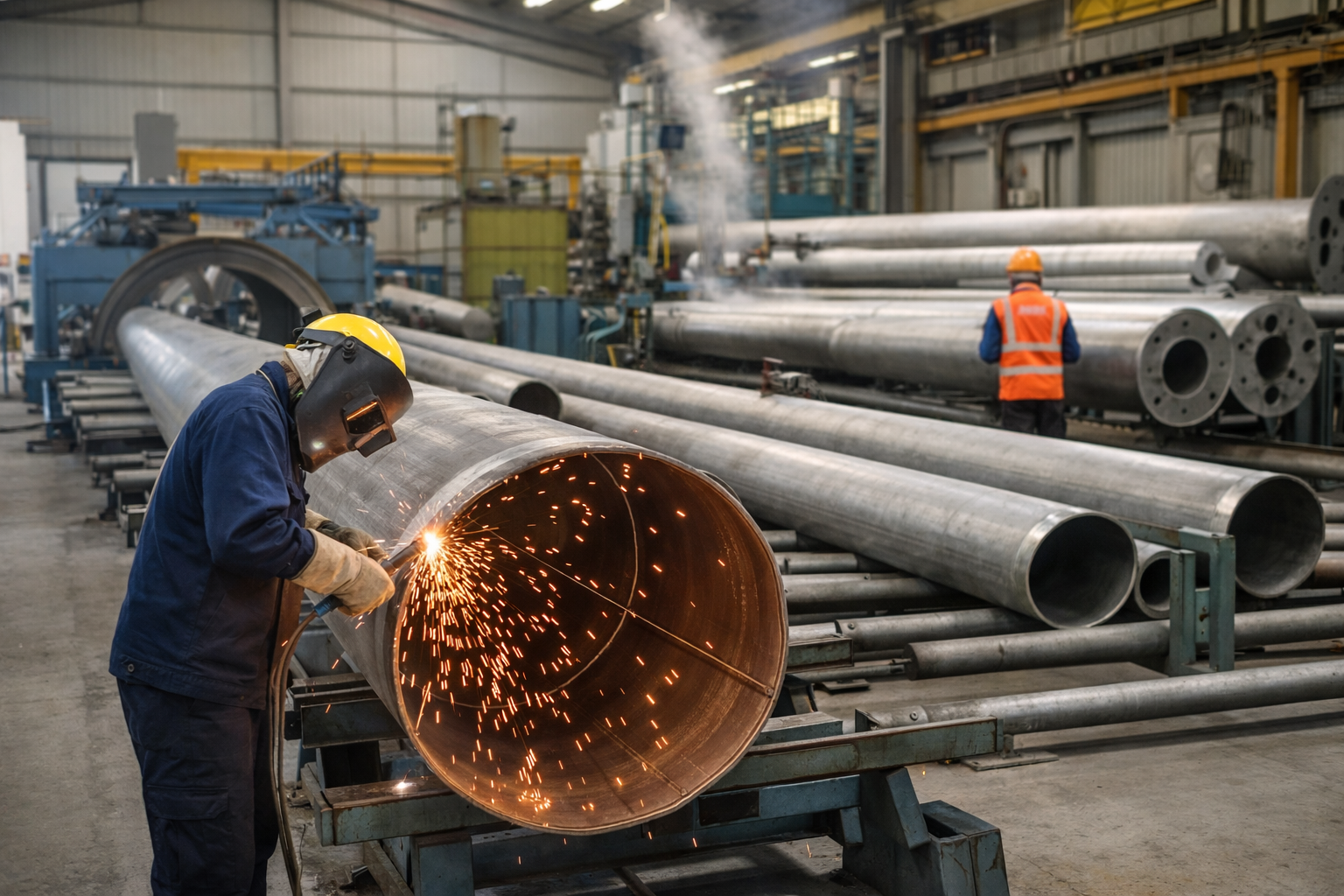
Electric poles are crucial for the infrastructure that supports our modern electrical and communication systems. The manufacturing process of these poles requires precision, expertise, and state-of-the-art equipment. In this blog, we will walk you through the detailed process of manufacturing electric poles at Muspana, focusing on each step from raw material preparation to final inspection and delivery.
1. Raw Materials
The first step in the manufacturing of electric poles is selecting the right materials. The key raw materials required for making electric poles include:
Steel Sheets: The main structural material for the pole.
Welding Rods/Wires: For the welding process.
Zinc: Used for galvanization to protect the pole from corrosion.
Base Plates: The foundation of the pole, providing stability.
Anchor Bolts: For securing the pole to the ground.
Paint/Coating Materials: For surface protection and aesthetics.
2. Machinery & Equipment
To handle the raw materials and form them into finished poles, various machines and tools are used. These include:
Shearing Machine: Cuts steel sheets into required sizes.
Hydraulic Press/Bending Machine: Used for bending the steel into the desired shape.
Welding Machines: To weld the seams of the steel sheets.
Galvanizing Plant: For hot-dip galvanization.
Straightening Machine: To correct any deformation.
Powder Coating Unit: For painting the poles.
Crane/Material Handling Equipment: For moving heavy materials during the process.
3. Raw Material Preparation
The first step in processing the steel sheets is to prepare them for shaping. This includes:
Cutting the Sheets: Steel sheets are cut to the required size using plasma cutting, shearing, or laser cutting techniques. Precision is key in this step to ensure that each sheet is accurate for further processing.
4. Plate Bending
Once the sheets are cut, the next step is to shape them into the desired form. This involves:
Marking: Marking the lines and areas for bending.
Rolling: Using a rolling machine to bend the sheets into the desired curvature.
Check Roundness: Ensuring the poles maintain their proper circular shape to meet design specifications.
5. Longitudinal Welding
Once the steel plates are bent, they are joined together using a continuous welding process. This involves:
Setting the Plate: The plate is set to the specified dimension.
Welding: Internal or external continuous welding is performed along the seam to bind the plates together.
Weld Quality Inspection: Ensuring the quality of the welds to maintain structural integrity.
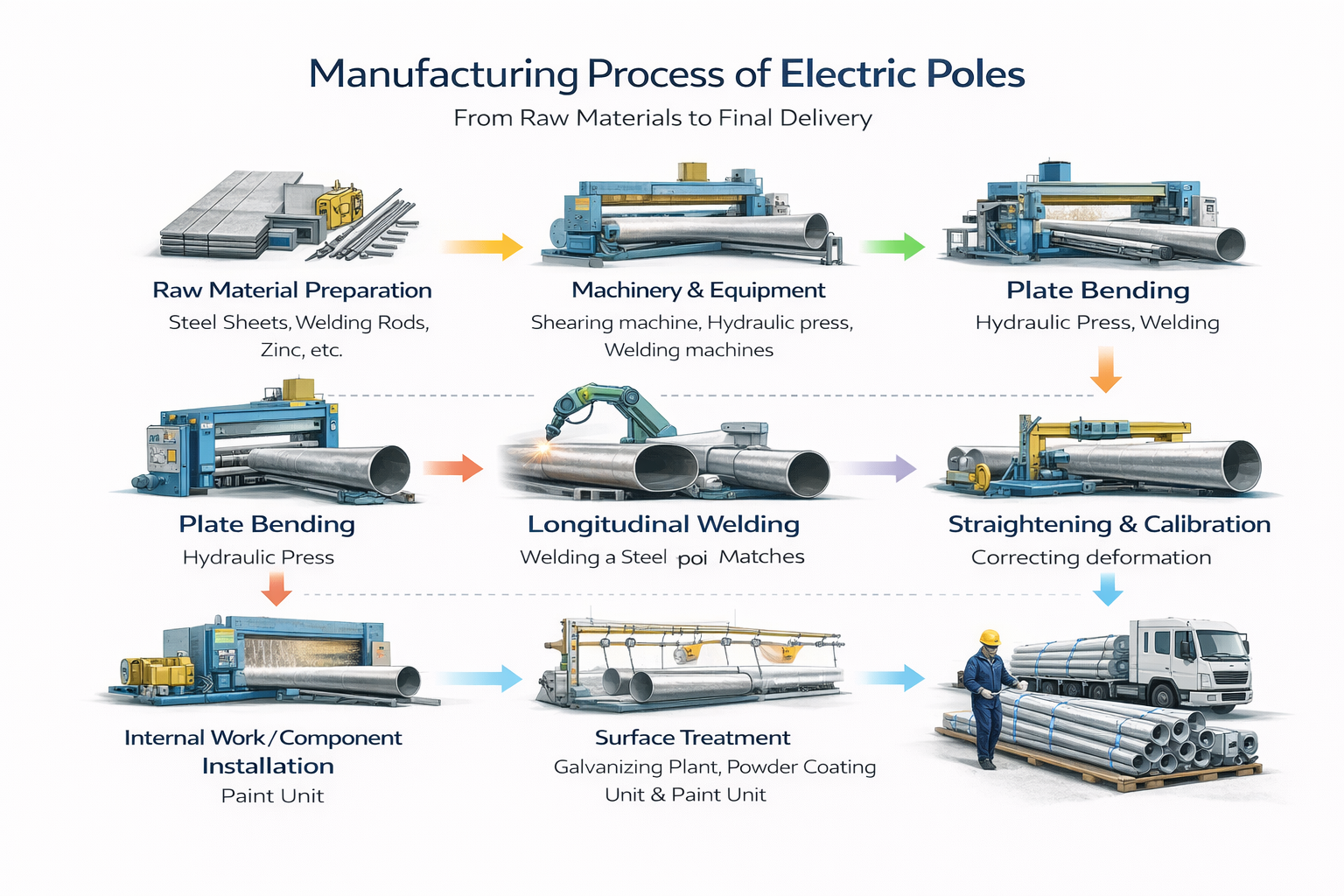
6. Straightening & Calibration
After welding, the poles may experience slight deformation. This step involves:
Hydraulic Straightening: Using hydraulic machines to correct any deformation, ensuring that the poles are perfectly round and tapered.
7. Internal Work/Component Installation
At this stage, the internal components of the pole are added, which includes:
Cutting Hand-Hole (Service Door): A service door is cut into the pole to allow maintenance and inspection.
Base Plate Welding: The base plate is welded to the pole for stability.
Stiffener Welding: Additional stiffeners are welded to improve the pole’s strength.
Grinding & Finishing: Smoothening and finishing the pole to ensure surface quality.
8. Surface Treatment
The next critical step is surface treatment to ensure the pole is durable and resistant to corrosion. The key steps include:
Hot-Dip Galvanization:
- Degreasing
- Pickling
- Rinsing
- Zinc Dipping
- Cooling & Inspection
In some cases, poles are further treated with powder coating or liquid painting for added protection and aesthetics.
9. Final Inspection
Before the poles are packed and delivered, they go through a rigorous final inspection process to verify that they meet all quality standards:
Dimensional Verification: Ensuring the height, diameter, and thickness meet specifications.
Welding Inspection: Checking the quality of welds.
Coating Thickness: Ensuring the correct thickness of zinc or paint coatings.
Visual Inspection: For any defects on the surface or structural issues.
10. Packing & Delivery
Once the poles have passed final inspection, they are prepared for delivery:
Protective Wrapping: Poles are wrapped with materials like plastic film, fabric, or bubble wrap to protect them during transport.
Bundling: Poles are bundled together for easy transport.
Documentation: All necessary documents, including QC reports, galvanization certificates, and challans, are prepared for delivery.
Conclusion
The manufacturing process of electric poles involves various steps, from raw material preparation to final delivery. At Muspana, we take pride in using high-quality materials, advanced machinery, and skilled craftsmanship to produce poles that are not only strong and reliable but also resistant to environmental factors. Whether for residential, commercial, or industrial applications, Muspana’s electric poles ensure safety, reliability, and longevity.