

By Md. Majedur Rahman, Senior Engineer (Muspana)
A motion sensor is an electronic device designed to detect physical movement within a defined area and convert it into an electrical signal. These devices play a crucial role in modern security systems, automated lighting, and smart home solutions, making everyday environments safer, more efficient, and more responsive.
The core function of a motion sensor is to identify changes in its surroundings. These changes may include variations in infrared radiation, sound waves, or microwave signals. When a person or object enters the sensor’s detection range, the sensor recognizes the change and triggers a predefined action. This action may include activating an alarm, switching on lights, opening doors, or initiating other automated responses.
Types of Motion Sensors
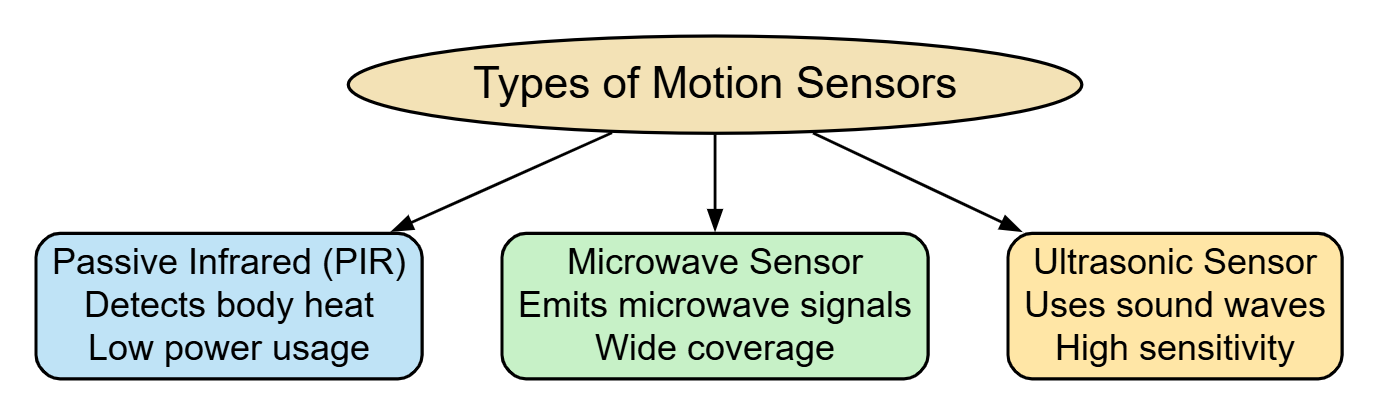
There are primarily three commonly used types of motion sensors:
Passive Infrared (PIR) Sensors
PIR sensors are the most widely used motion sensors. They detect movement by sensing infrared radiation or heat emitted by objects. When a warm body, such as a human, enters the sensor’s field of view, a sudden change in temperature is detected, triggering the sensor.
Microwave Sensors
Microwave sensors emit microwave signals and analyze the reflected waves. Any movement within the coverage area alters the reflected signal, which the sensor detects. These sensors offer a wider detection range but may consume more power.
Ultrasonic Sensors
Ultrasonic sensors emit high-frequency sound waves that reflect off nearby objects. By measuring the time it takes for the sound waves to return, the sensor determines movement or changes in position.
Applications and Benefits of Motion Sensors
Motion sensors are widely used across residential, commercial, and industrial environments.
In security systems, motion sensors help detect unauthorized entry in homes and commercial facilities and are often integrated with alarm and surveillance systems.
In automated lighting, sensors turn lights on when someone enters a space and switch them off when the area is vacant, significantly reducing electricity consumption.
In automatic doors and gates, such as those in shopping malls and office buildings, motion sensors enable hands-free access.
In building energy management, motion sensors regulate heating, cooling, and ventilation systems based on occupancy, improving overall energy efficiency.
Conclusion
In simple terms, motion sensors make everyday life more convenient, secure, and energy efficient. By enabling automation and intelligent control, they have become an essential component of modern smart living and sustainable infrastructure.