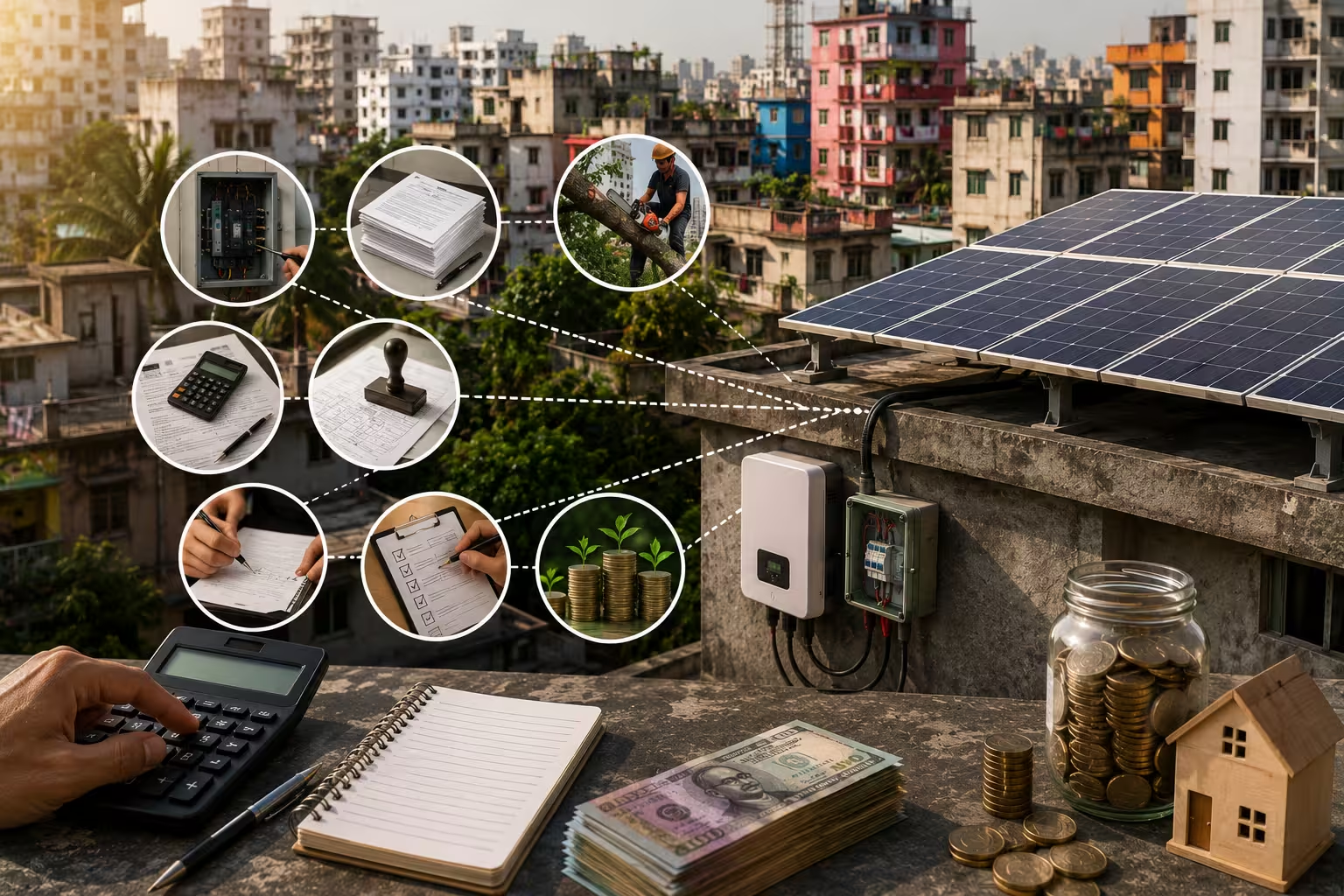
You receive a solar quotation for:
৳6,00,000
Looks simple enough.
The panels are listed.
The inverter is listed.
Installation is included.
You think:
“Great. ৳6 lakh is my total solar cost.”
Not always.
A solar quotation can show the main equipment while leaving several additional costs outside the headline price.
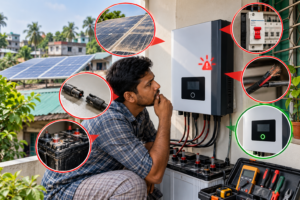
You may later discover that you need:
- Electrical upgrades
- Additional wiring
- Structural work
- Permits or approval-related costs
- Net-metering work
- Roof preparation
- Battery storage
- Inverter replacement
- Insurance
- Maintenance
None of these necessarily means your installer is doing something wrong.
The problem is that many buyers look only at the panel + inverter + installation price and don’t ask what else may be required.
So before you decide whether solar is affordable for your home or business in Bangladesh, look beyond the first number on the quotation.
What Are the Hidden Costs of Going Solar?
Hidden solar costs are expenses that may not be obvious when you first receive a quotation.
Some occur before installation.
Others appear during installation.
And some arrive years after the system has been installed.
The attached source identifies several important categories, including electrical upgrades, permitting/interconnection, financing costs, inverter replacement, insurance, property-related costs and battery storage.
For Bangladesh, the exact cost of each item depends on the property, system size, location, equipment and installer.
Let’s look at the nine costs you should check before signing a solar contract.
1. Electrical Panel and Wiring Upgrades
One of the easiest costs to overlook is your existing electrical infrastructure.
You may have enough roof space for solar.
You may have a suitable inverter.
But your existing electrical system may not be ready for the new installation.
Depending on the property, you may need:
- Electrical panel upgrades
- New distribution boards
- Additional breakers
- AC/DC protection
- Earthing improvements
- Cable upgrades
- Additional conduits
- Rewiring
- Surge protection
This is particularly important for older buildings.
Why Does This Matter?
Imagine your solar quotation says:
Solar system = ৳5,50,000
After the site inspection, the installer discovers that your existing electrical panel needs modification.
Now you have an additional:
৳30,000–৳80,000
or potentially more, depending on the work.
Your actual project cost is no longer ৳5.5 lakh.
It could be:
৳5.8–৳6.3 lakh
The exact amount depends entirely on the property’s existing electrical system.
Ask Your Installer
Before signing, ask:
“Is my existing electrical system ready for this solar installation, or will I need any upgrade?”
Get the answer in writing.
2. Roof Repair and Structural Work
Solar panels can last for decades.
Your roof may not.
If your roof needs repair soon, installing solar first can create an expensive problem later.
Imagine installing:
৳7 lakh solar system
and then discovering two years later that major roof work is required.
You may have to:
- Remove the panels
- Store the equipment
- Repair the roof
- Reinstall the system
That creates additional labour and potential downtime.
Check Your Roof Before Installing Solar
Look for:
- Cracks
- Water leakage
- Weak areas
- Corrosion
- Old waterproofing
- Structural problems
- Rooftop modifications
For larger commercial systems, a structural assessment can be particularly important.
Don’t Forget Mounting Structure
The mounting structure also needs to be suitable for:
- Roof type
- Panel weight
- Wind exposure
- Corrosion
- Long-term weather conditions
A cheap mounting structure can become an expensive problem later.
3. Permits, Approvals and Grid Connection Costs
A solar system connected to the electricity grid isn’t simply a matter of installing panels and switching them on.
Depending on the project and applicable requirements, you may need:
- Electrical approvals
- Utility coordination
- Net-metering application
- Inspection
- Meter-related work
- Documentation
- Connection-related services
The exact process and cost can vary depending on your location, utility and system type.
Net Metering Can Add Work
If you’re installing an on-grid system and want to export surplus electricity to the grid, the applicable net-metering process needs to be considered.
Ask your installer:
“Does your quotation include all work related to the net-metering application and installation, or are there additional charges?”
This single question can prevent an unexpected cost later.
4. Additional Electrical and Cable Costs
Your quotation may say:
Installation included.
But what exactly does “installation” include?
Sometimes the distance between the solar panels, inverter and main electrical distribution point is greater than expected.
That can increase the requirement for:
- DC cable
- AC cable
- Conduit
- Cable tray
- Protection equipment
- Earthing
- Labour
For a large factory or commercial building, the cable run can be significant.
Example
Suppose your inverter needs to be installed far away from the main electrical panel.
You may need:
More cable + more conduit + more labour
The additional cost can be substantial compared with a simple rooftop installation.
So ask for the complete bill of materials before approving the quotation.
5. Financing and Loan Costs
A solar system can look affordable when the salesperson presents only a monthly payment.
For example:
“Only ৳15,000 per month!”
That sounds attractive.
But what is the total amount you will actually pay?
If you finance the system, consider:
- Interest rate
- Processing fees
- Documentation fees
- Down payment
- Loan tenure
- Early repayment charges
- Total interest
Example
Suppose your solar system costs:
৳6,00,000
But after financing costs, your total repayment becomes:
৳7,80,000
Your solar investment isn’t really ৳6 lakh from a cash-flow perspective.
It is:
৳7.8 lakh
for the financed purchase.
This matters when calculating your actual solar payback period.
6. Battery Storage Is Often an Extra
This is one of the biggest misunderstandings about solar.
Someone says:
“I want solar so my electricity stays on during power outages.”
Then they receive an ordinary on-grid solar quotation.
But a basic grid-tied solar system generally isn’t designed to provide backup electricity when the grid is unavailable.
If you want backup power, you may need:
Battery + suitable inverter/hybrid system
And that can significantly increase the project cost.
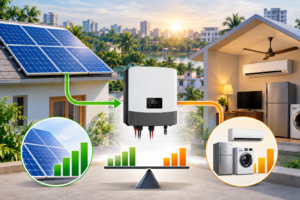
On-Grid Solar
Usually:
Solar + Grid
Battery may not be required.
Hybrid Solar
Usually:
Solar + Grid + Battery
Battery provides backup and energy-storage capability.
Off-Grid Solar
Usually:
Solar + Battery + Inverter
The battery becomes a major part of the system.
Ask Before Comparing Quotes
Ask:
“Does this quotation include battery storage?”
If the answer is no, ask:
“How much would the complete backup system cost?”
Don’t compare a ৳5 lakh on-grid quotation with a ৳10 lakh hybrid quotation and conclude that one installer is more expensive.
They may be quoting completely different systems.
7. Inverter Replacement
Solar panels are designed to operate for many years.
The inverter may have a shorter service life.
This means your initial solar quotation isn’t necessarily the last major equipment expense you’ll ever have.
Depending on the equipment and warranty, you may eventually need to:
- Repair the inverter
- Replace the inverter
- Upgrade the inverter
The attached source specifically identifies inverter replacement as an important mid-life solar cost.
Why This Matters for ROI
Suppose your solar system costs:
৳6,00,000
and you calculate a simple payback of:
7 years
If you later need a significant inverter replacement, that cost should be included in your long-term financial model.
Otherwise, your lifetime ROI may look better on paper than it actually is.
Ask About Warranty
Before buying, ask:
- How long is the inverter warranty?
- Does the warranty cover parts?
- Does it cover labour?
- What happens after the warranty expires?
- Is local technical support available?
Parts warranty and labour warranty are not always the same thing.
8. Insurance and Property-Related Costs
A solar system is a valuable addition to your property.
If you already have property insurance, inform your insurer about the installation and ask how the system will be treated under your policy.
Depending on the policy, you may need to review:
- Coverage limit
- Fire protection
- Lightning
- Storm damage
- Theft
- Physical damage
- Battery coverage
The attached source also highlights insurance as an ongoing cost that can change after adding a solar installation.
Don’t Wait Until Something Goes Wrong
If you install:
৳8 lakh solar system
and never tell your insurer, don’t assume that the full ৳8 lakh will automatically be covered if something happens.
Ask before installation:
“Is my solar system covered under my existing property insurance, and what additional premium or endorsement is required?”
9. Maintenance, Cleaning and Performance Costs
Solar panels don’t require the same level of maintenance as many mechanical systems, but they aren’t completely maintenance-free.
Over the years you may need:
- Panel cleaning
- Electrical inspection
- Cable inspection
- Mounting inspection
- Inverter servicing
- Protection-device inspection
- Monitoring
- Repairs
Bangladesh Weather Makes Cleaning Important
Dust, pollution, bird droppings and other rooftop debris can accumulate on panels.
During dry periods, dirty panels can reduce energy production.
During the rainy season, natural cleaning may help, but it doesn’t necessarily eliminate the need for inspection and maintenance.
Commercial Systems Need More Attention
A small home system may be relatively simple to maintain.
A large factory or commercial rooftop system can involve:
- Hundreds of panels
- Multiple inverters
- Long cable runs
- Large mounting structures
- More complex protection systems
The larger the installation, the more important planned maintenance becomes.
The 9 Hidden Solar Costs at a Glance
| Hidden Cost | When It Can Appear | Why It Matters |
|---|---|---|
| Electrical upgrades | Before/during installation | Existing system may not support the new solar setup |
| Roof repair | Before/during/after installation | Removing panels later can be expensive |
| Permits & approvals | Before installation | Grid connection and net-metering may require additional work |
| Extra cables & electrical work | During installation | Long cable runs can increase material and labour costs |
| Financing costs | During purchase | Interest and fees increase total project cost |
| Battery storage | During system selection | Required for backup/hybrid/off-grid applications |
| Inverter replacement | Later | Inverter may not last as long as the panels |
| Insurance | After installation | Additional equipment value may require coverage changes |
| Cleaning & maintenance | Ongoing | Helps protect system performance and equipment |
The Biggest Mistake: Comparing Only the Solar Quote
Suppose you receive three quotations:
Installer A
৳5,50,000
Installer B
৳6,20,000
Installer C
৳6,80,000
It is tempting to choose Installer A immediately.
But what if:
Installer A excludes electrical upgrades
Installer A excludes net-metering-related work
Installer A uses lower-cost mounting
Installer A doesn’t include monitoring
Installer A excludes some installation materials
while Installer C includes everything?
Suddenly, the cheapest quotation may not actually be the cheapest project.
Ask for a Complete Turnkey Price
A better question is:
“What is the total amount I will pay from the beginning of the project until the system is fully operational?”
Ask the installer to clearly identify:
- Solar panels
- Inverter
- Mounting structure
- DC cable
- AC cable
- Protection
- Earthing
- Installation
- Transportation
- Roof work
- Electrical upgrades
- Approvals
- Net-metering work
- Testing
- Commissioning
Then you can compare quotations properly.
Don’t Forget the Roof
Roof condition is particularly important for rooftop solar.
If your roof is already old or needs major waterproofing, you may want to complete those repairs before installing the panels.
Otherwise, you may face:
Solar installation
↓
Roof problem develops
↓
Panels must be removed
↓
Roof repaired
↓
Panels reinstalled
That’s an unnecessary additional expense.
Don’t Forget Shading
Trees and nearby buildings can also create an indirect cost.
Suppose a tree blocks sunlight from a significant portion of your panels.
Your installer may recommend:
- Tree trimming
- Tree removal
- Panel relocation
- Different panel layout
If tree work is required, include that cost in the project budget.
The attached source identifies tree removal for shade clearance as one of the commonly overlooked pre-installation costs.
In Bangladesh, the situation may involve trees, neighbouring buildings, water tanks, stair rooms and other rooftop structures rather than the large trees commonly referenced in overseas examples.
What About Solar Panel Cleaning?
Cleaning costs depend on the installation.
A rooftop system near:
- Roads
- Construction areas
- Industrial zones
- Dusty environments
may accumulate dirt faster.
For a small home system, occasional cleaning may be manageable yourself if safely accessible.
For a large commercial installation, professional cleaning may be preferable.
When calculating long-term solar savings, don’t assume:
Maintenance = ৳0
A small annual maintenance budget is more realistic.
What About Monitoring?
Modern solar systems may include monitoring through:
- Inverter apps
- Wi-Fi
- Web dashboards
- Remote monitoring
Some systems include monitoring as standard.
Others may require additional equipment or internet connectivity.
Monitoring is particularly valuable for commercial installations because it can help identify:
- Low-performing strings
- Inverter faults
- Unexpected production drops
- Communication failures
Ask whether monitoring is included in your quotation.
What About Spare Parts?
Another cost that doesn’t always appear in the initial quotation is future replacement of smaller components.
Depending on the system, these could include:
- Fuses
- Breakers
- Surge protection devices
- Connectors
- Fans
- Communication devices
- Cables
- Sensors
Not every component will fail.
But a realistic long-term solar budget should leave room for maintenance and occasional replacement.
What About Battery Replacement?
If you install a battery system, don’t calculate only the initial battery price.
Ask:
“How long is the expected battery life?”
and:
“What will replacement cost?”
For example:
Solar + Battery = ৳12,00,000
If the battery eventually requires replacement, the long-term cost of the system will be higher than the initial ৳12 lakh investment.
This is especially important when comparing:
On-grid vs Hybrid vs Off-grid
because battery storage can significantly change the economics.
One-Time Costs vs Ongoing Costs
One-Time or Pre-Installation Costs
- Electrical upgrades
- Roof repairs
- Structural work
- Approvals
- Net-metering-related work
- Additional cables
- Tree/shade work
- Battery installation
- Financing fees
Ongoing or Future Costs
- Panel cleaning
- Maintenance
- Monitoring
- Repairs
- Insurance
- Inverter replacement
- Battery replacement
- Equipment upgrades
This distinction is useful when calculating your real solar payback.
A Real Bangladesh Example
Let’s say a homeowner receives this quotation:
Solar panels + inverter + installation = ৳6,00,000
At first glance:
Total = ৳6 lakh
But then you discover:
Electrical upgrade
৳40,000
Additional roof/electrical work
৳25,000
Net-metering-related work
৳15,000
Monitoring/other equipment
৳10,000
Now your actual initial investment becomes:
৳6,90,000
That’s nearly:
৳90,000 more
than the original headline quotation.
Now imagine financing costs and future maintenance are added.
The real lifetime cost becomes even higher.
This is why the correct question isn’t:
“How much are the solar panels?”
It is:
“How much will this complete solar project cost me?”
How to Calculate Your Real Solar Cost
Use this simple formula:
Real Initial Cost = Solar Equipment + Installation + Electrical Work + Structural Work + Approvals + Other Required Costs
Then for long-term planning:
Lifetime Solar Cost = Initial Cost + Financing + Maintenance + Repairs + Inverter Replacement + Battery Replacement
Not every project will have every cost.
But checking each category prevents surprises.
Questions to Ask Your Solar Installer
Before signing the quotation, ask these questions.
Electrical
Is my existing electrical panel suitable for this system?
Will I need additional wiring or protection equipment?
Roof
Does my roof need any repair before installation?
Is structural assessment included?
Approvals
Are permits and required approvals included?
Is net-metering application/installation included?
Equipment
What exactly is included in the quoted price?
Is monitoring included?
Battery
Does the quote include a battery?
If not, how much will a suitable battery system cost?
Financing
What is the cash price?
What is the total amount payable if I finance it?
Are there any processing or financing fees?
Maintenance
What maintenance is included?
How much should I budget annually after the warranty period?
Warranty
What are the panel, inverter and installation warranties?
Does the warranty cover labour?
Questions to Ask Before Signing a Solar Loan
If you’re financing your system, don’t ask only:
“What’s the monthly payment?”
Ask:
“What’s the total repayment?”
Then ask:
- Interest rate?
- Loan term?
- Processing fee?
- Early repayment fee?
- Other charges?
- Cash price?
- Total financed amount?
A low monthly payment can still result in a high total cost if the loan runs for many years.
Questions to Ask About a Solar PPA or Lease
If you are considering a PPA or lease instead of buying the system, investigate:
- Starting electricity rate
- Annual price escalation
- Contract length
- Cancellation cost
- Transfer cost
- Buyout price
- Maintenance responsibility
- Equipment ownership
- End-of-contract arrangements
The attached source specifically identifies lease/PPA escalators and cancellation or transfer fees as costs that buyers can overlook.
Don’t Assume the Biggest Solar System Is the Best
Another hidden cost can come from oversizing the system.
Suppose your property only needs a certain amount of electricity but you install a much larger system without a clear reason.
You may spend more on:
- Panels
- Inverter
- Structure
- Installation
- Electrical infrastructure
without receiving proportionally greater financial benefits.
System sizing should be based on:
- Actual electricity consumption
- Future load
- Roof space
- Solar resource
- Self-consumption
- Net-metering arrangements
- Budget
Don’t Assume the Cheapest System Is the Best
The opposite mistake is also common.
A very cheap solar quotation may use:
- Lower-quality equipment
- Smaller protection system
- Basic mounting
- Limited warranty
- Minimal installation work
The system may still work, but the long-term risk can be higher.
Compare:
Price + quality + warranty + expected generation + long-term cost
rather than price alone.
What About Equipment Warranty?
Warranty is not a hidden cost, but what happens after the warranty ends can be.
Ask:
Solar Panel
- Product warranty?
- Performance warranty?
Inverter
- Warranty duration?
- Parts coverage?
- Labour coverage?
Battery
- Cycle life?
- Warranty?
- Replacement terms?
Installation
- Workmanship warranty?
- Waterproofing responsibility?
A cheap system with a weak warranty can become expensive later.
The True Cost of Solar Is More Than the Quote
Let’s say your quotation says:
৳6,00,000
Your real project budget might look like:
Initial system: ৳6,00,000
Electrical work: +৳40,000
Additional installation: +৳25,000
Approvals/connection-related costs: +৳15,000
Financing cost: +৳80,000
Maintenance over system life: +৳50,000+
Future inverter replacement: +৳1,00,000+
Now the lifetime economics look very different from simply saying:
“My solar system costs ৳6 lakh.”
These numbers are only an illustrative example. Actual Bangladesh project costs vary significantly by system size, equipment, property and installer.
Does Solar Still Make Financial Sense?
Yes, solar can still be financially attractive.
But you should calculate the economics using the real project cost, not only the headline quotation.
Compare:
Total Solar Cost
against:
Expected Lifetime Electricity Savings
Then consider:
- Electricity tariff
- Solar generation
- Net metering
- System degradation
- Maintenance
- Financing
- Inverter replacement
- Battery replacement
This gives you a much more realistic payback and ROI calculation.
Frequently Asked Questions
What are the hidden costs of solar panels?
Common hidden or overlooked costs can include electrical upgrades, roof repairs, approvals, additional wiring, financing charges, battery storage, maintenance, inverter replacement and insurance-related costs.
Does a solar quote include everything?
Not always. Some quotations are comprehensive turnkey proposals, while others may exclude certain electrical, structural, approval or optional equipment costs. Always ask for a detailed scope of work.
Does solar require a battery?
No. A standard grid-connected solar system can operate without a battery. A battery becomes important when you want backup power, energy storage or an off-grid/hybrid system.
How much does a solar battery cost in Bangladesh?
There is no single price because battery cost depends on capacity, chemistry, brand, warranty and system configuration. Ask for a separate battery quotation rather than assuming it is included in the solar price.
Will I need to upgrade my electrical panel?
Not necessarily. It depends on your existing electrical infrastructure and the proposed solar system. A site inspection should determine whether upgrades are required.
Do I need to repair my roof before installing solar?
If the roof has significant leakage, structural problems or is approaching major renovation, repairing it before installing solar can prevent the cost of removing and reinstalling the panels later.
Does net metering cost extra?
The applicable process, equipment and service requirements depend on the project and utility. Ask your installer exactly which net-metering-related work is included in the quotation and which costs are separate.
How often does a solar inverter need replacement?
The actual service life depends on the inverter type, brand, environment and operating conditions. For long-term financial planning, you should account for the possibility of inverter replacement during the solar system’s lifetime.
Does solar require regular maintenance?
Solar systems generally require relatively low maintenance, but periodic inspection and cleaning can help maintain performance and identify electrical or structural problems.
Will solar increase my insurance cost?
It may. A solar installation adds valuable equipment to your property, so you should inform your insurer and ask whether the coverage limit or premium needs to change.
What is the biggest hidden cost in solar?
There isn’t one universal hidden cost. For some projects it may be electrical upgrades; for others, batteries, roof work, financing or future equipment replacement can have a much bigger impact.
How can I avoid hidden solar costs?
Ask for a complete turnkey quotation and confirm in writing whether it includes:
- Equipment
- Installation
- Electrical work
- Structure
- Protection
- Approvals
- Net-metering work
- Testing
- Commissioning
- Monitoring
- Warranty
Then separately budget for long-term maintenance and potential component replacement.
What should I compare between solar quotations?
Don’t compare only the total price.
Compare:
System capacity
Expected annual generation
Equipment quality
Installation scope
Warranty
Net-metering support
Maintenance
Financing
Battery inclusion
Total long-term cost
That’s how you find the solar quotation that actually gives you the best value.
Final Verdict
Solar panels are not necessarily expensive because the panels themselves are expensive.
The real cost comes from the complete system and everything required to install, operate and maintain it.
Before you sign a quotation, check these nine hidden-cost categories:
- Electrical upgrades
- Roof repair and structural work
- Permits, approvals and grid connection
- Additional cables and electrical work
- Financing costs
- Battery storage
- Inverter replacement
- Insurance
- Cleaning and maintenance
Not every project will require all nine.
But every solar buyer should at least ask about all nine.
At Muspana, we recommend comparing solar quotations based on the complete project cost, not just the number printed at the top of the proposal.
Before signing, ask your installer:
“Is this the final turnkey price, or are there any additional costs I should budget for?”
Then get the answer in writing.
Because the cheapest solar quotation isn’t necessarily the cheapest solar system.
The best solar investment is the one where you understand the full cost before you sign—not after the extra bills start arriving.