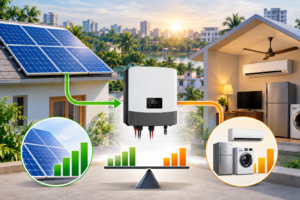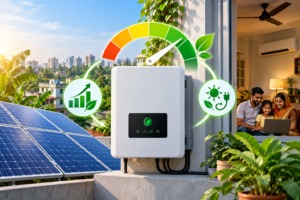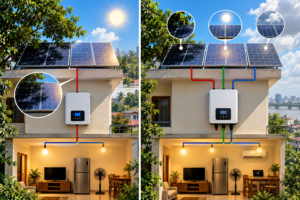
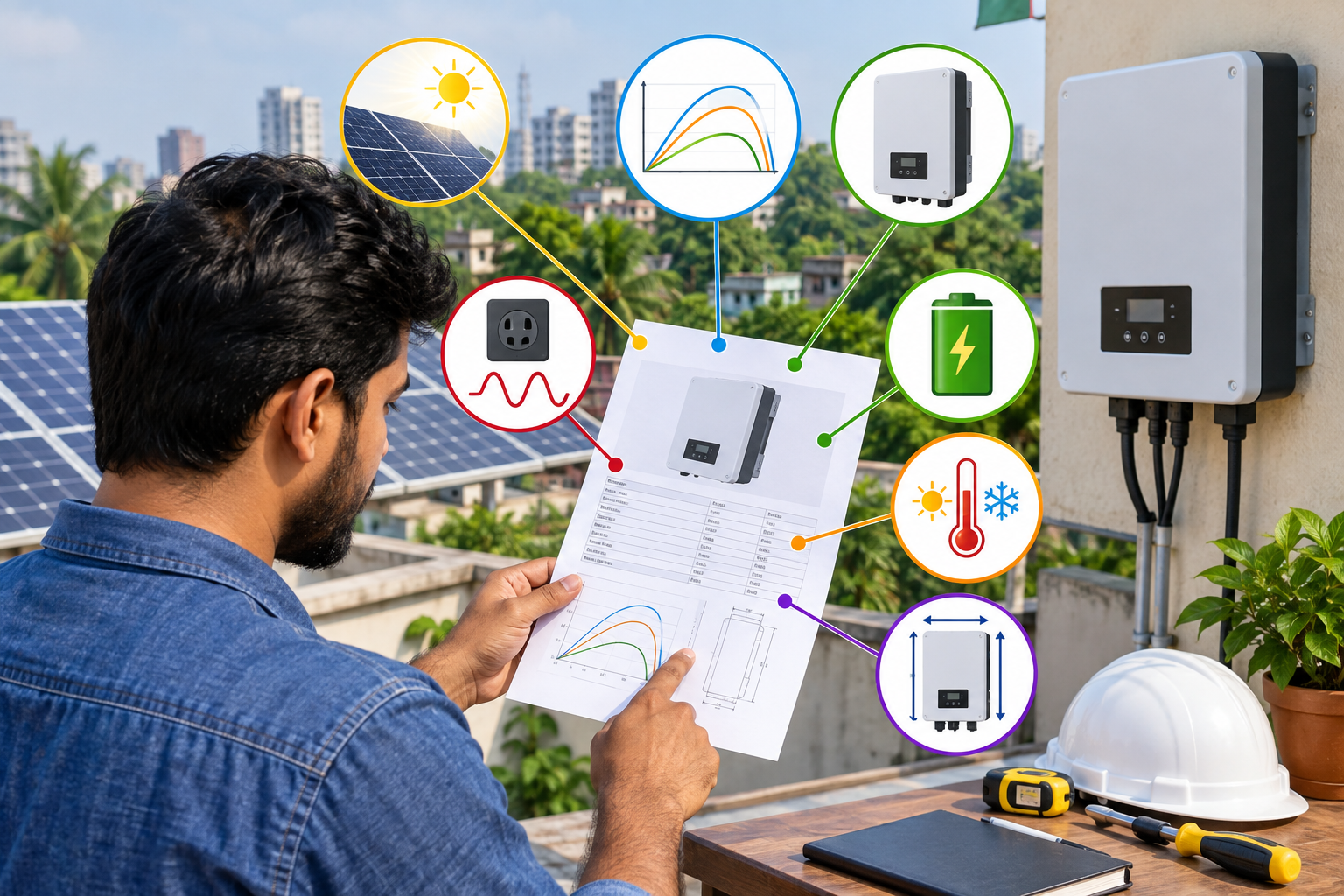
Somewhere between the sales pitch and the signature, most solar buyers get handed a datasheet full of numbers they’ve never seen before — Voc, MPPT range, THD, weighted efficiency — and asked to trust that everything checks out. Most people don’t. They nod, sign, and hope the installer knew what they were doing.
Sometimes the installer did. Sometimes the inverter is quietly mismatched to the panels, or missing a certification that later blocks a net metering application with the local distribution company. By then it’s an expensive problem to fix. A datasheet isn’t marketing material — it’s the one document that tells you, in advance, whether an inverter will actually do its job in Bangladesh’s climate and grid conditions.
You don’t need an electrical engineering degree to read one. You need to know which numbers are safety limits, which ones affect how much electricity you’ll actually generate, and which ones determine whether your system gets approved at all.
If you only check three things
- MPPT voltage range — does it match your panel string’s voltage under real conditions, not just ideal ones?
- AC output voltage and frequency — does it match the local grid standard (single-phase ~220V or three-phase ~400V, 50Hz)?
- Certification and grid-compliance features — is it on Bangladesh’s approved equipment list, and does it include anti-islanding protection?
Everything else on the sheet either fine-tunes performance or protects the system from failure. Here’s what each section actually tells you.
Input Specifications: what the inverter can safely accept from your panels
Maximum DC Input Voltage is a hard safety ceiling, not a target. It’s the highest voltage the inverter can handle without damage. The number that matters here is your solar string’s open-circuit voltage (Voc) at the coldest temperature the site will realistically see — panel voltage rises as temperature drops, so a string sized correctly on a warm afternoon can exceed the inverter’s limit on a cool winter morning. In most of Bangladesh, temperature swings are modest compared to colder climates, but installers still need to run this calculation rather than eyeball it.
MPPT Voltage Range is the window in which the inverter can actually track and extract maximum power from your panels. If your string’s operating voltage regularly drifts outside this range — because of shading, temperature, or an under-designed string — you lose generation even though nothing is “broken.” This is one of the more common quiet inefficiencies in poorly designed rooftop systems.
Start-up Voltage is the minimum voltage needed to wake the inverter up in the first place. If it’s set too high, the inverter simply won’t switch on until the sun is well up — which means low-light generation, on a cloudy monsoon morning for instance, is lost by default rather than by any fault in the panels.
Maximum DC Input Current protects the inverter from an oversized or miswired panel string pushing more current than it’s rated for. Exceeding it isn’t a performance issue — it’s a safety and longevity one.
Output Specifications: what the inverter delivers to your grid or loads
Nominal AC Output Power is the continuous power rating — effectively, the inverter’s real capacity. Peak or surge power is different: it’s the short burst the inverter can handle when something like a motor or compressor starts up and briefly demands more than its steady-state draw. This distinction matters more for industrial buyers running pumps, compressors, or heavy machinery than for a typical home.
AC Output Voltage Range and Frequency need to match the local grid, not a generic international default. Bangladesh’s grid standard is 50Hz, with roughly 220V for single-phase residential connections and 400V for three-phase industrial/commercial connections. An inverter configured for a different regional standard won’t integrate cleanly — this is a basic compatibility check, not a fine detail.
Power Factor reflects how efficiently the inverter handles reactive loads, which matters more in industrial settings with motors and inductive equipment than in a typical home.
Total Harmonic Distortion (THD) measures how “clean” the power output is. Industry practice generally expects THD below roughly 3% for grid-compliant, low-distortion output — high THD can interfere with sensitive equipment and, more importantly for a Bangladesh-based buyer, is one of the technical requirements distribution companies (BPDB, BREB, DESCO, DPDC, and others) check before approving a grid-tied or net-metered connection. This exact threshold should be confirmed against current relevant grid interconnection requirements rather than treated as universal — but the underlying point stands: a non-compliant inverter can hold up your net metering approval regardless of how well it performs technically.
Efficiency and Environmental Ratings: real-world performance, not lab conditions
Weighted Efficiency (often labeled Euro or CEC efficiency) is a far more honest number than Peak Efficiency. Peak efficiency is the best-case number measured under ideal lab conditions; weighted efficiency accounts for how the inverter performs across a realistic mix of output levels through an actual day — which is closer to what you’ll experience. When comparing two inverters, weighted efficiency is the number worth comparing, not the flashier peak figure on the front of the brochure.
Temperature Derating curves show how much power the inverter loses once ambient temperature crosses a certain threshold — commonly cited in the 40–45°C range, though this varies by manufacturer and should be checked on the specific datasheet rather than assumed. This is genuinely more relevant in Bangladesh than in cooler markets: summer rooftop and enclosure temperatures here can sit close to, or exceed, that range for extended periods, particularly for inverters mounted in direct sun or poorly ventilated spaces. An inverter with a steep derating curve will quietly underperform during exactly the months when solar generation potential is highest.
Certifications (commonly referenced as BIS or IEC standards internationally) confirm safety and manufacturing quality. For a Bangladesh installation, the more practically important checkpoint is whether the inverter model appears on SREDA’s approved equipment list — since that’s the actual gatekeeper for net metering eligibility here, not a foreign certification mark on its own. It’s worth asking your supplier directly whether a specific model is currently SREDA-approved, since this list is maintained and updated by the authority rather than being a fixed, permanent status.
Nighttime Power Consumption is a small but real detail — inverters draw a trickle of power even when idle overnight. It doesn’t change your buying decision on its own, but it’s a fair question to ask when comparing near-identical models.
Protection and Monitoring: what keeps the system safe and usable long-term
Battery Under/Over Voltage protection, relevant mainly for hybrid systems with batteries, prevents damage from charging or discharging outside safe limits.
Anti-islanding protection automatically disconnects the inverter from the grid during a power outage, so it doesn’t keep feeding electricity into lines that utility workers may be repairing. This is a genuine safety requirement, and — again — a feature that grid interconnection approval will typically expect to see documented.
Surge protection guards against voltage spikes, which is a relevant consideration during Bangladesh’s monsoon season when lightning-related grid disturbances are more common.
Communication interfaces (Wi-Fi, RS485, and similar) let you or your installer monitor real-time voltage, current, and power output remotely through an app or monitoring platform. For a homeowner, this is a convenience. For a facility manager running an industrial array, it’s closer to a necessity — it’s how faults get caught before they turn into weeks of lost generation.
Home vs. industrial: what to prioritize
| Priority | Homeowner / Apartment Owner | Facility Manager / EPC / Procurement |
| Top concern | MPPT range matches panel string; correct voltage/frequency | THD and grid compliance at scale; surge power for motor loads |
| Efficiency focus | Weighted efficiency over peak efficiency | Weighted efficiency + temperature derating under sustained industrial heat |
| Compliance | SREDA-approved for net metering | SREDA-approved + documented anti-islanding for DISCOM approval |
| Monitoring | Nice to have | Effectively essential for O&M |
Questions worth asking before you sign
- Is this specific model currently on SREDA’s approved product list?
- What’s the MPPT voltage range, and has someone actually checked it against my panel string’s voltage?
- What’s the temperature derating curve, and at what ambient temperature does output start dropping?
- Does it include anti-islanding protection, and is that documented for my net metering application?
- What communication/monitoring options are included, and is there an added cost for remote monitoring later?
None of these questions require you to be an engineer. They just require the datasheet to be read rather than skimmed — and a supplier who’s willing to walk through it with you, rather than one who’d rather you didn’t ask.
If you’re evaluating quotes for a home or a facility and the paperwork feels like a wall of unexplained numbers, that’s usually a sign to get a second, plainer explanation before committing — whether that’s from Muspana or another installer you trust to walk through the datasheet with you rather than past it.
FAQs
What is the most important spec on a solar inverter datasheet?
There’s no single most important spec — MPPT voltage range determines whether the inverter matches your panels, while certification and anti-islanding protection determine whether it will pass grid/net-metering approval. Both matter, just for different reasons.
What does THD mean on an inverter datasheet?
THD (Total Harmonic Distortion) measures how clean the inverter’s electrical output is. Lower THD means less interference with sensitive equipment and better grid compliance.
Why is weighted efficiency more useful than peak efficiency?
Peak efficiency is measured under ideal lab conditions and rarely reflects daily reality. Weighted (Euro/CEC) efficiency averages performance across typical output levels, making it a more honest comparison point between inverters.
Does inverter temperature derating matter in Bangladesh?
Yes, more than in cooler climates. Summer ambient and rooftop temperatures in Bangladesh can approach the thresholds where many inverters start losing output, so checking the derating curve is worth the extra few minutes.
How do I know if an inverter qualifies for net metering in Bangladesh?
Check whether the specific model is on SREDA’s current approved equipment list and confirm it includes documented anti-islanding protection — these are the two checkpoints that typically matter for DISCOM approval.