Solar Is No Longer Just an Option for Some Bangladeshi Buildings
If you’ve applied for a new electricity connection or a load increase recently, you may have already run into this: your utility office asks whether you’re installing rooftop solar, and it isn’t a friendly suggestion. Since a Power Division circular issued in December 2025, buildings with at least 1,000 square feet of usable roof space are now required to install a net-metered solar system when they apply for a new connection, and the obligation runs for a minimum of 20 years. Three-phase connections with an allocated load of 10kW or above face a separate requirement: a solar system of at least 3kW. For industrial and commercial consumers with 10kW or more of allocated load, the threshold is a system equal to at least 20% of the approved load.
That single policy shift is why so many people are searching for the net metering application process right now — not because they suddenly love solar, but because their utility just told them it’s part of the deal.
Whatever brought you here, this guide walks through what net metering actually is, who it applies to, and — the part most articles skip — what you actually need to submit, how long it realistically takes, and why applications get sent back for revision.
A quick note on timing: Bangladesh’s net metering framework changed substantially in 2025. If you’ve read older guides describing a 70% sanctioned-load cap or a three-phase-only requirement, that information is outdated. This article reflects the Net Metering Guidelines 2025 and the December 2025 circular that followed it.
What Net Metering Actually Means
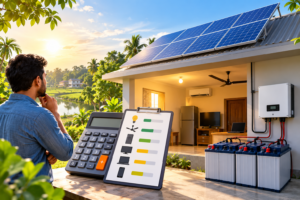
Net metering is a billing arrangement, not a technology. You install a solar system on your roof, use the electricity it generates during the day, and any surplus flows back into the national grid through a bidirectional meter. That meter tracks both directions — what you draw from the grid and what you send back — and your utility settles the difference.
If you consistently produce more than you consume, you build up a credit. If you produce less, you draw the shortfall from the grid as normal. It’s a genuinely different mechanic from a battery system, and you don’t need one to participate — though many households in areas with frequent load shedding choose to add battery storage anyway, since net metering alone doesn’t keep your lights on during a grid outage.
One term worth knowing early: sanctioned load. This is the maximum power your utility has authorized you to draw at any given time, and under the 2025 guidelines, your solar system’s AC capacity can now go all the way up to that full sanctioned load — a change from the previous 70% ceiling. If you’re connected at 11kV or above, there’s a separate cap: your system can’t exceed 80% of your transformer’s rated capacity.
Is Rooftop Solar Actually Mandatory for You?
For most existing homeowners with no plans to change their connection, net metering is still voluntary. The mandatory clause kicks in specifically when:
- You’re applying for a new electricity connection and your building has 1,000+ square feet of usable roof space
- You’re a three-phase customer with an allocated load of 10kW or more, applying to increase that load
- You’re an industrial or commercial consumer with 10kW+ allocated load, in which case a system sized at 20% of that load or more is required
If none of those apply to you, solar remains a choice — one worth making for the long-term savings, but not one the utility will force. Worth flagging: applicants who convert a pre-2025 solar installation into the current framework can gain the benefit of the expanded sanctioned-load allowance retroactively for future capacity additions, so there’s an upside to formalizing an older system even if you weren’t required to.
The Application Process, Step by Step
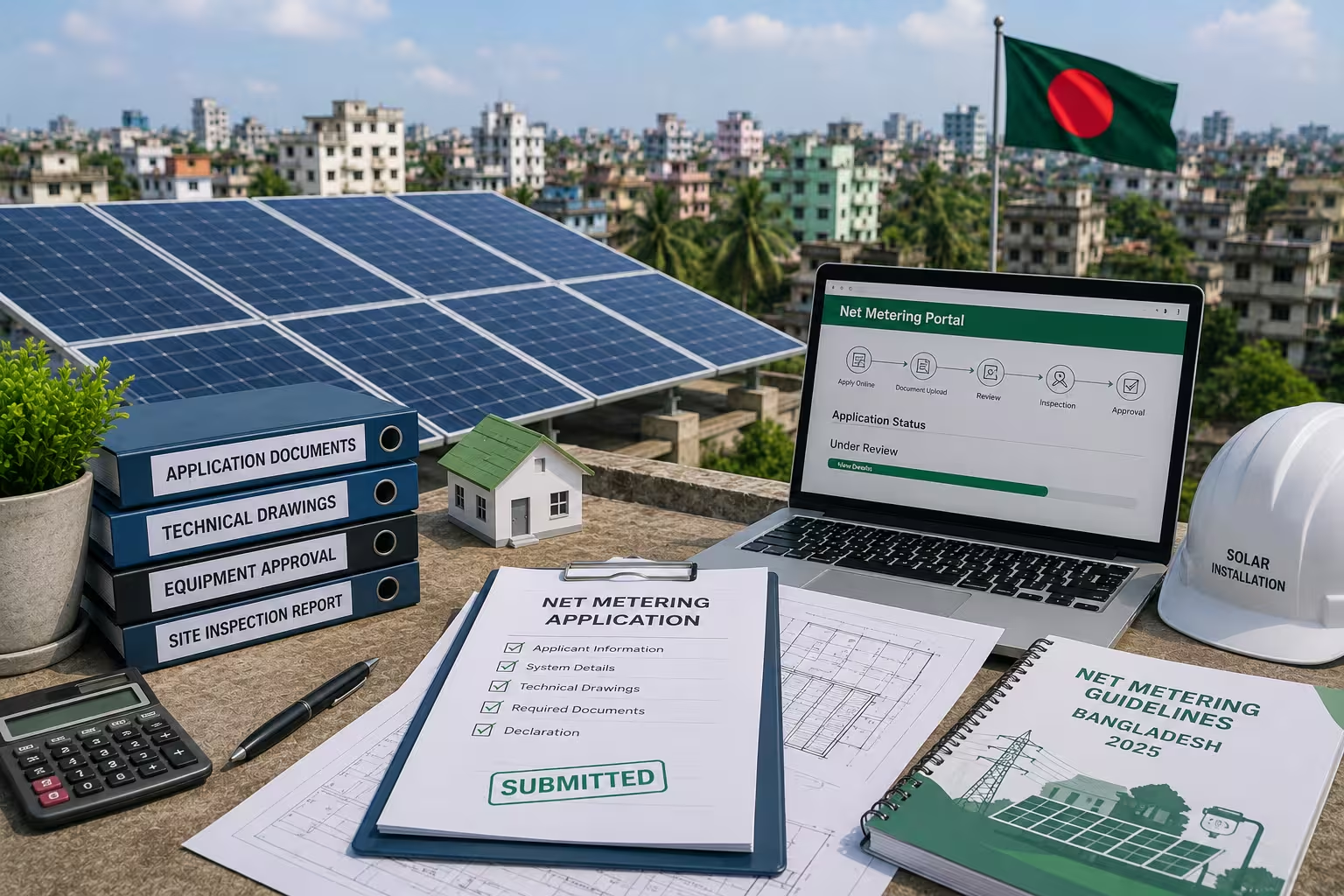
Applications go through a single national portal — nem.powerdivision.gov.bd — rather than a separate process per utility. Here’s roughly how it unfolds:
1. System design comes first. Before you touch the portal, your system needs to be properly engineered. This means a single-line diagram (SLD) showing the full path from panels to inverter to your AC panel to the bidirectional meter, plus earthing and lightning-protection design. This is the step most people underestimate, and it’s also the most common source of delay — utility engineers frequently return applications because the SLD or capacity calculation is incomplete.
2. Submit online. You apply through the portal with your connection details, applicant information, and the installation model — CapEx or OpEx (more on that distinction below). If you’re going the OpEx route, your agreement with the investor company needs to be finalized before you apply.
3. Utility review. The distribution utility — DESCO or DPDC if you’re in Dhaka, BREB if you’re on a rural or semi-urban connection, or BPDB, WZPDCL, and NESCO depending on your region — reviews the application and, per the guideline, issues an approval letter within 10 working days.
4. Field inspection. An inspector visits to check the proposed installation area and how it connects into the existing distribution system. A cleared, accessible rooftop with any shading obstructions already accounted for in your design speeds this along considerably.
5. Installation window. Once approved, you have up to 8 months to complete installation — a generous window compared to some other markets, but one that still requires using SREDA-approved equipment throughout.
6. Testing and final agreement. After installation, you submit a system checklist and request final inspection. Once that passes, the final Net Metering Agreement gets signed — the guideline allows up to 15 working days for this — and the signing date becomes your Commercial Operation Date, the official start of your net metering arrangement.
What You’ll Need to Prepare
The exact document set can vary slightly by utility, but expect to gather:
- Application form with connection/tracking details
- Your national ID (or, for organizations, registration and trade license documents)
- Single-line diagram and system design package, signed by a qualified engineer
- Equipment specifications confirming SREDA-approved modules and inverters (checkable at solar.sreda.gov.bd)
- Proof of no outstanding electricity dues — this one catches people out more than almost anything else, since applications with unpaid bills are rejected automatically
- For OpEx installations, the signed agreement with the investor/installer company
Timeline at a Glance
| Stage | Guideline Timeframe |
| Utility application review | Up to 10 working days |
| Field inspection scheduling | Utility-dependent, typically within days of submission |
| Installation window (post-approval) | Up to 8 months |
| Final agreement signing (post-inspection) | Up to 15 working days |
These are the timeframes set out in the guideline itself. Real-world experience can run longer, particularly when a design package needs revision — so treat this as the intended process speed, not a guarantee.
CapEx or OpEx: Which Ownership Model Fits You?
Bangladesh’s net metering framework recognizes two ways to own the system, and the choice matters more here than in markets where households typically have more spare capital to invest upfront.
| CapEx (Own It) | OpEx (Third-Party Owned) | |
| Upfront cost | You pay the full system cost | Little to no upfront cost |
| Who owns the system | You | An investor/developer |
| How you pay | One-time purchase | Power purchase agreement, typically below your standard tariff |
| Who gets the net metering credit | You, in full | Depends on the agreement terms |
| Best suited for | Households or businesses with available capital wanting maximum long-term savings | Those who want savings from day one without financing the system themselves |
Neither model is objectively better — it genuinely depends on your cash position and how long you plan to stay in the property or business location, since OpEx arrangements typically run on multi-year contracts.
Why Applications Get Delayed or Rejected
Most of the friction in this process is avoidable, and it tends to come from a small set of recurring issues:
- Outstanding electricity bills. Clear these before applying — an unpaid balance is an automatic rejection trigger.
- Non-SREDA-approved equipment. Every module and inverter needs to appear on SREDA’s approved product list. This is exactly the kind of detail a rushed or inexperienced installer can get wrong, so it’s worth checking the equipment list yourself rather than taking an installer’s word for it — this is one area where working with a team that designs strictly to SREDA specifications, as Muspana does, removes a genuine point of failure before it happens.
- Sizing that exceeds sanctioned load. Even a small overshoot beyond your allowed capacity will get an application returned, particularly if your sanctioned load has changed since your last connection review.
- Incomplete earthing or lightning-protection design. Panel-frame earthing needs to be shown separately from your building’s existing earthing system — a detail that trips up design packages more often than you’d expect.
- Missing or vague single-line diagrams. This is the single most-returned document in the entire process.
None of these are complicated fixes on their own. The pattern is that they’re easy to overlook if you’re managing the paperwork yourself without engineering support.
How the Credit Actually Gets Paid
This is where Bangladesh’s system works a little differently from flat monthly billing credits you might read about in guides written for other markets. Net metering accounts are settled over a quarterly settlement period — typically aligned to March, June, September, and December. If you’re on prepayment or a smart meter, your accumulated credit units get used first, before the system draws down your prepaid balance. Any credit remaining at the end of a settlement period gets paid out by the utility at the BERC bulk generation rate, through bank transfer (BEFTN/NPSB), mobile banking such as bKash, Nagad, or Rocket, or by cheque, depending on what you specify in your application.
It’s a mechanic worth understanding upfront, because it means your solar system’s financial benefit shows up in two forms: reduced draw from the grid day to day, and a periodic payout for genuine surplus — not a single simplified monthly credit line.
Home Rooftop vs Industrial Facility: What Changes
For a residential applicant — a homeowner or an apartment building — the process centers on a relatively straightforward design package, a manageable installation timeline, and navigating the portal for the first time. The mandatory clause mostly affects you if you’re building new or increasing your load significantly.
For a factory, warehouse, or commercial facility, the stakes look different. You’re often dealing with Medium Tension or High Tension connections, transformer hosting-capacity limits, and a mandatory 20% solar-to-load ratio if your allocated load is 10kW or above. Downtime during installation and inspection matters more, since production schedules are on the line, and the design package typically needs to account for a more complex electrical layout across the facility. Facility managers and procurement teams also tend to weigh CapEx versus OpEx more carefully here, since the numbers involved are larger and the decision often needs sign-off from more than one stakeholder.
Getting the Sizing and Design Right From the Start
A large share of the delays described above trace back to one root cause: a system that wasn’t properly sized or designed against the applicant’s actual sanctioned load and roof conditions before the application went in. Getting the single-line diagram, earthing plan, and equipment selection right the first time isn’t just a compliance checkbox — it’s what determines whether your application clears review in 10 working days or bounces back for revision.
This is the part of the process where Muspana’s role tends to be most useful: helping applicants size a system correctly against their sanctioned load, confirming equipment against SREDA’s approved list before purchase, and preparing a design package that holds up to utility review the first time it’s submitted. It doesn’t remove the paperwork, but it removes the guesswork that causes most of the back-and-forth.
FAQs
Is rooftop solar mandatory in Bangladesh?
Not for everyone. It becomes mandatory if you’re applying for a new connection on a building with 1,000+ square feet of usable roof space, increasing a three-phase load of 10kW or more, or you’re an industrial/commercial consumer with 10kW+ allocated load. Outside those cases, it remains voluntary.
How long does net metering approval take in Bangladesh?
The guideline allows up to 10 working days for utility review, up to 8 months for installation once approved, and up to 15 working days for the final agreement to be signed after inspection. Real-world timing can run longer if your design documents need revision.
What documents do I need to apply for net metering?
An application through the national portal, identification or company registration details, a single-line diagram and system design signed by a qualified engineer, confirmation of SREDA-approved equipment, and proof that you have no outstanding electricity bills.
Should I choose CapEx or OpEx for my solar system?
CapEx means you own the system outright and keep the full net metering credit, but it requires upfront capital. OpEx removes that upfront cost through a third-party-owned system and a power purchase agreement, usually at a rate below standard tariff. The right choice depends on your available capital and how long you expect to stay at the property.
Where do I apply for net metering in Bangladesh?
Through the national portal at nem.powerdivision.gov.bd. Equipment must be checked against SREDA’s approved product list before purchase, and you’ll work with your local distribution utility — DESCO, DPDC, BREB, BPDB, WZPDCL, or NESCO — for inspection and interconnection.
Why do net metering applications get rejected or delayed?
The most common causes are outstanding electricity bills, non-SREDA-approved equipment, system sizing that exceeds the sanctioned load, and incomplete earthing or single-line diagram documentation.