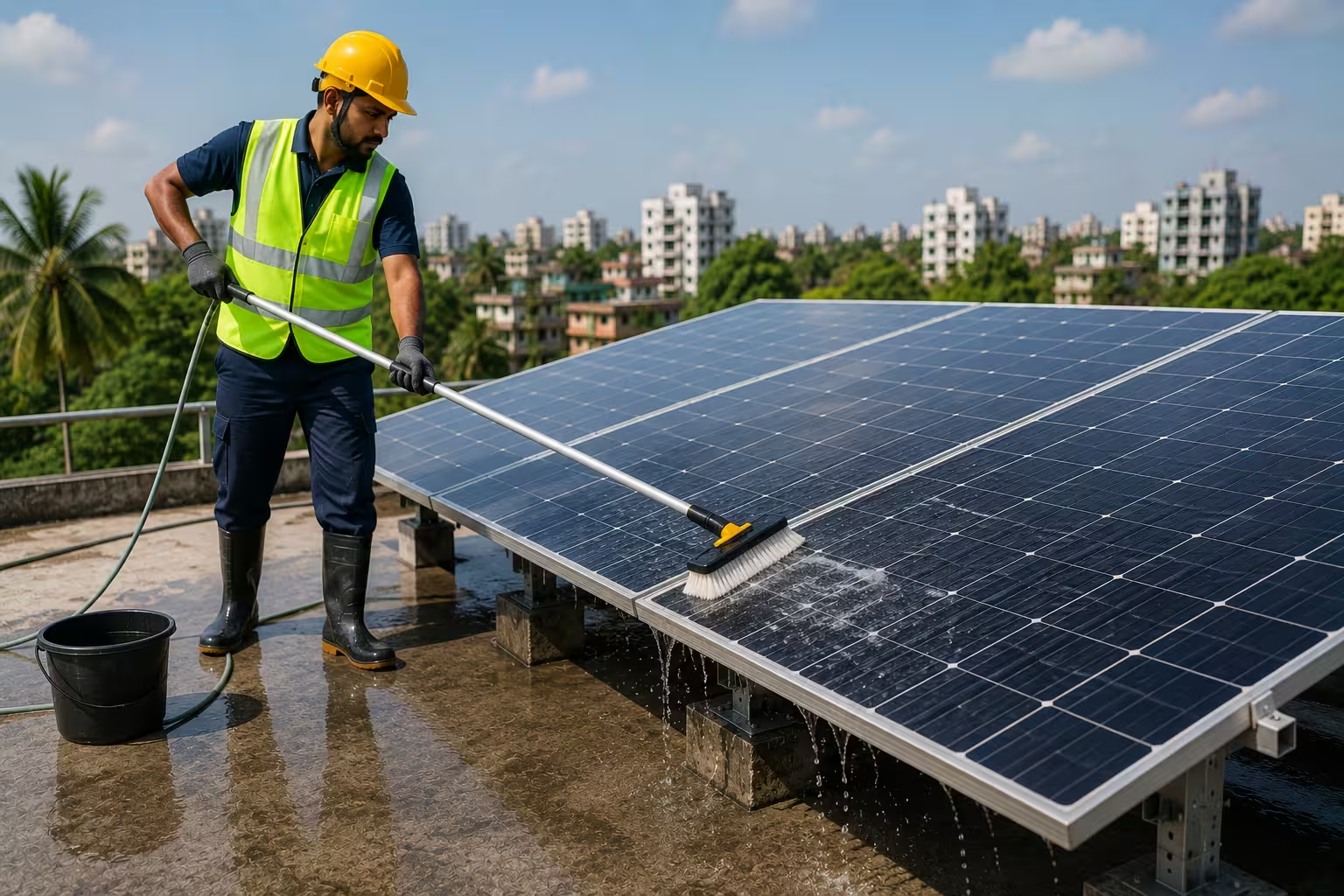
If your monthly electricity bill has been creeping back up even though nothing changed about how your household uses power, dust on your panels is one of the first things worth ruling out. It’s not dramatic, it’s not a system fault, and it’s usually fixable in an afternoon.
How Often Do Solar Panels Actually Need Cleaning in Bangladesh?
There isn’t one universal number, and most generic guides skip the part that actually matters here: Bangladesh has two very different seasons for panel soiling.
During the dry season (roughly November to March), dust settles on panels steadily and there’s little rain to wash it off naturally. Homes near construction sites, brick kilns, or busy roads tend to accumulate a visible film faster than panels in quieter, greener areas. During this stretch, checking your panels every couple of months isn’t excessive.
During monsoon (roughly June to September), regular rainfall does a lot of the cleaning for you — especially if your panels are tilted at an angle rather than mounted flat. Rain runs dust off effectively, though it won’t remove sticky residue like bird droppings or tree sap.
As a general starting point, two cleanings a year — once heading into the dry season and once as it ends — is a reasonable baseline for most residential systems. Treat that as a starting estimate rather than a fixed rule, though: a rooftop in a dusty urban pocket of Dhaka or Gazipur may need more frequent attention, while a well-tilted system in a cleaner, greener area may need less. The honest answer is that your own output data will tell you more than any generic schedule.
The Simplest Way to Know: Watch Your Monitoring App
If your system is on-grid or net-metered, you likely have access to a monitoring app that tracks daily or monthly generation. This is genuinely the most reliable signal you have.
Compare your recent output to the same period last year, or to a recent sunny day against another recent sunny day. A gradual, unexplained drop — not tied to cloud cover or shorter winter days — is a reasonable trigger to walk up and take a look. There’s no need to memorize a precise percentage threshold; what matters is noticing a pattern that doesn’t match normal seasonal variation.
A quick visual check once a season is worth doing anyway, even without the app. Look for:
- A visible dust film or streaking across the panel surface
- Bird droppings or tree sap sitting in one spot
- Leaves or debris caught near the frame edges
- Any patchy shading that wasn’t there before
Cleaning Your Panels Yourself: What Actually Works
For most home rooftop systems on flat RCC roofs — which describes the majority of residential installations in Bangladesh — DIY cleaning is genuinely manageable, more so than it would be on the steep pitched roofs common in a lot of international cleaning guides.
When to clean: Early morning or late afternoon, when the panels are cool. Pouring water on a panel that’s been baking in midday sun can cause thermal stress, and it also leaves water spots that dry into their own streaks.
What to use: Plain rainwater, if you’ve collected any, is close to ideal — it’s naturally low in the minerals that cause streaking. If you’re using tap or tube-well water, be aware that hard water common in many areas can leave a mineral film behind, so a final rinse with the softest water available, or a gentle wipe-down after rinsing, helps avoid that. A soft brush, a microfiber cloth, or a soft sponge is enough. Skip anything abrasive, and skip pressure washers entirely — they can damage the panel surface or seals.
The process:
- Rinse the panel surface to loosen loose dust
- Gently wipe or brush in one direction rather than scrubbing in circles
- Rinse again to remove any residue
- Let the panels air-dry naturally
Safety matters more than the cleaning itself. Flat rooftops are genuinely easier and safer to work on than the sloped roofs a lot of cleaning advice assumes, but that doesn’t mean no precautions. Keep clear of the roof edge and parapet, don’t clean during or right after rain when surfaces are slippery, and don’t lean equipment or your weight directly on the panel frames — they’re not built to be stepped on.
When Professional Cleaning Is Worth Considering
For a small residential system, DIY cleaning two or three times a year is usually enough, and paying for a service every time isn’t necessary for most households.
Professional cleaning becomes more worth it when:
- The installation is large, has many panels, or is genuinely hard to access
- You’re in a heavy-dust or coastal area needing more frequent attention than you can realistically keep up with
- The system is commercial or industrial scale, where downtime and safety liability change the calculation
On cost: pricing for professional panel cleaning in Bangladesh varies by provider, panel count, and accessibility, and there isn’t a single reliable published rate to quote here. Treat any number you see quoted — including in foreign guides — as a rough estimate at best, and get a direct quote from a local provider rather than budgeting off an imported figure.
| DIY Cleaning | Professional Cleaning | |
| Best for | Small residential systems, accessible flat roofs | Large arrays, hard-to-reach panels, commercial sites |
| Cost | Water and basic tools only | Varies by provider — get a local quote |
| Time | An hour or two, a few times a year | Scheduled, often quarterly for larger sites |
| Safety consideration | Manageable on flat RCC roofs with basic care | Providers bring proper equipment for difficult access |
For Industrial and Commercial Facilities: A Different Calculation
If you’re managing a factory rooftop or a ground-mounted commercial array — in Gazipur, Narayanganj, or anywhere with a larger installation — the maintenance conversation shifts from “when did I last clean this” to soiling loss as a measurable, trackable number against your system’s generation baseline.
At this scale, an operations and maintenance (O&M) approach tends to make more sense than manual, ad hoc cleaning: scheduled cleaning cycles, string-level monitoring to catch localized soiling or shading issues early, and a documented cleaning log that ties into warranty and performance records. Muspana works with commercial and industrial clients on this kind of ongoing system upkeep, and if that’s the situation you’re in, it’s worth a direct conversation rather than trying to apply residential-scale advice to a much larger asset.
A Few Things Worth Knowing Before You Start
Cleaning your own panels generally doesn’t affect your warranty, but warranty terms differ by manufacturer and installer, so it’s worth a quick check of your documentation — or a call to your installer — if you’re unsure, rather than assuming.
Bird droppings and tree sap are the main things that won’t wait for your next scheduled cleaning. They’re small, localized, and easy to deal with as soon as you spot them, rather than left to sit through a full season.
And if your output has dropped noticeably and cleaning doesn’t bring it back, don’t assume it’s still a soiling issue — that’s a sign to look into degradation or a technical fault rather than repeating the cleaning process.
FAQs
Does dust really reduce solar panel output?
Yes — a buildup of dust, dirt, or residue blocks some sunlight from reaching the cells, which lowers generation. How much it affects your specific system depends on how dusty your area is and how long the buildup has been sitting.
Can I clean my solar panels myself, or do I need a professional?
For most home rooftop systems on flat roofs, DIY cleaning with water and a soft brush or cloth is enough. Professional cleaning becomes more worthwhile for large, hard-to-reach, or commercial-scale installations.
Will cleaning my own panels void the warranty?
Generally no, but warranty terms vary by manufacturer and installer. Check your documentation or ask your installer directly if you’re not sure.
What’s the best time of day to clean solar panels?
Early morning or late afternoon, when the panels are cool. Cleaning hot panels in direct midday sun can cause thermal stress and leave water spots.
Do solar panels need more cleaning during monsoon season?
Usually less — rainfall naturally washes dust off, especially on tilted panels. Sticky residue like bird droppings or tree sap can still need manual attention even during monsoon.
How much does professional solar panel cleaning cost in Bangladesh?
It varies by provider, system size, and accessibility. There isn’t a single standard rate, so it’s best to get a direct quote from a local provider rather than relying on a general figure.
Is solar panel cleaning different for industrial or commercial systems?
Yes. At a larger scale, cleaning is usually planned around measured soiling loss and monitoring data rather than a fixed schedule, often as part of a broader operations and maintenance approach.