-By Md. Kamrul Hassan, Procurement Officer (Muspana)
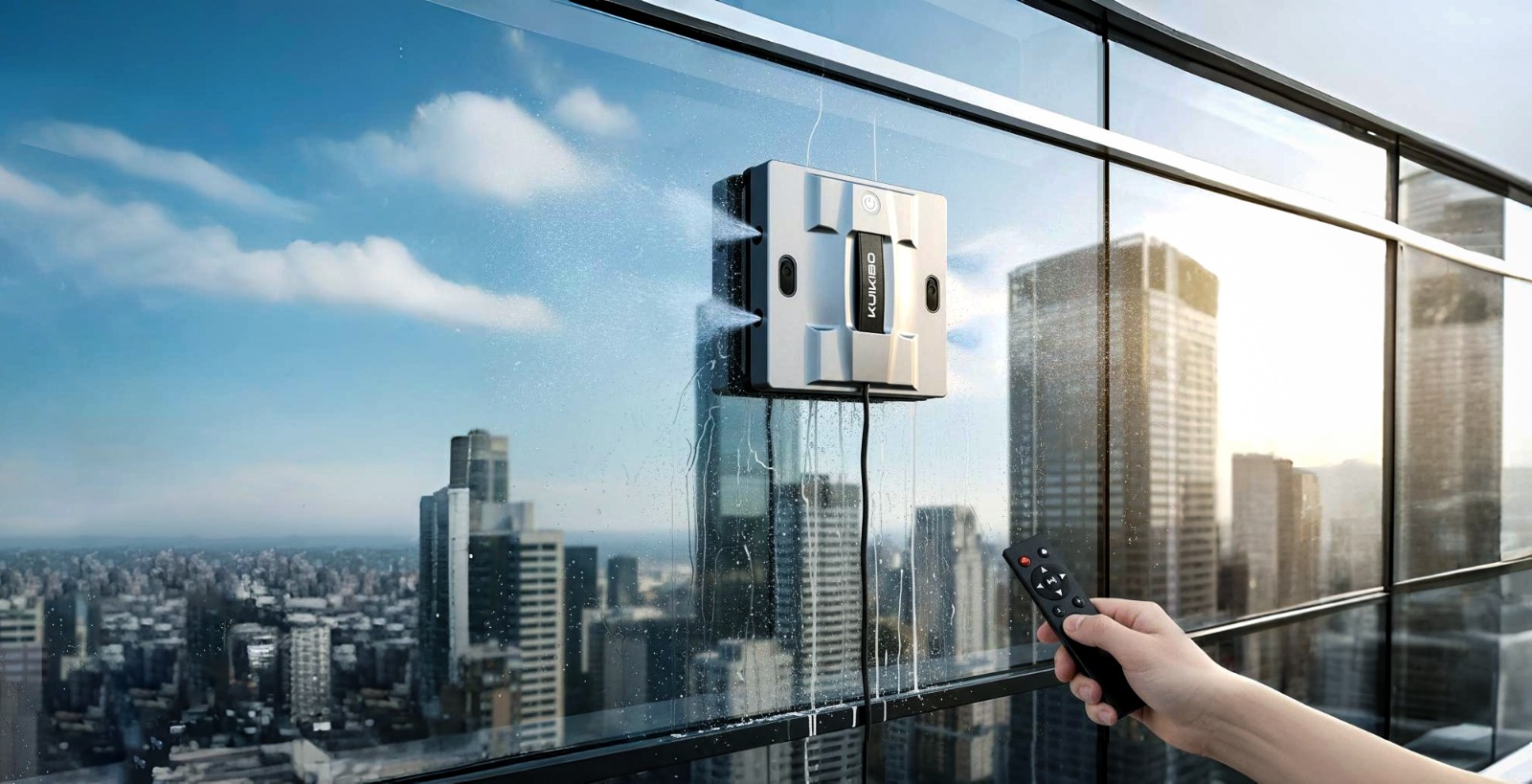
Window cleaning robots are automated devices designed to clean glass surfaces of residential buildings, offices, and high-rise structures, reducing the risks and limitations of traditional manual cleaning. In today’s article, we discuss the key design considerations for window cleaning robots, focusing on safety, efficient adhesion, reliable movement, intelligent sensing, and user-friendly operation to ensure effective and damage-free cleaning on vertical glass surfaces.
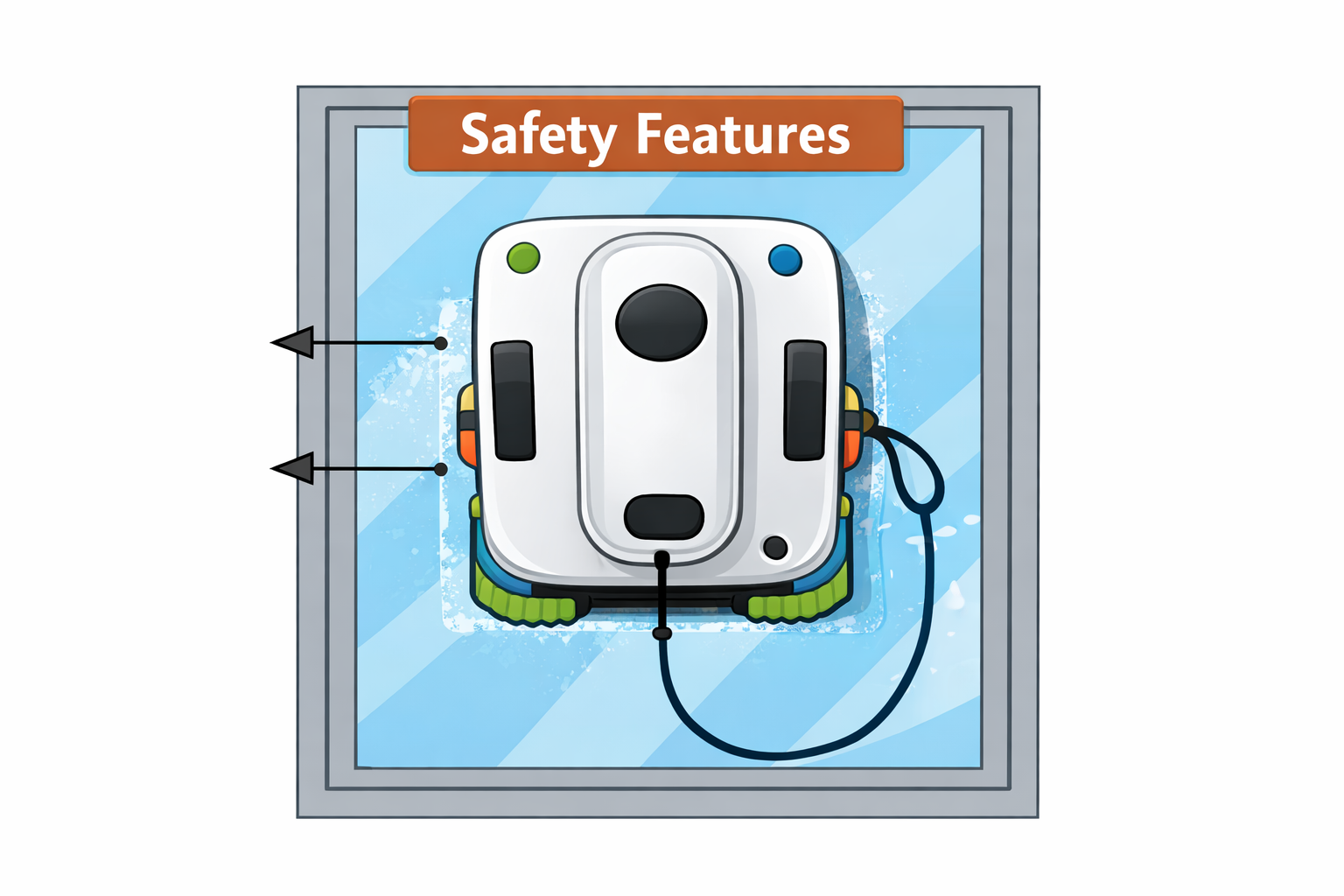
- Safety and Stability
Safety is the most critical design factor to prevent the robot from falling and causing damage or injury.
- Strong Suction: The robot must have powerful suction to stick firmly to the glass. If the suction is weak, the robot may fall.
- Backup Battery: An emergency battery is needed to keep the robot attached to the window if the power fails.
- Fall Protection: Adding a safety rope or tether can prevent the robot from falling to the ground.
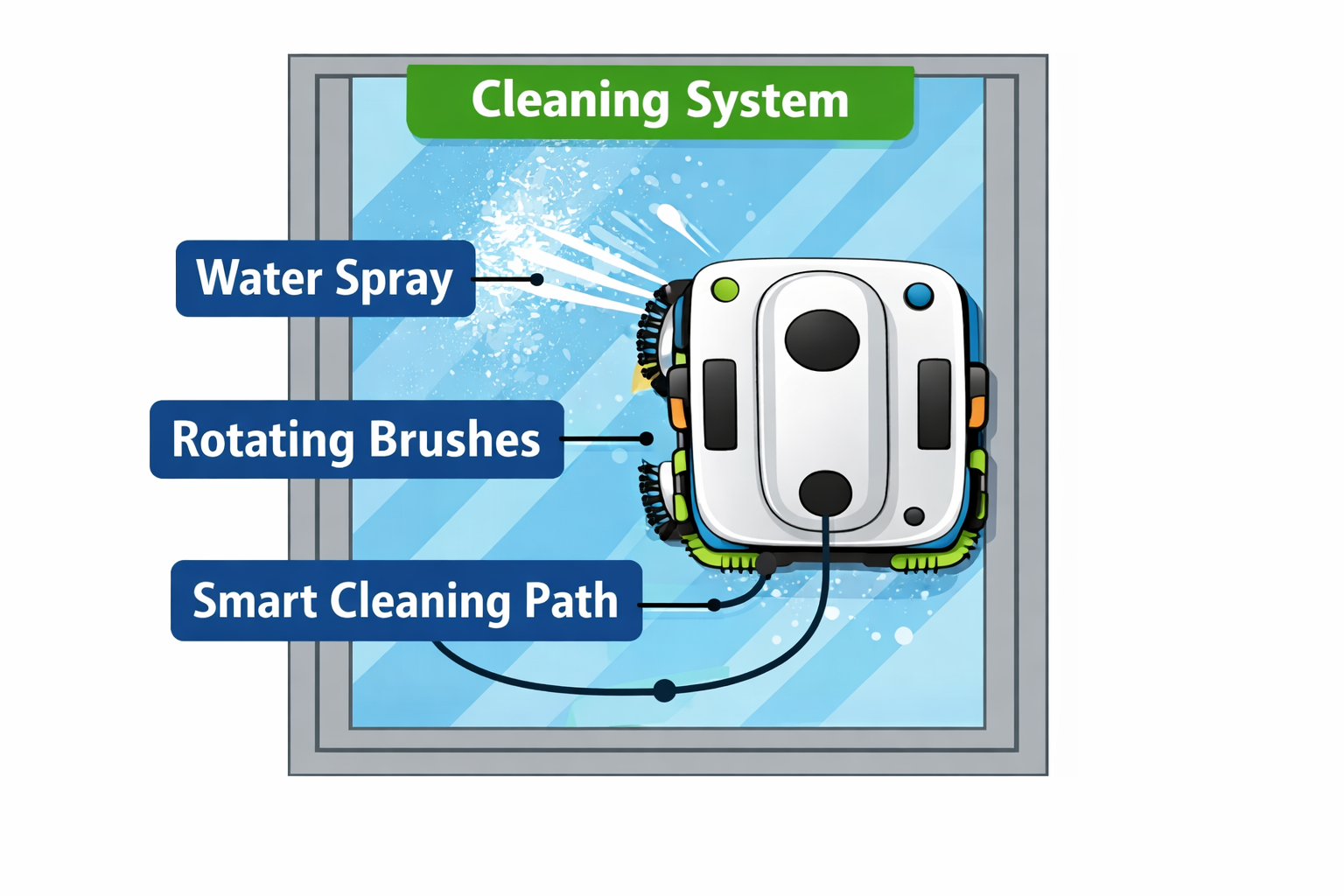
- Cleaning Efficiency
To provide value, the robot must be able to clean as effectively as a human.
- Effective Brushes: The robot should have high-quality brushes or cleaning pads to remove dirt and streaks.
- Water Spraying: A built-in water spray system helps to loosen stubborn dirt for better cleaning results.
- Smart Cleaning Paths: The robot should move in a systematic pattern (like a Z-shape or N-shape) to cover the entire window surface without missing spots.
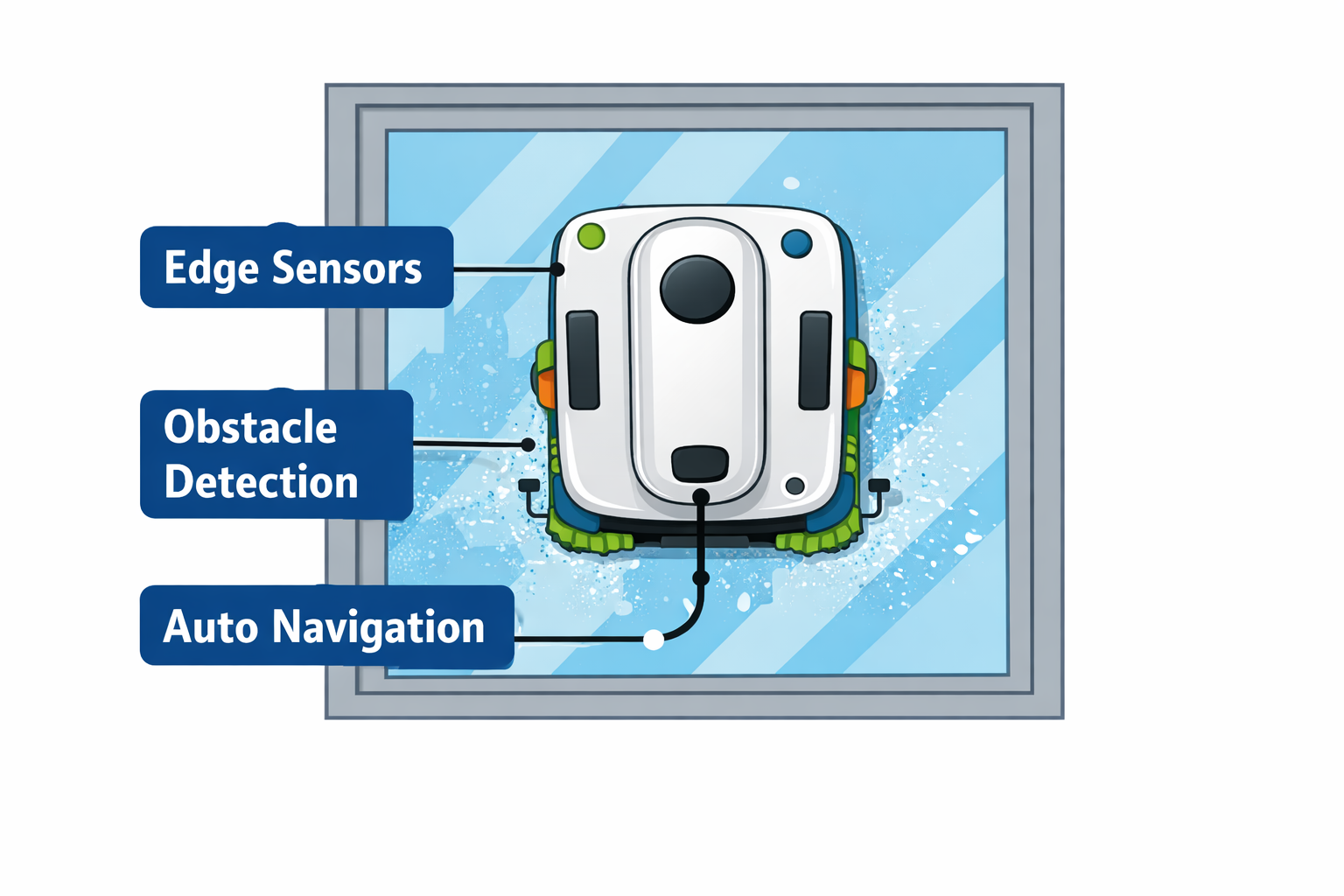
- Navigation and Sensors
Smart navigation ensures the robot covers the whole area safely and efficiently.
- Obstacle Detection: Sensors to detect window frames and obstacles (like handles) to avoid collisions.
- Edge Sensors: Specific sensors to detect the edges of frameless windows to prevent the robot from driving off the glass.
- Auto Navigation: Software that allows the robot to calculate the most efficient route automatically.
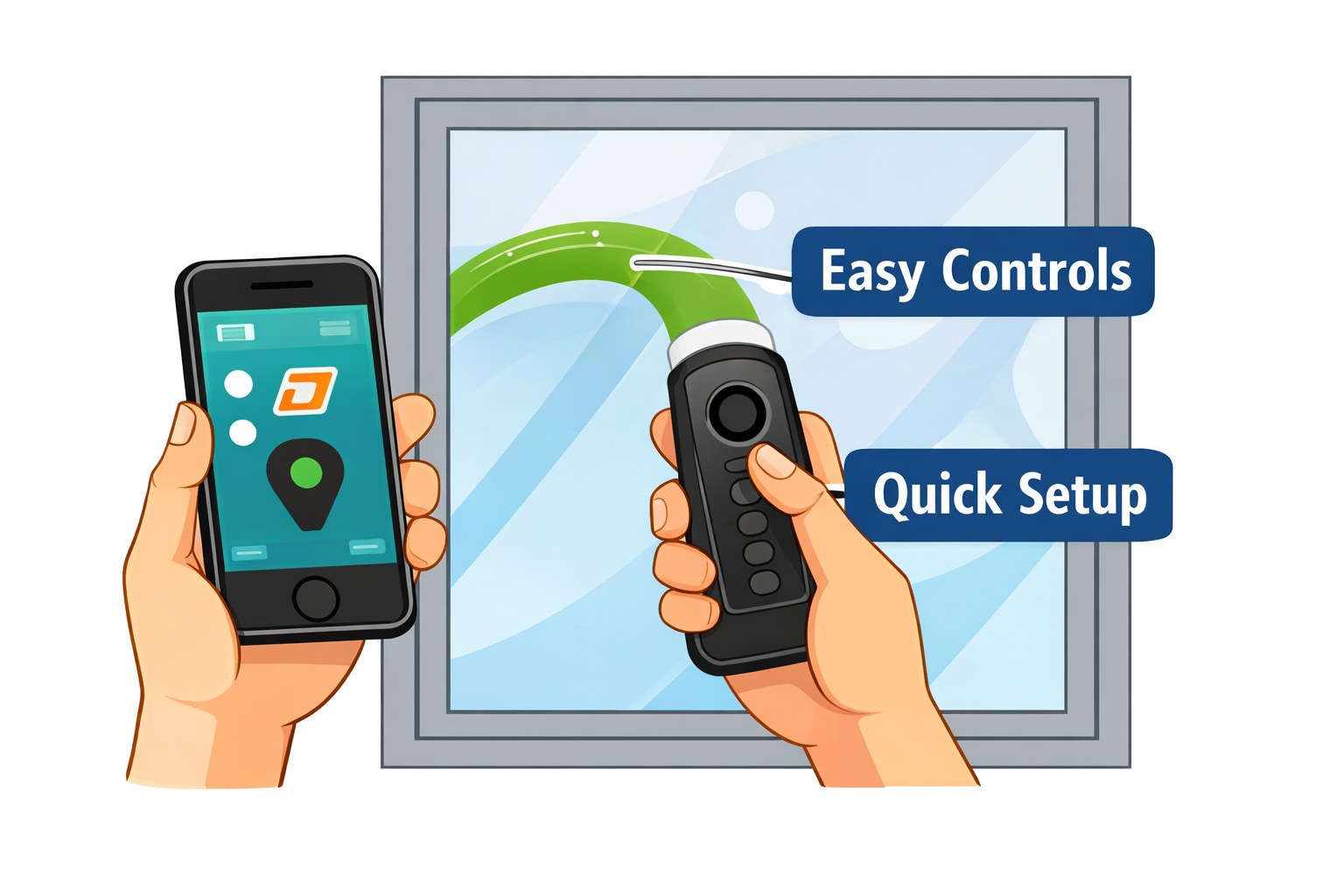
- User-Friendly Design
A great product must be easy for the consumer to set up and maintain.
- Easy Controls: Simple remote control or smartphone app integration for easy operation.
- Quick Setup: The robot should be lightweight and easy to attach to the glass to begin working immediately.
- Maintenance: Removable and washable parts (like microfiber pads) for easy cleaning after use.
Window cleaning robots represent an important advancement in automation technology. By carefully considering safety, cleaning efficiency, power systems, sensors, and cost, effective and reliable window cleaning robots can be designed. These robots reduce human risk and improve cleaning performance, making them ideal for modern buildings.