Most people hear “solar panels” and picture one thing. One box. One technology. One decision.
That’s not how it works.
There are actually two completely different ways to harness sunlight, and they do different jobs. One turns sunlight into electricity. The other turns it into heat. Mix them up, and you could end up with a system that doesn’t actually solve the problem you bought it for.
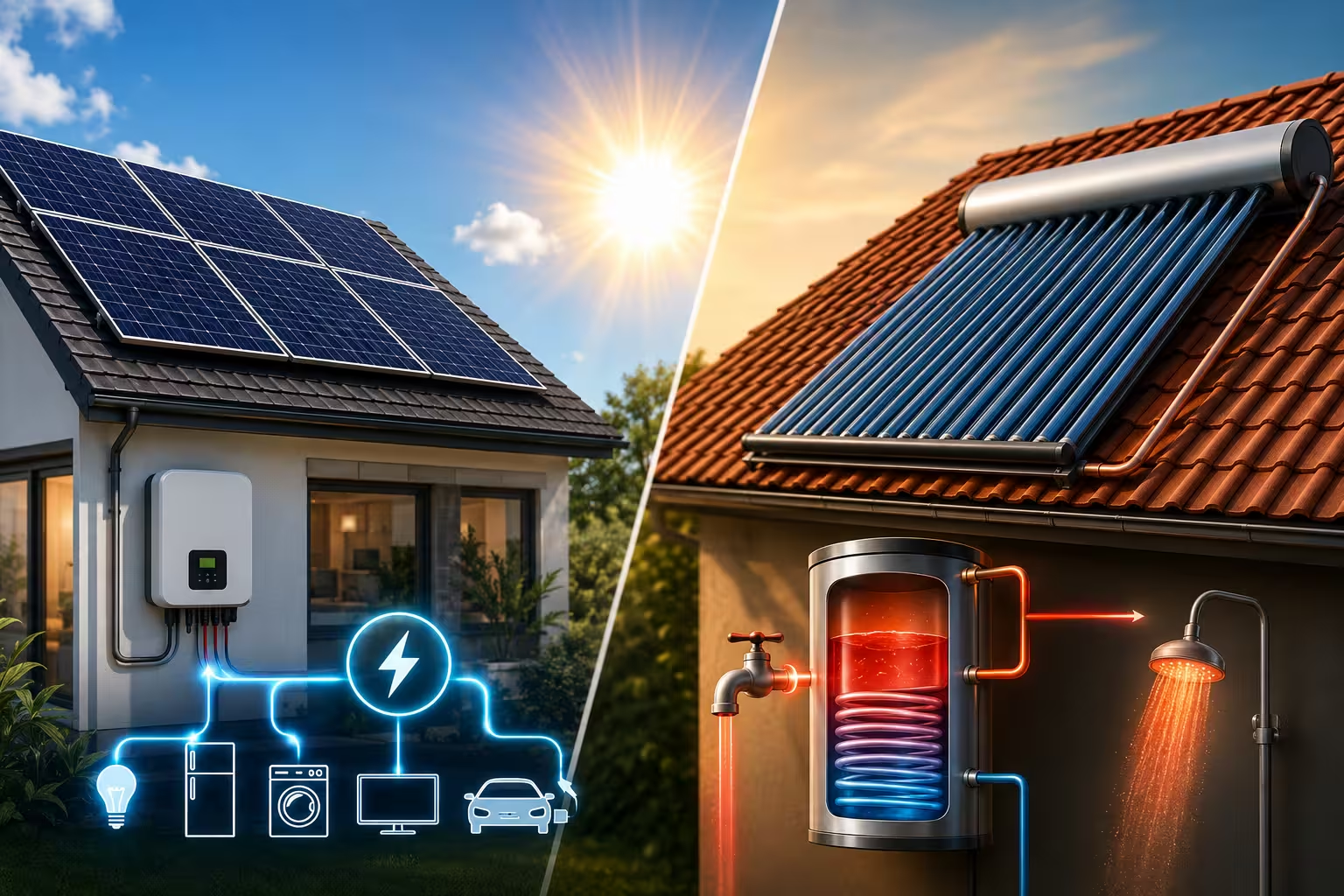
So let’s clear this up properly. Solar PV (photovoltaic) generates electricity you can use to run your lights, your fridge, your AC, your EV charger — basically anything that plugs in. Solar thermal captures heat and uses it directly, mostly for hot water or space heating. Same sun, two very different jobs.
If you’re trying to figure out which one you actually need, keep reading. We’ll walk through how each one works, where they shine, where they fall short, and — most importantly — how to match the technology to your actual situation instead of guessing.
How Solar PV Actually Works
Solar photovoltaic panels are made up of individual cells, usually silicon-based, and when sunlight hits them, something interesting happens at the atomic level: electrons get knocked loose and start moving. That movement is your electric current. This is the photovoltaic effect, and it’s the whole reason PV panels can turn sunshine into usable power.
Here’s the catch, though — that electricity comes out as direct current (DC), and almost nothing in your home runs on DC. So an inverter steps in and converts it to alternating current (AC), which is what your appliances actually understand.
Once you’ve got AC power, you can use it immediately, store extra in a battery, or send it back to the grid through net metering and get credited for it. That flexibility is honestly PV’s biggest strength — the electricity it makes can go almost anywhere.
Efficiency-wise, most rooftop PV panels convert somewhere between 15% and 22% of the sunlight hitting them into electricity. Some premium or tandem-cell panels push higher, but that’s the general range you’ll see in real installations. It sounds low compared to solar thermal (more on that in a second), but don’t let that number fool you — we’ll get to why.
Another thing worth knowing: PV systems are modular. You’re not locked into one size. Start with six panels, add six more next year if your budget or energy needs grow. That kind of scalability is part of why PV adoption has grown so fast over the past decade.
How Solar Thermal Actually Works
Solar thermal skips electricity entirely and goes straight for heat. Instead of solar cells, you’ve got collectors — usually flat-plate collectors or evacuated tube collectors — that absorb solar radiation and pass that heat into a fluid running through the system.
That heated fluid then does the actual work: warming your household water, heating your home, or keeping a pool comfortable. The heat usually gets stored in an insulated tank so you’re not limited to using it only while the sun’s actually out.
There are a few flavors of solar thermal worth knowing:
- Flat-plate collectors — the most common setup for home and business water heating. Reliable, relatively simple.
- Evacuated tube collectors — better suited for colder climates because they trap heat more effectively even when it’s chilly outside.
- Concentrated solar power (CSP) — this is the big one, mostly used at utility scale. Mirrors or lenses focus sunlight to generate extreme heat, which drives turbines to produce electricity. Not something you’re installing on your roof, but worth knowing it exists.
Here’s where solar thermal actually beats PV on paper: heat-capture efficiency. Some collector designs hit 60–80% efficiency or higher, which sounds like it blows PV out of the water.
But hold on — that comparison isn’t as simple as it looks.
The Efficiency Number That Trips Everyone Up
This is probably the single most misunderstood part of the whole PV vs thermal conversation.
Yes, solar thermal captures heat more efficiently than PV captures electricity. But you’re comparing two different currencies. Heat can really only do one thing — heat something. Electricity can do almost anything: run your lights, charge your car, power your laptop, cool your house in summer.
So a lower “efficiency” number for PV doesn’t mean it’s the weaker technology. It means it’s producing a more versatile output. A thermal system converting 70% of sunlight into hot water is fantastic — if hot water is what you need. If you need to power your home office and charge an EV, that 70% doesn’t help you at all.
Solar PV vs Solar Thermal: Side-by-Side Comparison
| Factor | Solar PV | Solar Thermal |
| Output | Electricity | Heat |
| Typical efficiency | 15–22% | 60–80%+ |
| Best for | Powering appliances, EVs, lighting, electronics | Water heating, space heating, pools |
| Storage | Batteries or grid export (net metering) | Insulated thermal storage tanks |
| Maintenance | Low — no moving parts, occasional cleaning | Higher — pumps, fluid, plumbing to monitor |
| Lifespan | 25–30 years | Varies, generally shorter due to moving components |
| Versatility | Very high — powers almost anything | Limited to heating applications |
| Upfront cost | Dropped significantly over the last decade | Can be cheaper for simple water heating setups |
Which One Should You Actually Choose?
This is the part most articles skip, and it’s honestly the only part that matters if you’re trying to make a decision this week.
Go with solar PV if:
You care about your electricity bill. Full stop. If you’re running central AC, charging an EV, working from a home office with multiple monitors, or just want to cut your dependence on the grid, PV is the obvious pick. It’s flexible, it scales, and the electricity it produces can be redirected wherever you need it — including storage for nighttime use.
Go with solar thermal if:
Your hot water usage is genuinely high. Think a household with four teenagers taking back-to-back showers, a home with a pool that needs heating, or a small business with heavy hot water demand (think a laundromat or a gym with showers). In these cases, solar thermal can pay for itself faster than you’d expect, because you’re offsetting a real, recurring cost with a system that’s specifically built for that job.
Consider both — or a hybrid — if:
You want to cover electricity and hot water without choosing one over the other. This is where PVT (photovoltaic-thermal) hybrid systems come in. These setups capture electricity and heat from the same panel surface at the same time, using circulating fluid to cool the PV cells (which actually improves their electrical efficiency) while capturing the heat that would otherwise be wasted. It’s a genuinely clever use of limited roof space, and it’s gaining traction as more homeowners want to squeeze maximum value out of every square foot they’ve got.
A Few Honest Trade-Offs Nobody Mentions
Before you commit to either system, a few things worth knowing upfront:
- PV systems need an inverter and, if you want backup power, a battery. Those add cost and complexity that a simple thermal water heater doesn’t require.
- Thermal systems involve moving parts — pumps, valves, circulating fluid — which means more potential points of failure over time compared to a PV panel that just sits there quietly converting light.
- Thermal systems generally can’t generate electricity without a lot of extra equipment (we’re talking steam turbines, which is CSP-plant territory, not rooftop territory).
- PV systems have essentially become the default choice for most homeowners, but that doesn’t mean thermal is outdated — it just means thermal is a specialist tool, not a generalist one.
Questions Worth Asking Before You Install Either System
If you’re about to talk to an installer, come prepared with these:
- What’s my current hot water usage, and would thermal actually pay off faster than PV here?
- How much roof space do I realistically have, and would a hybrid PVT system make more sense than choosing one or the other?
- What’s the maintenance schedule look like for each option over the next 10 years?
- Are there local incentives or tax credits that make one option significantly more attractive?
- What’s my actual electricity usage pattern — do I need power during the day, at night, or both?
Asking these upfront saves you from a sales conversation that steers you toward whatever the installer happens to specialize in.
The Bottom Line
Solar PV and solar thermal aren’t competing versions of the same product — they’re two different tools solving two different problems. PV gives you electricity you can use for almost anything. Thermal gives you efficient, targeted heat for water and space heating.
If you’re only paying attention to your electric bill, PV wins. If your hot water usage is the real cost driver, thermal wins. And if you’ve got the roof space and want both, a hybrid PVT setup might be worth a serious look.
Understanding how the photovoltaic effect actually works helps make sense of why PV behaves so differently from thermal collectors, and if you’re curious how solar radiation and insolation affect performance in your specific climate, that’s worth a read before you install anything. It’s also worth checking how peak sun hours in your area factor into which system will actually perform best where you live.
FAQs
Is solar thermal cheaper than solar PV?
It depends on your usage. For simple water heating needs, solar thermal can have a lower upfront cost and faster payback. For homes prioritizing electricity savings, PV usually offers stronger long-term returns, especially with falling panel prices and available tax credits.
Can solar thermal power a house?
Not directly. Solar thermal produces heat, not electricity, so it can’t run appliances, lighting, or electronics on its own. Generating electricity from heat requires additional equipment like steam turbines, which is typically only practical at utility scale (concentrated solar power plants), not on a residential roof.
What is a PVT hybrid solar system?
A PVT (photovoltaic-thermal) system combines both technologies in one panel. It generates electricity like a standard PV panel while also capturing heat from circulating fluid that cools the cells — giving you two forms of usable energy from the same roof space.
How efficient is solar thermal vs solar panels?
Solar thermal collectors typically convert 60–80% (or more) of captured sunlight into usable heat, while PV panels convert around 15–22% of sunlight into electricity. The comparison isn’t apples-to-apples, though — electricity is far more versatile than heat, even at a lower conversion rate.
Do solar thermal systems work in winter?
Yes, particularly evacuated tube collectors, which are designed to retain heat more effectively in colder conditions than flat-plate collectors. Performance does drop somewhat with reduced sunlight hours, but well-designed thermal systems remain functional through winter months.