Your Inverter Runs Hotter Than You Think
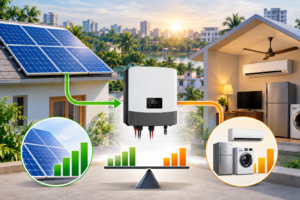
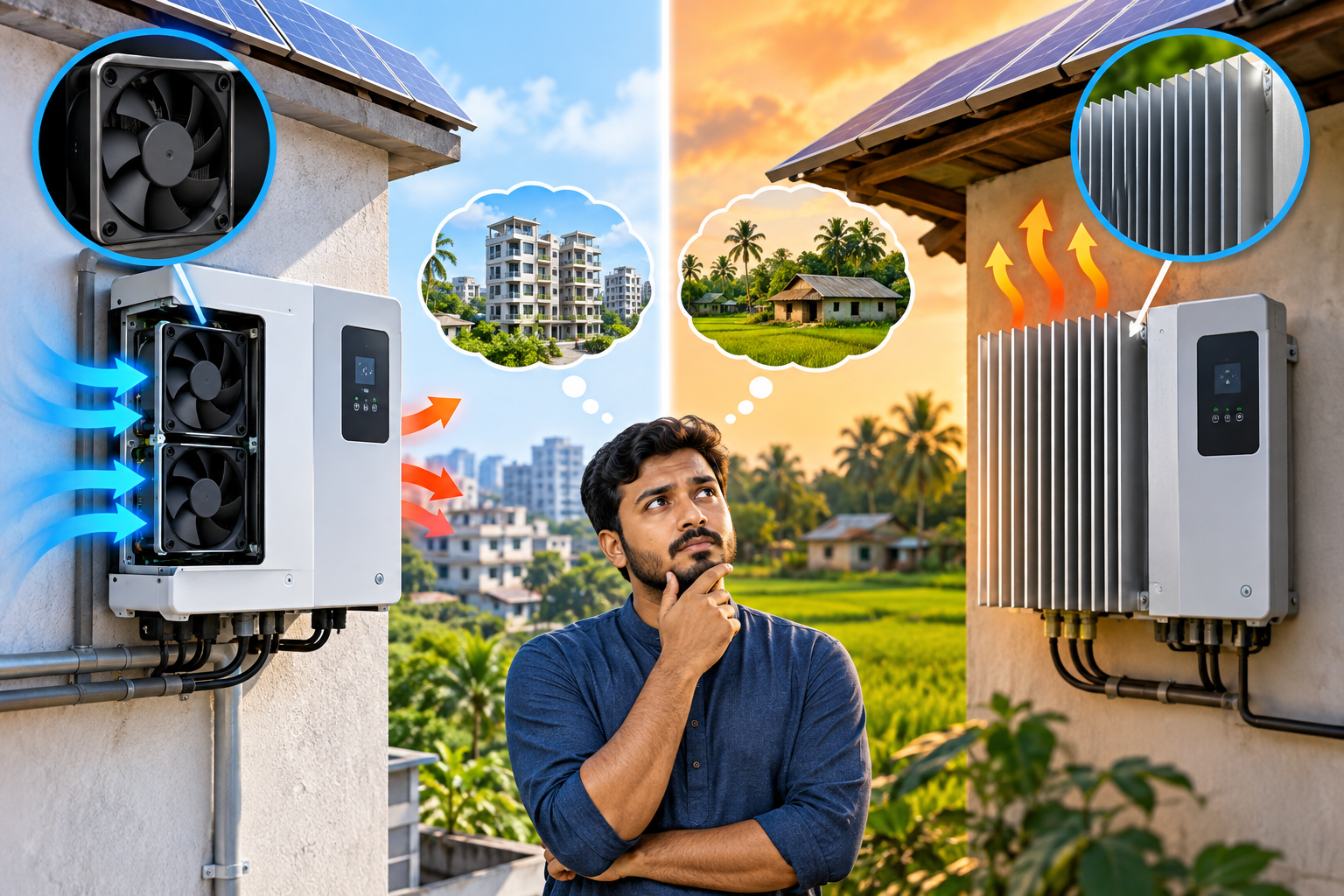
Every inverter generates heat while it converts DC power from your panels into usable AC power. That heat has to go somewhere, and manufacturers deal with it in one of two ways: they either push air across the internal components with a fan, or they let the heat rise and escape on its own through metal heat sinks. That’s really the whole decision — active cooling with a fan, or passive cooling through natural convection.
It sounds like a minor spec-sheet detail. It isn’t. Get it wrong for your situation, and you end up with either an inverter that’s noisier than you expected sitting outside your bedroom window, or one that quietly loses output on the hottest afternoons of the year.
Quick answer:
| Fan-cooled (active) | Naturally cooled (passive) | |
| Noise | Audible hum when running | Silent |
| Heat handling | Strong, even under sustained load | Good in mild conditions, weaker in heat |
| Moving parts | Yes — fan can wear out | No |
| Maintenance | Occasional filter/fan cleaning | Very low |
| Typically used for | Larger systems, hot environments, continuous heavy load | Smaller residential systems, quieter installs |
What “Cooling” Actually Means for an Inverter
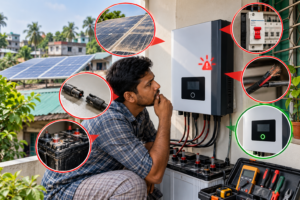
An inverter that gets too hot doesn’t just fail outright — it protects itself first. This is called thermal derating: the inverter automatically reduces its power output to keep its internal temperature within a safe range. You don’t see a fault code. You just quietly get less electricity than your panels are actually producing, usually in the middle of the hottest part of the day — which, frustratingly, is also when your panels are generating the most.
Fan-cooled inverters push air directly across the heat sink, so they can sustain higher output for longer before that protection kicks in. Naturally cooled inverters rely purely on the heat sink’s surface area and rising warm air, which works fine up to a point, but that point arrives sooner.
Why This Matters More in Bangladesh Than the Spec Sheet Suggests
Most inverter comparison guides are written for climates that never get particularly hot. That’s not the environment most Bangladeshi installations sit in.
Ambient temperatures through the summer regularly climb well past 35°C, and an inverter mounted on an unshaded rooftop, inside a tin-roofed utility space, or against a sun-facing wall will run hotter than the surrounding air suggests — sometimes noticeably so. That pushes a naturally cooled unit closer to its derating threshold sooner than it would in a milder climate, particularly on a larger system working at or near capacity through peak sun hours.
There’s a second factor that’s easy to overlook: load-shedding. In areas where grid supply is inconsistent, hybrid and off-grid inverters often run longer, more continuous cycles pulling from battery storage rather than switching seamlessly on and off with a stable grid. Continuous operation under load is exactly the condition where the gap between active and passive cooling shows up most.
And then there’s dust and humidity working against each other across the year — dry-season dust settling into vents and filters, followed by monsoon humidity that doesn’t help anything dry out quickly. It’s a genuinely harder environment for a cooling fan to work in than a temperate, dry climate, which has real implications for maintenance — more on that below.
None of this means passive cooling is a bad choice in Bangladesh. It means the decision is worth making deliberately rather than by default.
If You’re a Homeowner: You May Not Actually Be Choosing
Here’s something most articles on this topic skip entirely: if you’re installing a typical residential rooftop system — the kind sized for a single-family home or apartment rather than a factory — there’s a good chance your inverter is naturally cooled whether you ask for it or not. Most manufacturers only fit fans to inverters above a certain output, generally somewhere in the range of 17-20kW, because smaller units simply don’t generate enough heat to need forced air.
So for most homes, the practical question isn’t “which one should I pick,” it’s “is my naturally cooled inverter installed somewhere that lets it actually cool.” That comes down to placement:
- Mount it somewhere shaded, not in direct afternoon sun
- Leave the clearance around it that the manufacturer specifies — passive units need open airflow more than fan-cooled ones, since they have no way to force air through a tight space
- Avoid boxing it into an enclosed cupboard or a sealed utility nook with no ventilation
If you’re planning a larger home system, or you live somewhere the installation space genuinely can’t offer good airflow, a fan-cooled unit becomes a reasonable ask even at home — the trade-off being some audible fan noise, which is worth factoring in if the inverter sits near a bedroom or a shared wall.
If You’re Sizing an Industrial or Commercial System
Past a certain scale, this stops being optional. Factories, commercial buildings, and any installation running at continuous heavy load through the day are exactly the conditions fan cooling was designed for. The ability to sustain higher output without derating matters directly to the business case — every hour spent in a derated state is generation you paid for but aren’t getting.
The trade-off is maintenance. A cooling fan is a moving part, and moving parts need attention — periodic filter cleaning, occasional fan replacement over the inverter’s working life. In Bangladesh’s dust-and-monsoon cycle, that’s not a “check it once a year” item; a more realistic habit is a filter check roughly monthly during the dry season, when dust accumulation is fastest, easing off somewhat once the rains settle things down. That’s a practical recommendation based on the conditions, not a manufacturer-specified interval — actual schedules vary by installation and should sit inside your preventive maintenance plan.
It’s also worth being honest about the flip side: “no moving parts” doesn’t mean “no maintenance ever.” Passive units still need their heat sinks kept clear of dust and their surrounding airflow unobstructed — it’s just a lighter, less frequent job than fan upkeep.
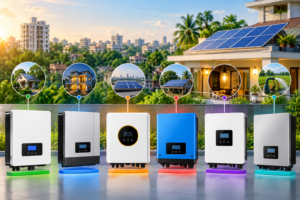
Choosing Between the Two
Lean toward active (fan) cooling if:
- Your system is large enough that a fan-cooled unit is standard for its output class
- It runs under continuous heavy load through the day, especially in an industrial or commercial setting
- It’s installed somewhere with limited airflow, high ambient heat, or no shade
- Sustained full output matters more to you than silence
Lean toward passive (natural) cooling if:
- Your system is a typical home-sized install, where this is likely the default anyway
- Noise is a real concern — it’s near living space, a bedroom, or a shared wall
- The installation location can offer genuinely open airflow and some shade
- You’d rather avoid any moving parts at all, even at the cost of a slightly earlier derating point on the hottest days
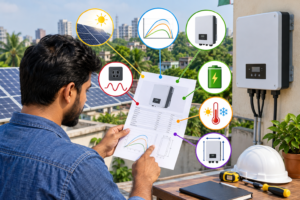
Cooling type is one factor among several in how long an inverter lasts and how well it performs — component quality, IP rating, and installation quality all matter just as much. It’s worth raising directly with whoever is helping you evaluate quotes or choose an installer: ask what cooling type is fitted, what its IP rating is, and what a realistic maintenance schedule looks like for your specific site. That’s a more useful conversation than assuming one type is universally “better” — the honest answer really does depend on your system size and where it’s going to sit.
FAQs
Does a passive-cooled inverter really need no maintenance at all?
It needs far less than a fan-cooled unit, but not zero. The heat sink fins and surrounding vents still collect dust over time and should be checked periodically, along with making sure nothing has been placed too close to block airflow.
Why is my new inverter making a humming or fan noise?
If it’s a fan-cooled model, a low hum while it’s actively converting power during daylight hours is normal. It should be noticeably quieter or silent at night when there’s no solar input. Continuous loud or grinding noise is worth having checked.
Is fan cooling better for hot climates like Bangladesh’s?
Generally yes for larger, continuously loaded systems, because it sustains output better as ambient temperature rises. For a typical home-sized system, though, placement and airflow around a passive unit usually matter more than the cooling type itself.
Can I choose the cooling type when buying a home solar inverter?
Often not directly — most inverters below roughly 17-20kW are naturally cooled by default, since they don’t generate enough heat to justify a fan. The more useful question for a home system is where it will be installed and whether that spot allows good airflow.
Does cooling type affect how long an inverter lasts?
It’s one factor among several. A fan is a moving part that can eventually wear out, while a passive unit has none — but component quality, IP rating, and correct installation all affect lifespan at least as much as the cooling method.