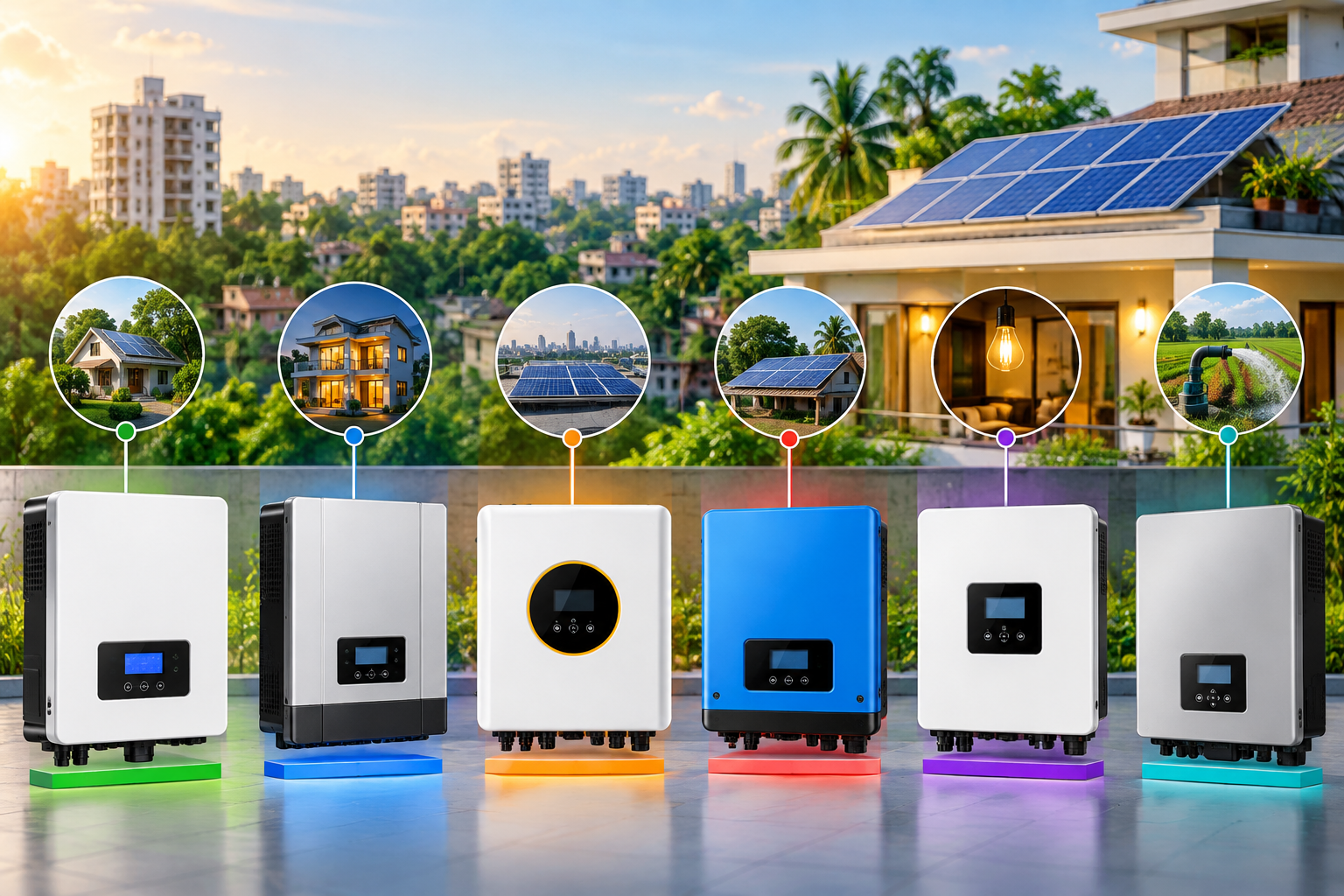
Ask five different solar installers in Bangladesh which inverter brand is “the best,” and you’ll probably get five different answers — plus a sixth opinion from your neighbor who just had a system installed. Part of the confusion is that most of the buying guides floating around online were written for India, the US, or Europe, where the brands sold, the pricing, and even the electrical standards don’t line up with what you’ll actually be offered here.
So instead of handing you another top-10 brand list copied from a foreign market, this is about what actually decides whether an inverter serves you well for the next 10–15 years in Bangladesh: the type you need, what separates a good inverter from a risky one, and — the part almost nobody talks about — whether the brand has anyone in the country who’ll answer the phone if it fails.
What does a solar inverter actually do?
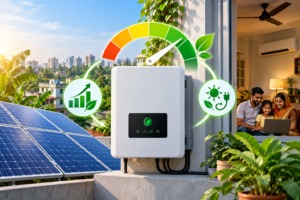
A solar inverter converts the direct current (DC) electricity your panels produce into the alternating current (AC) your home or business actually uses. It’s arguably the most important single component in a solar system — panels rarely fail outright, but inverters are the part most likely to need servicing or replacement over the system’s lifetime.
The three inverter types, and which one you probably need
| Type | How it works | Best for |
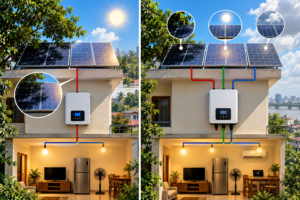
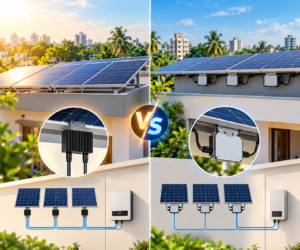
| String inverter | Converts power from a “string” of panels wired together; simplest and cheapest | Grid-tied homes with a clean, unshaded roof and a straightforward net-metering setup |
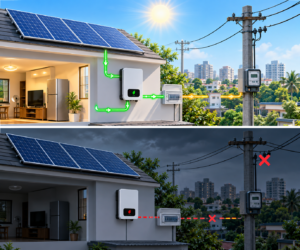
| Hybrid inverter | Manages solar, battery storage, and the grid together, switching automatically when needed | Homes and businesses dealing with load shedding, where battery backup matters as much as solar generation |
| Off-grid inverter | Works independently of the national grid entirely, paired with batteries | Remote areas, or sites with unreliable or no grid connection |
For most urban and semi-urban homes in Bangladesh, the real decision is between a plain string inverter (cheaper, simpler, no battery) and a hybrid inverter (more expensive, but keeps your fridge and lights running during a grid outage). If load shedding is a regular part of your life, a hybrid inverter earns its higher price tag quickly.
What actually separates a good inverter from a risky one
Brand name matters less than these four things:
- MPPT (Maximum Power Point Tracking): This is the technology that lets the inverter squeeze the most usable power out of your panels as sunlight conditions change through the day. Almost every modern inverter has it — but the number of independent MPPT trackers matters if your roof has multiple orientations or partial shading from a neighboring building or water tank.
- Battery compatibility: If you’re considering a hybrid system, check whether the inverter works with lithium batteries specifically. Lithium batteries last longer and handle Bangladesh’s heat better than older lead-acid types, but not every hybrid inverter is built for them out of the box.
- Local service and warranty backing: This is the one foreign buying guides almost never mention, and it’s the one that matters most here. An inverter typically carries a 5–10 year warranty on paper — but that warranty is only as good as the company or distributor actually honoring it in Bangladesh when something goes wrong.
- IP rating and build quality for heat and humidity: Bangladesh’s climate — heavy monsoon humidity, high ambient heat for much of the year — is harder on electronics than temperate markets. An inverter rated for outdoor or semi-outdoor mounting with a solid IP rating will hold up better long-term.
Which brands actually have a presence in Bangladesh?
This is where a lot of online brand lists mislead readers, because they’re written for a different country’s market. Here’s what’s verifiable rather than assumed:
- Sungrow has an established distribution partnership in Bangladesh and has supplied inverters for some of the country’s largest utility-scale solar projects, alongside residential and commercial products. It has real local backing, particularly at the commercial and industrial scale.
- GoodWe maintains a dedicated Bangladesh presence with certified installation partners in several major cities and markets its hybrid inverters specifically around local grid conditions and climate.
- Other globally known names — Growatt, Deye, Solis, Delta, SMA — are genuinely reputable manufacturers and their products do circulate in the Bangladesh market through importers and retailers. What’s harder to confirm from outside is whether every one of them has an official local distributor and warranty desk here, as opposed to units brought in independently. That distinction matters more than the brand name itself.
- Brands that dominate residential buying guides written for India — such as Luminous, Microtek, and Havells — are primarily built around the Indian domestic market and don’t have the same established presence or service network in Bangladesh. Seeing them in a “best inverter” article is often a sign the content wasn’t written with Bangladesh in mind at all.
The honest takeaway: don’t shop by brand reputation alone. Shop by asking your installer or supplier directly, “Who services this brand in Bangladesh, and where do I take it if it fails?” A good answer to that question tells you more than any spec sheet.
What inverters typically cost in Bangladesh
Exact market pricing varies by capacity, brand, and current import conditions, so treat the following as a rough guide rather than a quote:
- Small residential string inverters (2–3 kW) sit at the lower end of the price range
- Hybrid inverters with battery management cost noticeably more than an equivalent-capacity string inverter, given the added electronics
- Larger three-phase inverters for commercial or industrial use scale up significantly in price
For an actual number relevant to your situation, get quotes from more than one supplier — pricing on imported electronics like this shifts with currency movements and stock availability.
For factories and commercial buildings: a different set of priorities
If you’re sizing an inverter for a factory, warehouse, or commercial building, efficiency percentages matter less than they do for a home system — at scale, even small efficiency differences add up, but so does downtime. Facility managers should weigh:
- Three-phase compatibility for industrial electrical systems
- Remote monitoring capability, so problems get flagged before they cause a production stoppage
- Response time commitments from the local distributor, not just the manufacturer’s warranty terms on paper
- Whether spare parts are stocked locally or need to be imported if something fails
A cheaper inverter that takes three weeks to get a replacement part during a production-critical period usually costs more in the end than a slightly pricier one with a responsive local service desk.
Before you sign anything
A few practical checks worth doing before committing to a brand or a specific quote:
- Ask for the name of the official local distributor or service partner, not just the manufacturer’s name
- Confirm the warranty is registered in your name once installed, not just theoretically valid
- Check whether the inverter is compliant with Bangladesh’s net metering and SREDA-related requirements if you’re planning to export excess power to the grid
- Get the model number and verify it isn’t an older or discontinued version being sold at a discount
If you’re working through system sizing and quotes, this is also the point where it helps to compare full quotes side by side rather than the inverter brand in isolation — a lower-priced inverter is only a good deal if the rest of the system and the installer’s workmanship hold up too.
Choosing an inverter brand isn’t really about finding “the best” one — it’s about matching the type to your situation and confirming there’s someone in Bangladesh who’ll stand behind it. Get those two things right, and the brand name becomes a much smaller decision than it first appears.
FAQs
Which inverter is best for load shedding in Bangladesh?
A hybrid inverter paired with a lithium battery bank is generally the better choice if frequent load shedding is a concern, since it can switch to stored battery power automatically during an outage. A plain string inverter has no battery backup and shuts down when the grid goes out, even on a sunny day.
Do I need multiple MPPT trackers?
Only if your roof has more than one orientation, or parts of it are shaded at different times of day by a water tank, wall, or neighboring building. A single, unshaded, uniformly-angled roof doesn’t need it.
How long do solar inverters typically last?
Most quality inverters carry warranties in the 5–10-year range, though actual lifespan depends heavily on build quality, heat exposure, and how well it’s maintained. It’s common for an inverter to need replacement once during a system’s 20–25 year panel lifespan.
Is a more expensive inverter brand always worth it?
Not automatically. A higher price is worth paying when it buys genuine local service backing, better battery compatibility, or a build quality suited to Bangladesh’s climate — not simply because a brand name is more recognizable internationally.
Can I buy an inverter brand that has no official distributor in Bangladesh?
You can but weigh the risk carefully. If it fails outside a narrow return window, you may have no local path to warranty service or spare parts, even if the manufacturer is reputable elsewhere.