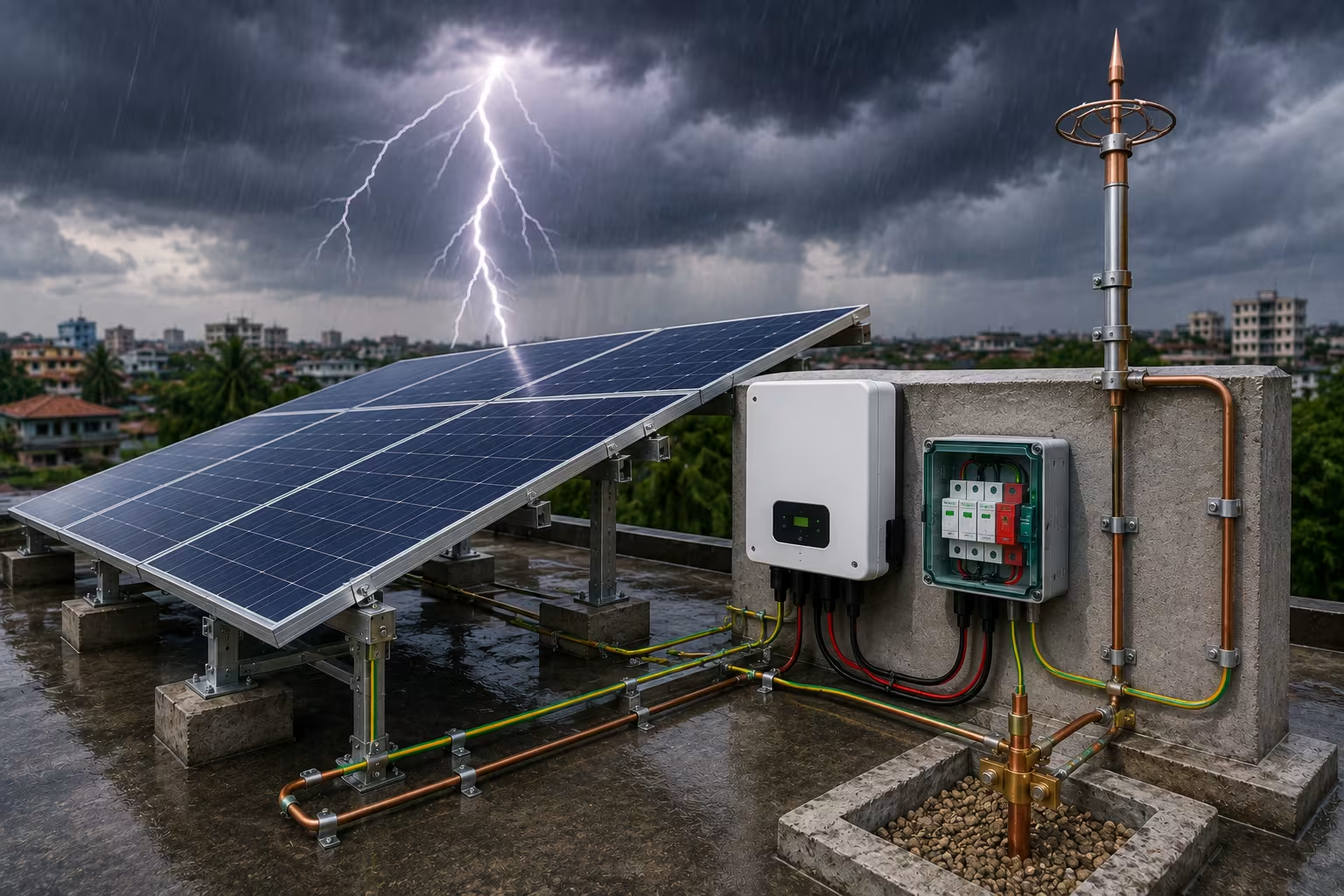
Does Lightning Actually Damage Solar Panels?
Bangladesh sits in one of the most lightning-active parts of the world, and the country has officially recognised lightning as a natural disaster after a string of high fatality years. So it’s a fair question for anyone with panels on their roof: is your solar system now a lightning magnet?
Short answer — no. Solar panels don’t attract lightning any more than any other metal object at the same height. What actually determines risk is how tall your building is, where it sits, and what’s around it. But lightning damage to solar systems is real, and it happens more often through indirect surges than through a direct hit. If you’ve read a story about someone’s inverter dying after a storm, that’s usually what happened — not a bolt landing on the panel itself.
A recent household survey on rural solar-home-system failures in Bangladesh found lightning-related damage sitting alongside inverter faults and loose connections as one of the leading causes of system breakdown, with real repair costs landing on the household. That’s the honest starting point for this article: this isn’t a hypothetical risk dreamed up to sell you hardware. It’s a documented one. But it also doesn’t mean every rooftop needs the same level of protection — and that’s where most guides on this topic fall short.
The Three Ways Lightning Actually Damages a Solar System
Before deciding what you need, it helps to know what you’re protecting against. There are three distinct damage paths, and they call for different defences.
| Damage Type | What Happens | How Common | Typical Result |
| Direct strike | Lightning hits the array, roof, or building structure directly | Rare, but severe when it happens | Physical destruction of panels, mounting, wiring; fire risk |
| Indirect surge (induced) | A nearby strike induces a voltage spike in DC or AC cabling through electromagnetic induction | The most common cause of solar-related lightning damage | Fried MPPT controllers, blown charge controllers, dead inverter boards |
| Ground potential rise (GPR) | Current from a nearby strike raises the local earth voltage, creating dangerous differences between grounded parts | Less common, more relevant near tall structures or poor earthing | Equipment damage, shock hazard, damage to bonded metal parts |
Most solar-related lightning claims — in Bangladesh and elsewhere — come from that second category. A storm doesn’t need to touch your roof at all to cook your inverter’s electronics.
The Core Protection Components, in Plain Terms
Full lightning protection is really a layered system, and you build it up in this order.
Grounding (earthing). Every metal part of your solar system — the panel frames, the mounting rails, the inverter chassis — needs a low-resistance path into the earth. This is the foundation everything else depends on. Without proper earthing, none of the other layers work as intended.
Bonding. All the metal components get electrically connected to each other and tied to a single grounding point. This prevents dangerous voltage differences from building up between parts of the system during a nearby strike — which is what actually causes GPR-related damage.
Surge Protection Devices (SPDs). These are the component most people mean when they say “lightning protection.” An SPD sits on the DC side (between the panels and inverter) or the AC side (between the inverter and the grid or load) and diverts surge energy safely to ground before it reaches sensitive electronics. SPDs come in three types:
| SPD Type | Typical Use | When You Need It |
| Type 1 | Buildings with an external lightning protection system already in place | Only where a direct-strike risk exists and an air terminal/down-conductor system is installed |
| Type 2 | Standard protection for most residential and commercial solar installations | Recommended baseline for almost every grid-tied rooftop system |
| Type 3 | Fine protection close to sensitive equipment (e.g., right at the inverter) | Added on top of Type 2 for extra-sensitive electronics, not a standalone solution |
External Lightning Protection System (LPS) — optional. This is the air-terminal-and-down-conductor setup most people picture when they hear “lightning rod.” It’s only necessary for taller structures or where a direct-strike risk is genuinely elevated — not for a typical single-storey home.
The honest limitation to understand here: none of this stops lightning from striking. What it does is control where the resulting current goes, so it doesn’t pass through your inverter, your wiring, or your building’s occupants. Anyone promising “complete protection” from any single component is overselling it.
How Much Protection Do You Actually Need?
This is the question almost no guide answers directly, and it depends heavily on what kind of system you have.
Home and Residential Systems
If you’re running a small rooftop system on a single or two-storey home — whether it’s an IDCOL-supported off-grid Solar Home System or a grid-tied net-metered setup — your realistic protection stack is:
- Proper grounding and bonding of every metal component (non-negotiable, low cost, and the foundation for everything else)
- A Type 2 SPD on the DC side, and one on the AC side if your inverter doesn’t already include internal surge protection
- An external LPS is usually not required unless your home is unusually tall for its surroundings, sits in an exposed location, or is near taller structures with their own lightning protection you’d want to tie into
Off-grid IDCOL Solar Home Systems typically run at lower DC voltages with simpler wiring, so the protection needs are correspondingly simpler — grounding plus a basic DC-side surge device covers most cases. This is a meaningfully different (and cheaper) protection profile than a grid-tied rooftop system, and it’s worth confirming which category your setup falls into with your installer.
Industrial and Commercial Systems
Factory rooftops, larger commercial arrays, and RMG (garment) facility installations carry higher stakes: production downtime, equipment warranty conditions (many inverter manufacturers require documented surge protection to honour a warranty claim), and compliance obligations under building-safety requirements that have become more prominent across Bangladesh’s industrial sector in recent years.
For these systems, expect:
- Full grounding and equipotential bonding across the entire array, combiner boxes, and building steel
- Type 1 SPDs where the building already has (or requires) an external LPS, paired with Type 2 protection at combiner boxes and string inverters
- Documented earth resistance testing, since compliance and insurance requirements often call for measured values, not assumptions
- Coordination with the building’s existing lightning protection system rather than treating the solar array as a separate, unprotected addition
If your facility falls under the Bangladesh National Building Code’s requirements for taller structures, your solar installation needs to be integrated into that existing lightning protection plan — not bolted on afterward as an independent system.
What Does BNBC Actually Require?
Bangladesh’s lightning protection and earthing requirements come from the Bangladesh National Building Code (BNBC), not the US-based NEC that a lot of English-language solar content cites — that distinction matters if you’re trying to get compliance right rather than just reading generic advice. BNBC’s provisions draw on international references like IEC 62305 and NFPA 780, but they’re applied through Bangladesh’s own building code, and separately, the Bangladesh Electricity Distribution Code governs earthing requirements. Taller structures face mandatory lightning-arrestor requirements under BNBC, with the exact threshold varying by building classification — worth confirming the current figure with a licensed electrical engineer or your installer rather than relying on a fixed number, since code interpretations and updates can shift these details.
If your solar installer is only referencing NEC articles, that’s a sign they’re working from a generic international template rather than one built for Bangladesh’s actual regulatory framework.
Realistic Costs in Bangladesh
Pricing varies by supplier, system size, and installation complexity, so treat the following as observed market ranges rather than fixed figures — always get a current quote before budgeting:
- Small plug-in surge protectors for basic DC-side protection: roughly ৳200–1,000
- Basic lightning arrestor setups from local suppliers: starting from around ৳8,000
- Premium active (ESE-type) arrestor units, common in industrial applications: roughly ৳6,000–7,000 for the arrestor unit alone, before installation, earthing work, and labour
Installation, earth resistance testing, and labour add to these figures and depend heavily on your building’s existing electrical infrastructure. For a residential system, grounding and a Type 2 SPD is usually a modest addition on top of your total installation cost — worth weighing against the realistic cost of replacing a fried inverter or charge controller, which is often where households actually end up paying more than they expected.
Does My Home’s Existing Lightning Protection Cover My Solar System?
Not automatically. An existing building LPS handles direct strikes to the structure, but your solar array’s DC and AC wiring still needs its own bonding and SPDs to handle induced surges — the damage path that’s actually most common. If your building already has an LPS, the right move is to bond your solar system’s metal components into that existing system and add SPDs at the inverter, rather than assuming the building’s protection extends automatically to your panels and cabling.
A Simple Maintenance Checklist
- Have earth resistance tested periodically, especially after monsoon season when soil conditions change
- Visually inspect SPD indicator lights (most have a status window showing whether the device has already absorbed a surge and needs replacing)
- Check that all bonding connections remain tight and corrosion-free — Bangladesh’s humidity and monsoon exposure accelerate corrosion at exposed metal joints
- After any major storm, have your installer check the system rather than waiting for a visible fault to show up
If you’re planning a new rooftop installation or upgrading an existing one and want your grounding, bonding, and surge protection specified correctly for your system size, building height, and location, Muspana can help you plan and install it as part of your overall solar setup rather than as an afterthought.
FAQs
Do solar panels attract lightning?
No. Panels don’t attract strikes any more than any other object at the same height. What matters is your building’s height and surroundings, not the presence of solar panels.
Is lightning protection required by law for solar installations in Bangladesh?
The Bangladesh National Building Code (BNBC) sets lightning-arrestor requirements based on building height, and these apply to the structure your solar system sits on. Confirm the current thresholds and whether they apply to your specific building with a licensed electrical engineer, since requirements vary by building classification.
How much does solar lightning protection cost in Bangladesh?
Basic DC-side surge protectors start from around ৳200–1,000, while full arrestor setups from local suppliers typically start around ৳8,000, with premium industrial-grade units running higher. Treat these as market-observed estimates and get a current quote for your specific system.
Does my home’s existing lightning protection system cover my solar panels?
Not automatically. An existing building LPS protects against direct strikes to the structure, but your solar wiring still needs its own bonding and SPDs to handle induced surges, which are the more common cause of solar-related lightning damage.
Do off-grid Solar Home Systems need the same protection as grid-tied rooftop systems?
No. Off-grid IDCOL-supported systems generally run at lower DC voltages with simpler wiring, so grounding plus a basic DC-side surge device typically covers the need. Grid-tied systems, especially larger or industrial ones, usually require a more layered protection setup.
What actually gets damaged when lightning affects a solar system without a direct hit?
The most common failures are a fried MPPT controller, a blown charge controller, or a damaged inverter board — caused by an induced voltage surge traveling through the DC or AC wiring rather than a direct strike to the panels.