Here’s something that trips people up every time: fossil fuels are actually more efficient than solar panels. Coal and gas plants convert 20% to 40% of their fuel into usable electricity. Solar panels? Somewhere between 15% and 22%.
So why does solar keep winning on price?
That question is the whole story here, and almost nobody bothers to actually answer it. So let’s do the math properly.
Solar Energy vs Fossil Fuels Cost: The Real Numbers
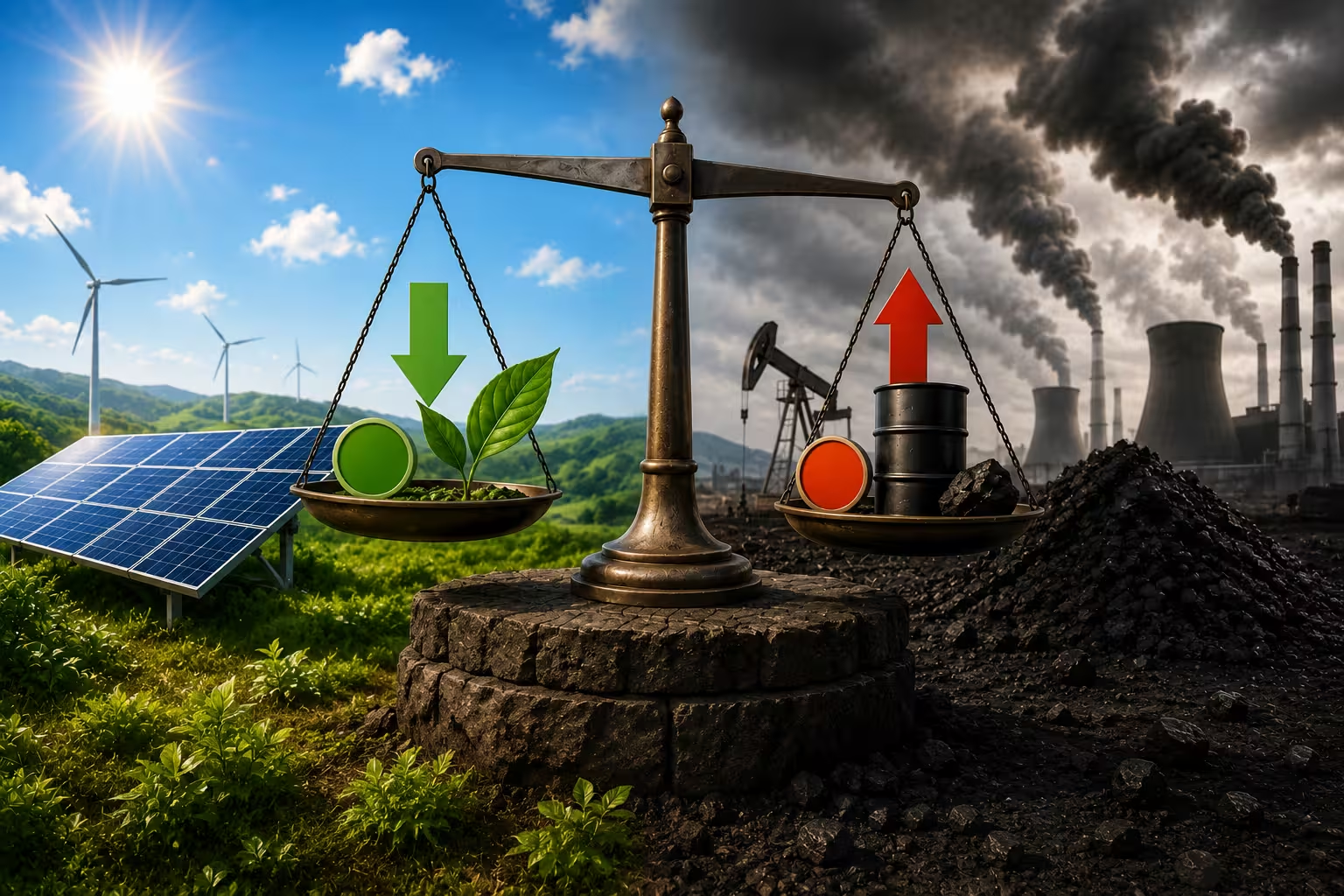
Solar electricity typically runs about 3 to 6 cents per kilowatt-hour. Fossil fuels — coal, natural gas, that whole category — land somewhere between 5 and 17 cents per kWh, depending on the plant, the fuel source, and where you are in the world.
That’s not a small gap. On the high end, fossil fuel power can cost nearly three times what solar does.
Quick answer, if you’re skimming: solar energy costs less per kilowatt-hour than fossil fuels, even though fossil fuels convert energy more efficiently. The reason comes down to fuel cost, not conversion rate — solar’s “fuel” (sunlight) is free forever, while coal and gas have to be mined, shipped, and burned continuously.
Solar vs. Fossil Fuels at a Glance
| Factor | Solar Energy | Fossil Fuels |
| Cost per kWh | 3¢ – 6¢ | 5¢ – 17¢ |
| Efficiency | 15% – 22% | 20% – 40% |
| Emissions | Minimal, near-zero | High CO2 and pollutants |
| Resource availability | Effectively unlimited | Finite, depleting reserves |
| Price trend | Falling steadily | Volatile, tied to global markets |
Why Fossil Fuels Are More Efficient — But Still Cost More
This is the part worth sitting with for a second, because it’s genuinely counterintuitive.
Efficiency measures how much of the raw energy input actually gets turned into electricity. A gas plant burning fuel at 40% efficiency is wasting 60% of that energy as heat — but it’s still squeezing more usable power out of every unit of fuel than a solar panel does out of sunlight.
The catch is that fuel isn’t free. Every kilowatt-hour a coal plant produces requires more coal. More coal means more mining, more transport, more market volatility, more geopolitical risk baked into the price. You’re paying for the fuel every single day the plant runs.
Solar doesn’t have that problem. Once panels are installed, the “fuel” — sunlight — shows up for free, every day, indefinitely. You’re not buying more sunlight as you generate more electricity. The panels themselves lose a little efficiency each year (usually less than 1% annually), but the input cost stays at zero.
So the efficiency gap is real, but it stops mattering once you zoom out to actual dollars spent per kilowatt-hour delivered. Fossil fuels are better at converting energy. Solar is better at not needing to buy that energy in the first place. If you want the deeper mechanics of how panels actually convert light into usable power, the photovoltaic effect is where that whole process starts.
The Carbon and Environmental Impact Gap
Cost is one side of this. Carbon is the other, and it’s not really close.
Solar panels produce electricity with almost no direct emissions. There’s no combustion happening on your roof — no CO2, no sulfur dioxide, no particulate pollution drifting into the air your neighborhood breathes.
Fossil fuels are the opposite story. Burning coal, oil, or natural gas releases large volumes of carbon dioxide, plus a mix of other pollutants that affect air quality well beyond the plant itself. That’s the tradeoff baked into every fossil fuel kilowatt-hour, regardless of how efficiently the plant runs.
Manufacturing solar panels does carry some upfront carbon cost — mining silicon, manufacturing, shipping. That’s real and worth acknowledging rather than glossing over. But that upfront cost gets paid back many times over across a panel’s 25-to-30-year lifespan, while a fossil fuel plant keeps emitting for as long as it operates.
Running Out vs. Running Forever
There’s a resource math problem underneath all of this too.
Fossil fuel reserves are finite. Coal, oil, and natural gas took millions of years to form, and we’re extracting them on a timeline measured in decades. Every barrel burned is one that doesn’t exist anymore. Prices react to that scarcity — which is part of why fossil fuel costs swing so much depending on region, geopolitics, and supply constraints.
Sunlight doesn’t run out. It’s not a resource you can deplete by using it. That’s the entire premise behind solar’s long-term economics — you’re building infrastructure around a fuel source that will keep arriving whether you use it or not.
This matters more in some places than others, honestly. If you’re in a region with strong, consistent peak sun hours, the math tilts even further in solar’s favor. Somewhere with fewer sunny days and lower solar radiation, the payoff timeline stretches out — still positive, just slower.
What’s Driving Solar’s Price Drop
Solar wasn’t always this cheap. A decade or two ago, the cost-per-kWh numbers looked very different, and fossil fuels held a much stronger price advantage.
A few things changed that:
- Panel manufacturing got cheaper. Production scaled up globally, and the cost of making a solar panel has dropped dramatically compared to even ten years ago.
- Panel efficiency improved. Incremental gains in photovoltaic technology mean panels squeeze more electricity out of the same amount of sunlight than older models did.
- Government incentives. Tax credits, rebates, and net metering programs shift the upfront cost equation in solar’s favor in a lot of regions.
- Installation costs came down. Labor and hardware costs for residential and commercial solar have both dropped as the industry matured.
None of this happened overnight, and it’s not finished happening either. Solar adoption keeps climbing as these numbers keep improving, which is part of why the adoption trend line has been so steadily upward.
So, Is Solar Worth It?
Here’s where I’ll be honest instead of cheerleading: solar isn’t automatically the right call for everyone, everywhere, right now.
It tends to make the most sense if you’re in a region with decent sun exposure, if there are solar incentives available where you live, and if you’re planning to stay in your home long enough to actually hit the payback period — usually somewhere in the 6-to-12-year range, depending on system size, local electricity rates, and incentives.
It makes less sense if you’re in a low-sunlight region, renting, or planning to move in the next couple of years. The upfront installation cost is real, and it takes time to recoup.
But on pure cost-per-kilowatt-hour and carbon impact, the numbers aren’t really in dispute anymore. Solar costs less to run, produces a fraction of the emissions, and draws from a resource that isn’t going anywhere. Fossil fuels still win on raw conversion efficiency and, in some cases, on upfront simplicity — but they’re burning through a finite resource to get there, and the price reflects it.
If you’re weighing this seriously, it’s worth looking beyond just solar vs. fossil fuels too — comparing solar against wind energy or understanding how solar technology got here can round out the full picture before you make a call either way.
FAQs
Is solar cheaper than fossil fuels?
Yes, on a cost-per-kilowatt-hour basis. Solar typically runs 3 to 6 cents per kWh, while fossil fuels run 5 to 17 cents per kWh. The gap comes down to fuel cost, not conversion efficiency — sunlight is free, coal and gas aren’t.
Why are fossil fuels more efficient than solar if they cost more?
Fossil fuel plants convert 20% to 40% of their fuel into electricity, versus 15% to 22% for solar panels. But efficiency only measures conversion rate, not total cost. Fossil fuels require continuous fuel purchases, while solar’s “fuel” — sunlight — is free indefinitely.
How long do solar panels take to pay off?
Most residential systems hit their payback period somewhere between 6 and 12 years, depending on local electricity rates, available incentives, system size, and how much sun your region actually gets.
Is solar actually better for the environment?
Yes. Solar panels produce electricity with almost no direct emissions, while fossil fuels release significant carbon dioxide and other pollutants during combustion. There’s an upfront manufacturing carbon cost with solar, but it’s recovered many times over across a panel’s lifespan.
Will fossil fuel costs keep rising?
Likely, though it varies by region and market conditions. Fossil fuel reserves are finite, and prices tend to reflect supply constraints, extraction costs, and geopolitical factors — all of which push costs upward over time, unlike solar’s flat, fuel-free cost structure.