If you’ve searched for how rooftop solar gets approved here, you’ve probably run into articles written for India, where a single DISCOM handles everything through one national portal, backed by a direct subsidy. Bangladesh doesn’t work that way, and pretending it does is how people end up applying to the wrong office or waiting for a subsidy that was never coming.
In Bangladesh, approval runs through whichever distribution utility serves your address. There are six of them, and which one you deal with depends entirely on where your meter is:
| Utility | Where it typically applies |
| DESCO | Parts of Dhaka city |
| DPDC | Other parts of Dhaka city |
| BREB | Rural and semi-urban areas nationwide, through local Palli Bidyut Samity offices |
| NESCO | Rajshahi division and surrounding areas |
| WZPDCL | Khulna and the southwest |
| BPDB | Remaining areas not covered above |
If you’re not sure which one bills you, check your electricity bill — it names the issuing utility directly. That’s your starting point, not a national website.
What Net Metering Approval Actually Means
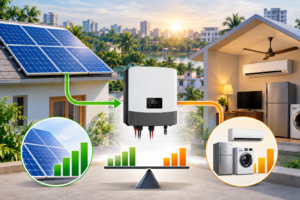
Net metering approval is the formal process by which your utility agrees to connect your rooftop solar system to the grid, install a bidirectional meter that tracks both the power you draw and the power you send back, and let you offset your consumption with what you export. Without this approval, you can still put panels on your roof, but you can’t legally export power to the grid or count on the utility to bill you for the net difference.
The rules for this process currently sit under the Net Metering Guidelines 2018, amended in 2019 — though the government approved a revised Net Metering Guidelines 2025 in August 2025. That update reportedly widens eligibility (including single-phase and prepaid-meter customers) and moves toward allowing fuller power injection to the grid. At the time of writing, individual utilities were still working through how the new rules apply in practice, so if you’re mid-application, it’s worth asking your utility directly whether the 2018/2019 framework or the 2025 update governs your case.
The Approval Process, Step by Step
The exact paperwork varies slightly by utility, but the sequence is broadly consistent:
- Apply through your utility. Submit an application to your distribution utility — DESCO, DPDC, BREB, NESCO, WZPDCL, or BPDB — along with the required fee and documents.
- Site inspection. A utility engineer visits to check your roof space, shading, wiring, and — importantly — your sanctioned load, since your solar system’s capacity generally can’t exceed what your connection is rated for.
- Net metering agreement. Once the site passes inspection, you sign an agreement with the utility setting out the terms of the connection.
- Install within the approved window. You (or your installer) complete the installation, typically within a set period after approval.
- Submit completion documents. This usually includes a single-line diagram, a bill of quantities, a completion report, photos of the finished installation, and equipment invoices.
- Final inspection and commissioning. The utility checks the completed system against what was approved, then issues a commissioning certificate and installs the net meter.
- Billing begins under net metering. From here, your bill reflects net consumption rather than gross consumption, typically settled on the utility’s regular billing cycle.
None of these steps are unusual on their own — what trips people up is not knowing which utility to start with, or submitting documents in a format the inspecting engineer doesn’t recognize. A proper site survey before you apply catches most of this early.
Documents You’ll Need Before You Start
Have these ready before you submit anything — it’s the single biggest thing that speeds up an application:
- Copy of your electricity bill (confirms your utility and sanctioned load)
- National ID or business registration documents
- Proof of roof ownership or, for apartment buildings, written consent from the building owner or management committee
- Technical specifications of the panels and inverter you plan to install
- Single-line diagram of the proposed system
- Application fee payment receipt
For apartment buildings specifically, that consent document is where a lot of applications stall. If the rooftop isn’t solely yours to modify, get the building’s written agreement before you go any further — not after your installer has already been booked.
How Long Does It Actually Take?
Be wary of any article that gives you one confident number here. Reported residential timelines run around two to four weeks for the inspection-to-approval stage, though this varies by utility workload, season, and how complete your paperwork is on first submission. Some official process documents also reference an installation window of up to six months following approval, which is separate from how long the approval itself takes.
Delays usually come from one of three places: incomplete documents on first submission, a backlog of inspection requests at your local utility office, or a mismatch between your proposed system size and your sanctioned load. None of these are things a portal fixes for you — they’re things a careful application avoids in the first place.
Is There a Subsidy for Rooftop Solar in Bangladesh?
Not a direct one, no. There’s no Bangladeshi equivalent of a straightforward per-kilowatt government subsidy paid to homeowners for going solar. What exists instead is financing support — most notably through IDCOL, which works with financial institutions on solar-related loans and refinancing rather than handing out direct grants. If a vendor tells you a national subsidy will cover part of your system cost, ask them to point to the specific scheme, because as of now, that claim doesn’t hold up the way it might for readers comparing this against other countries’ programs.
This matters more for household budgeting than it might seem. If you’re planning your numbers around a subsidy that isn’t there, your actual payback period is longer than expected — better to know that going in than to find out after signing a quote.
Homes vs. Factories: Where the Process Diverges
For a homeowner, the approval process above is essentially the whole story: apply, get inspected, sign the agreement, install, get commissioned. For industrial and commercial applicants, there’s an added layer worth knowing about.
For many new commercial and industrial grid connections, rooftop solar is moving from “worth considering” to something closer to a condition of getting connected at all, particularly for larger loads. If you’re a factory owner in Gazipur or Narayanganj applying for a new or upgraded connection, this isn’t a savings decision you can defer — it may be baked into your connection approval itself. Medium-voltage connections also come with their own sizing rule: your system’s capacity generally can’t exceed a set percentage of your transformer’s capacity, on top of the standard sanctioned-load limit.
Industrial applicants should also expect a more detailed technical review during inspection — transformer loading, protection equipment, and export limits get more scrutiny at higher connection voltages than they do for a typical home rooftop.
Where Approvals Usually Go Wrong
A few patterns show up repeatedly:
- Sizing the system to the roof, not the sanctioned load. A roof might fit a 10kW system, but if your sanctioned load only supports 5kW, that’s your ceiling until you upgrade your connection.
- Skipping apartment consent. Installing before securing written building consent is one of the fastest ways to get an application rejected or delayed indefinitely.
- Using an unregistered installer. Utilities generally expect installations from vendors they recognize; an unfamiliar installer can mean extra scrutiny or documents sent back for correction.
- Assuming the process is instant. Treating this like signing up for a mobile plan, rather than a regulated utility connection, is the most common source of frustration.
Choosing an Installer Who Knows the Paperwork
This is the part of the process where experience genuinely shows. An installer who’s been through DESCO’s, DPDC’s, and BREB’s paperwork repeatedly tends to submit single-line diagrams and completion reports in the format each utility actually expects — which avoids a round-trip of corrections that can add weeks to an otherwise straightforward application.
Muspana has been designing and installing on-grid, off-grid, and hybrid rooftop systems in Bangladesh since 2008, including institutional and government installations, and has been through this documentation process across multiple utilities. That’s less a sales pitch and more a practical reason to work with a locally established installer rather than treating the paperwork as an afterthought.
If you’re still deciding whether solar makes financial sense before you even get to the approval stage, it’s worth working out your numbers first — starting with how net metering compares to gross metering for your situation, and what your realistic system cost looks like before you apply.
FAQs
Which utility do I apply to for net metering in Bangladesh?
Whichever one issues your electricity bill — DESCO or DPDC if you’re in Dhaka city, BREB if you’re on a rural or semi-urban connection through a Palli Bidyut Samity, or NESCO, WZPDCL, or BPDB depending on your region. Your bill states which utility serves you.
Is there a government subsidy for rooftop solar in Bangladesh?
Not a direct one. There’s no per-kilowatt subsidy paid to homeowners. Financing support exists through channels like IDCOL, which works through loans and refinancing rather than direct grants.
How long does net metering approval take?
Typically around two to four weeks for the inspection-to-approval stage on a residential system, though this varies by utility, season, and how complete your documents are on first submission. Larger or industrial systems can take longer.
Can I install solar on my apartment building’s roof?
Only with written consent from the building owner or management committee, since the rooftop usually isn’t solely one flat owner’s to modify. This consent document should be secured before installation, not treated as a formality afterward.
What happens if my solar system is bigger than my sanctioned load?
Utilities generally cap your net-metered system capacity at your sanctioned load. If you want a larger system, you may need to apply to increase your sanctioned load first, which is a separate process from the net metering application itself.
Is rooftop solar mandatory for factories in Bangladesh?
For many new or upgraded industrial and commercial connections, rooftop solar is increasingly required as part of getting the connection approved, rather than being optional. Requirements vary by connection type and load, so it’s worth confirming directly with your utility during the application stage.