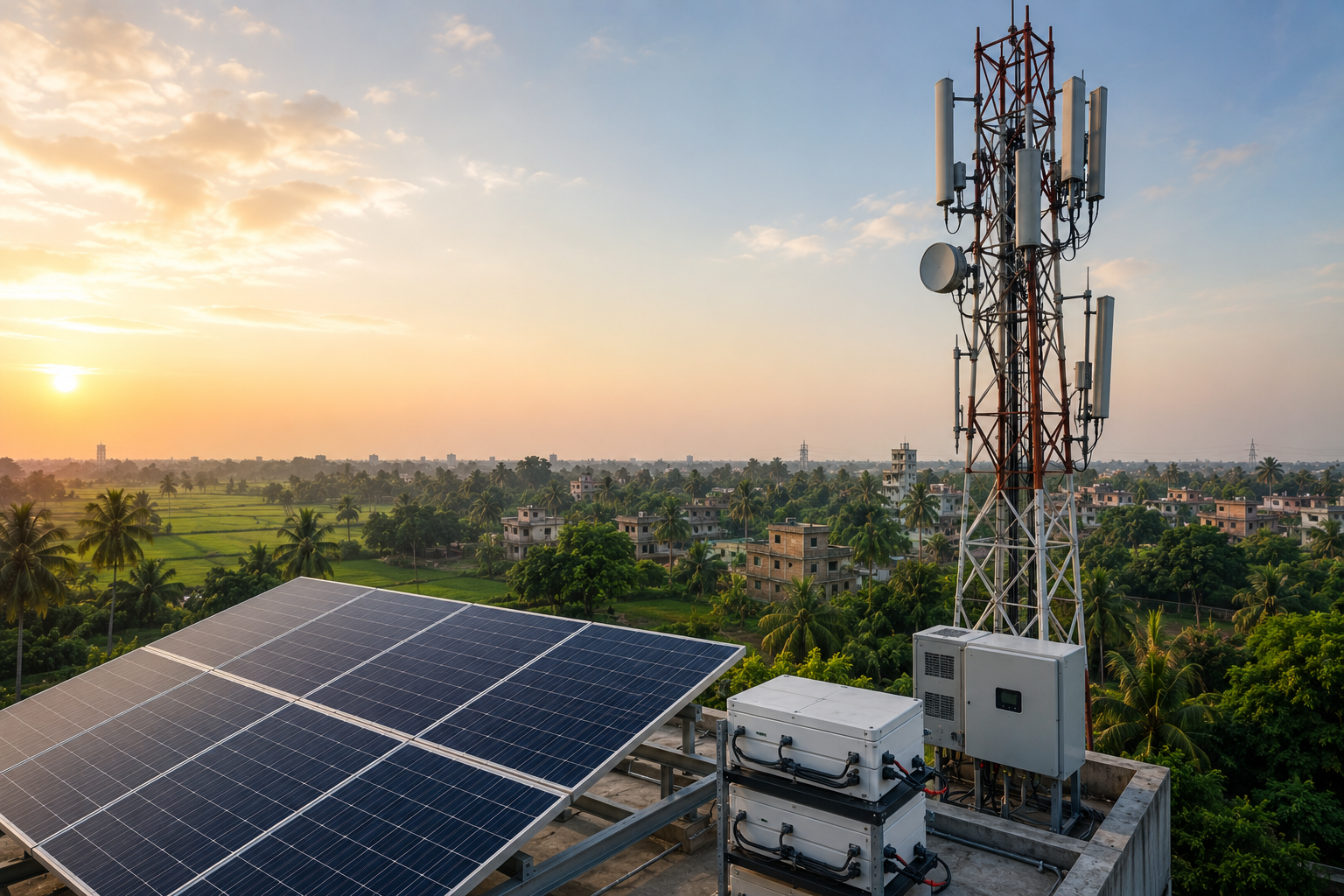
A telecom tower can’t afford to go dark. Not for an hour, not for a monsoon afternoon, not because the grid tripped again in a rural upazila. That’s the real reason solar has become part of the conversation for tower operators in Bangladesh — not because it’s trendy, but because diesel is getting harder to justify and the grid isn’t reliable enough to run alone.
This isn’t a “solar is green” pitch. It’s a look at how solar actually fits into telecom power, where it falls short on its own, and what a realistic system looks like for a Bangladeshi site.
Why Telecom Towers Are Such Demanding Loads
A standard BTS (Base Transceiver Station) site isn’t a light load. Between the radio equipment, microwave links, and cooling for the equipment cabinet, a typical site draws somewhere in the range of 1–3 kW continuously — and unlike a home or office, that draw doesn’t drop at night or on weekends. The tower needs power every hour of every day, without exception.
That constant, unforgiving demand is exactly why diesel generators became the default backup for decades: they don’t care about weather or daylight. But they come with their own baggage — fuel logistics, theft risk at remote sites, engine wear, and a running cost that moves with global oil prices, not with anything the operator controls.
Solar vs. Diesel vs. Hybrid — What Actually Works for a Tower
| Solar-only | Diesel-only | Hybrid (Solar + Battery + Diesel/Grid) | |
| Uptime reliability | Weak alone — no power at night without large battery banks | High, but dependent on fuel supply | Strong — solar handles daytime load, battery covers nights, diesel/grid is backup |
| Running cost | Low once installed | High and volatile (fuel + engine maintenance) | Moderate — fuel use drops sharply, doesn’t disappear |
| Upfront cost | High (panels + large battery bank) | Low | Moderate-high (panels + battery, smaller diesel role) |
| Maintenance | Panel cleaning, inverter checks | Frequent (oil changes, fuel delivery, engine wear) | Mixed — less than diesel-only, more than solar-only |
| Best suited for | Rarely used alone for towers | Very remote sites with no other option | Most off-grid or unreliable-grid tower sites |
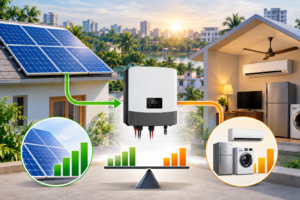
In practice, almost no tower runs on solar alone. What’s actually being deployed — in Bangladesh and elsewhere — is a hybrid system: solar as the primary daytime source, batteries to carry the load through the night, and diesel or grid power as a fallback for extended low-sun stretches.
How a Hybrid Solar-Diesel Tower System Actually Works
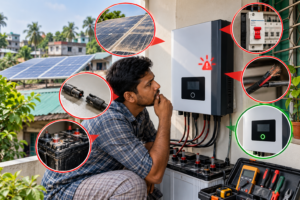
The core of the system is a hybrid controller — often built around an MPPT (Maximum Power Point Tracking) charge controller — that constantly decides where the tower’s power should come from.
The logic is straightforward, even if the electronics aren’t:
- During daylight, the MPPT controller pulls maximum output from the solar array and uses it to run the tower load directly, sending any surplus to charge the battery bank.
- After sunset, the battery bank — typically VRLA or increasingly lithium — takes over and runs the site through the night.
- If the battery drops below a set threshold (because of a long cloudy stretch or unusually high load), the controller automatically starts the diesel generator or switches to grid power, recharges the battery, and hands control back to solar once conditions improve.
None of this requires a technician on-site making decisions in real time — that’s the point of the smart controller. But it does require the system to be sized correctly in the first place, which is where a lot of underperforming installations go wrong.
Sizing: The Part Competitors Skip Over
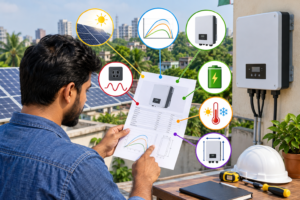
Most generic content on this topic stops at “solar panels power the tower.” The actual engineering question is: how much solar and battery does a specific site need to stay powered through its worst realistic day?
That depends on three things:
- The site’s actual load profile — a single BTS cabinet draws less than a multi-operator tower with several radio units and heavier cooling needs. Load calculation has to happen before anything else.
- Battery autonomy — how many hours (or days) the site needs to run purely on stored battery power without any sun or backup input. A site in an area with frequent, unpredictable load shedding generally needs more autonomy built in than one with a stable grid connection. This is sized specifically, not estimated from a rule of thumb.
- Local solar yield — how many usable sun hours the site actually gets, which varies by season and region, not just by rough national averages.
There’s no single “right” panel or battery count that applies to every tower. Any article — or vendor — that gives you a fixed number without asking about your load profile first is skipping the part that actually determines whether the system works.
What Bangladesh Adds to the Equation
A few conditions in Bangladesh make solar-hybrid systems a genuinely practical fit for towers — not because they’re forced into the conversation, but because they reflect real operating realities:
Grid instability and load shedding. Off-grid and semi-grid tower sites, especially outside major urban corridors, deal with frequent and often unpredictable power interruptions. For a tower, an unreliable grid isn’t an inconvenience — it’s a direct risk to network uptime. That’s the actual driver behind solar-hybrid adoption here, more than any environmental argument.
Diesel cost and logistics. Fuel has to be transported and stored at remote sites, and its price moves with global markets rather than anything a tower operator controls. A hybrid system that cuts diesel runtime — even without eliminating it entirely — reduces exposure to that volatility.
Monsoon season. This is worth being honest about rather than glossing over: solar generation drops during extended monsoon cloud cover, and a system sized only for dry-season sun hours will struggle in July and August. A properly sized hybrid system accounts for this by leaning more on battery autonomy and backup power during the wettest months, not by pretending the dip doesn’t happen.
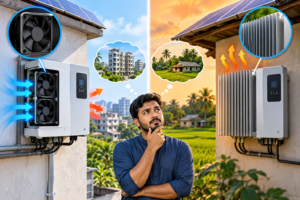
Heat. Sustained high temperatures affect both panel output and battery lifespan, particularly for lead-acid battery banks. This is a real design consideration — not a dealbreaker, but a reason component selection matters more here than in a milder climate.
Dust and soiling. Between the dry-season dust and monsoon runoff carrying debris, tower-mounted panels need a realistic maintenance schedule, not a “set it and forget it” assumption — soiling losses at a poorly maintained remote site can be significant.
For context: India has solarized a meaningful share of its telecom sites in recent years, with major operators expanding deployment rapidly. That’s a useful data point about the direction the industry is moving in the region — but it’s an India-specific figure, not a Bangladesh one, and shouldn’t be read as a claim about local adoption rates here.
Deployment Challenges Worth Knowing Upfront
Hybrid systems aren’t a simple swap. A few trade-offs are worth going in with eyes open:
- Upfront capital cost is higher than diesel-only. The payback comes from reduced fuel and maintenance costs over time, not from a cheap installation.
- Security matters at remote sites. Solar panels and battery banks represent equipment value sitting in locations that may not have on-site staff around the clock — this is a real planning consideration, not an afterthought.
- Maintenance access. A site an hour outside a district town needs a maintenance plan that accounts for travel time, not the same response window as an urban rooftop.
- ROI timelines vary by site. A tower with heavy diesel dependence and frequent load shedding will see a faster payback than one with a comparatively stable grid connection — there’s no single number that applies across every deployment.
None of these rule out hybrid solar. They just mean the decision should be made site-by-site, based on actual load and grid conditions, not a blanket assumption that every tower benefits equally.
Choosing a Partner for Critical-Load Sites
Designing power for a telecom tower isn’t the same exercise as sizing a rooftop system for a home or a small commercial building — the load never stops, and downtime has real operational consequences. It calls for the same rigor used across other continuous, critical-load industrial applications: accurate load calculation, realistic autonomy sizing, and hybrid controller logic that’s actually tuned to the site rather than a generic default.
That’s the kind of system design Muspana approaches critical-load and industrial solar projects with — starting from the site’s real numbers rather than a standard package. If you’re evaluating solar-hybrid options for a tower site or similar continuous-load facility, comparing quotes properly is worth doing before committing to any vendor’s numbers.
FAQs
Can solar power a telecom tower on its own, without diesel or grid backup?
Rarely in practice. Most tower sites use a hybrid setup — solar as the primary daytime source, battery storage for overnight, and diesel or grid as backup — because relying on solar alone would require an oversized, expensive battery bank to guarantee uptime through cloudy stretches or monsoon season.
How much solar power does a typical telecom tower need?
It depends on the site’s actual load, which commonly falls in the 1–3 kW continuous range for a standard BTS site, but varies with the number of radio units, cooling requirements, and equipment installed. Sizing should be based on the specific site’s load calculation, not a fixed industry number.
Does solar generation drop significantly during Bangladesh’s monsoon season?
Yes — extended cloud cover during monsoon reduces solar output, which is why a well-sized hybrid system leans more on battery autonomy and backup power during those months rather than assuming dry-season sun hours year-round.
Is a solar-hybrid system cheaper than running a diesel generator long-term?
The upfront cost is higher, but ongoing costs are typically lower since diesel consumption and engine maintenance drop significantly. The actual payback timeline depends on the site’s current diesel usage and grid reliability, so it varies case by case rather than following a fixed formula.
What maintenance does a solar-powered tower system need?
Regular panel cleaning to manage dust and soiling, periodic battery health checks, and inverter/controller monitoring. Remote sites also need a realistic maintenance schedule that accounts for travel time and access, not just the same response window used for urban installations.