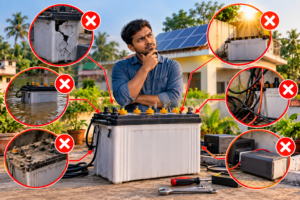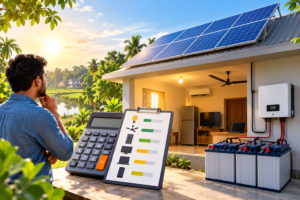
The battery is usually the most expensive part of a home solar system. It is also the part most likely to cause regret.
A brand can look perfect in a global ranking and still be a poor purchase if nobody nearby can service it. That is the problem with most lists of the best solar battery brands: they are written for the US, Europe or Australia, where every product on the list can be bought, installed and claimed under warranty.
Bangladesh is different. This comparison uses the same well-known brands, but it also asks the questions that matter here: can you buy it, will anyone support it, and does it work with the inverter you already have?
A quick note on how to read this. The specifications below come from a 2026 international brand roundup and reflect what manufacturers publish. Models change, and regional warranty terms can differ. We have not confirmed which of these brands have authorised distributors in Bangladesh, so treat availability as something to check with the supplier, not something to assume.
Which solar battery brand is best? The short answer
There is no single winner. The right brand depends on what you are trying to do:
- Premium whole-home backup: Tesla Powerwall 3
- Homes that already use Enphase microinverters: Enphase IQ Battery
- High power from a single unit: FranklinWH aPower 2
- Flexible, expandable storage: BYD Battery-Box HVL or Sungrow stackable systems
- Smart-home integration: Sigenergy SigenStor
- Efficient, more affordable residential systems: SolaX X-Hybrid series
Almost all of these use LiFePO4 chemistry, which is worth understanding before you compare anything else.
What is LiFePO4, and why does every good battery use it?
LiFePO4 (also written LFP) is lithium iron phosphate, a lithium battery chemistry. It has become the standard for home solar storage because it is generally considered safer and longer-lasting than older lithium NMC batteries. Manufacturers commonly quote 6,000 or more charge cycles for LFP, though the real figure varies by product and how the battery is used.
“Generally safer” is not the same as “can never catch fire.” Good LFP batteries also rely on a battery management system (BMS) to keep voltage and temperature in check. If you want to see what that does, our guide to energy storage in solar systems covers the basics.
What to check before you compare brands
Brand names get the attention, but four details decide whether a battery works for you.
1. Usable capacity, not headline capacity. A battery’s label shows total kWh, but you can’t always use all of it. Ask for the usable figure.
2. Power output. Capacity tells you how long the battery can run things. Power output (in kW) tells you what it can run at the same time. A battery with plenty of kWh but low output may not start your air conditioner and a water pump together.
3. Inverter compatibility. This is the mistake people make most often. Some batteries only work with specific inverters. Enphase batteries, for example, are designed to fit into systems built around Enphase microinverters. Before you pay for anything, confirm that the battery and your inverter can communicate. Our guides on choosing a hybrid solar system and DC vs AC coupling explain why.
4. Warranty fine print. “10 years” sounds simple, but the terms usually attach conditions, such as a cycle limit, a total energy throughput, or a minimum capacity the battery must keep. And a warranty only helps if someone local will honour it.
The brands, one by one
The capacity and warranty figures below are manufacturer figures from the roundup we used. Verify them against the current datasheet for the exact model you are quoted.
Tesla Powerwall 3: premium backup
- Capacity: 13.5 kWh
- Warranty: 10 years
- Good for: Homes that want strong whole-home backup and a polished, integrated system
- Watch out for: It is built around the Tesla ecosystem, and we haven’t confirmed local Bangladesh support. Check that before paying a premium price.
Enphase IQ Battery: for existing Enphase systems
- Capacity: 5 to 10 kWh (IQ Battery 5P / 10C)
- Warranty: 10 to 15 years
- Good for: Homes that already use Enphase microinverters, where integration is very smooth
- Watch out for: It makes the most sense inside an Enphase system. If your setup uses a different inverter, this isn’t the natural fit.
FranklinWH aPower 2: high power in one unit
- Capacity: 15 kWh
- Warranty: 15 years
- Good for: Larger homes with heavy loads that want high peak power without stacking several units
- Watch out for: A long warranty is only as good as the local service behind it. Confirm who actually handles claims in Bangladesh.
BYD Battery-Box HVL: modular and scalable
- Capacity: 5 to 60+ kWh
- Warranty: 10 years
- Good for: Systems that will grow over time, and larger homes or small businesses
- Watch out for: It has to be paired with a compatible hybrid inverter. Check the approved list before buying.
Sungrow high-voltage stackable batteries: value and scale
- Capacity: 9 to 102 kWh
- Warranty: 10 years
- Good for: Buyers who want good value and room to expand, including commercial-scale storage
- Watch out for: Like BYD, it works best with matching or approved inverters.
Sigenergy, SolaX and Anker SOLIX: worth a look
- Sigenergy (SigenStor): About 8.8 to 48+ kWh, 10-year warranty, aimed at smart-home integration.
- SolaX (X-Hybrid series): About 5 to 30 kWh, 10-year warranty, positioned as an efficient and affordable residential option.
- Anker SOLIX: Noted in the roundup for durability. We don’t have comparable capacity and warranty figures, so check the current specs directly.
Side-by-side comparison
| Brand | Best for | Key model | Capacity | Warranty | Bangladesh availability |
| Tesla | Premium backup | Powerwall 3 | 13.5 kWh | 10 years | Verify locally |
| Enphase | Microinverter systems | IQ Battery 5P/10C | 5–10 kWh | 10–15 years | Verify locally |
| FranklinWH | High power output | aPower 2 | 15 kWh | 15 years | Verify locally |
| BYD | Scalable storage | Battery-Box HVL | 5–60+ kWh | 10 years | Verify locally |
| Sungrow | Value and scalability | High-voltage stackable | 9–102 kWh | 10 years | Verify locally |
| Sigenergy | Smart ecosystem | SigenStor BAT | 8.8–48+ kWh | 10 years | Verify locally |
| SolaX | Efficiency | X-Hybrid series | 5–30 kWh | 10 years | Verify locally |
Source: manufacturer specifications as summarised in a 2026 international roundup. Confirm every figure against current datasheets.
The Bangladesh reality check
Here is where a global ranking stops being useful.
Support matters more than the spec sheet. Most of these products are imported. When something goes wrong, your warranty depends on the local distributor or installer, not on the manufacturer’s headline promise. A battery with an average spec and solid local service is often the safer buy than an excellent one you would have to ship abroad.
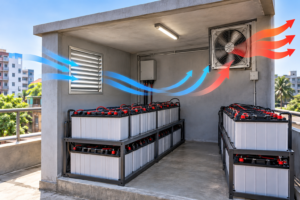
Heat and humidity are real factors. Batteries lose performance and life when they run hot. Look up the operating temperature range on the datasheet, and think about where the battery will sit. A cramped, unventilated flat balcony is a different environment from a cool utility room. For a deeper look, see our piece on solar in extreme climates.
Space is tight in apartments. Compact, wall-mounted LFP units tend to suit flats better than bulky older battery banks.
For many households, backup is the main value. In some countries the pitch for batteries is bill savings. In Bangladesh, the more immediate reason for many families is keeping the lights, fans and internet running during outages. Don’t assume a battery will pay for itself on savings alone. Our guide on solar storage economics walks through how to think about that.
Costs and rules need checking. Import duties, prices and net-metering rules can change. We haven’t listed prices here because we don’t want to give you a number that may be out of date. Ask for written quotes and compare them using our guide to evaluating solar quotes.
Should you still consider lead-acid batteries?
Many Bangladeshi homes already know lead-acid batteries from IPS and UPS systems. They usually cost less upfront, which is why they remain popular. But they generally last fewer cycles and are not meant to be drained deeply, which means you often can’t use as much of the rated capacity.
If your budget is tight and your backup needs are modest, lead-acid can still make sense. If you want a system that lasts and needs less babysitting, LFP is usually the better long-term choice. The upfront price is only one part of the picture, so compare cost over the battery’s whole working life.
How to choose a solar battery in five steps
- Work out your backup needs. List what must keep running and for how long. Our battery bank sizing guide shows you how.
- Check your inverter. Confirm the battery is compatible, or budget for a compatible hybrid inverter.
- Confirm local support. Ask who installs it, who services it and who handles warranty claims in Bangladesh.
- Read the warranty conditions. Look for cycle limits, throughput limits and the capacity it must retain.
- Get the usable capacity and operating temperature in writing.
Questions to ask any supplier
- Is this an authorised distributor for this brand in Bangladesh?
- Which inverters is this battery approved to work with?
- What is the usable capacity, and what is the continuous power output?
- Who handles warranty claims, and what is the process?
- What temperature range is the battery rated for?
A note for shops, clinics and small businesses
Business users care about different things: scalability, cycle life and service support. Modular systems such as BYD and Sungrow are popular for this reason, since you can add capacity as your load grows. The same rule applies, though: the service arrangement matters as much as the hardware. See our overview of solar for commercial buildings for the wider picture.
Where to go from here
If you’re planning a system, start by sizing your loads before you shop for a brand. Choosing the battery first is how people end up with a mismatched inverter.
Muspana publishes practical guides on battery sizing, solar warranties and common buyer mistakes to help you make these decisions with clearer information. If you’d like help thinking through your setup, get in touch with the Muspana team.
FAQs
Which is the best solar battery brand?
There isn’t one best brand. Tesla suits premium whole-home backup, Enphase suits existing Enphase systems, FranklinWH offers high power output, and BYD and Sungrow suit expandable systems. The best choice is one that is compatible with your inverter and supported locally.
Can I use a Tesla Powerwall or Enphase battery in Bangladesh?
Technically it depends on local distribution, support and compatibility with your system. We haven’t confirmed authorised availability in Bangladesh, so ask the supplier for proof of local support before buying.
Is LiFePO4 the best battery type for home solar?
For most homes, yes. LFP is generally considered safer and longer-lasting than older lithium chemistries, and it typically outlasts lead-acid. Exact life depends on the product and how it is used.
How long does a solar battery last?
Manufacturer warranties in this comparison run from 10 to 15 years, and LFP batteries are often quoted at 6,000 or more cycles. Real lifespan depends on temperature, how deeply you discharge it and how well it is managed.
Do I need a hybrid inverter to use a solar battery?
Often, yes. Many home battery systems are built around a hybrid inverter, though some batteries use other setups, such as AC coupling. Confirm compatibility before you buy.
Is lead-acid or lithium better for Bangladesh?
Lead-acid usually costs less upfront. Lithium (LFP) generally lasts longer and lets you use more of the rated capacity. The better choice depends on your budget and how long you want the system to last.
How much battery capacity do I need?
It depends on the appliances you want to run and for how long. Add up your essential loads, then use a battery sizing guide to convert that into kWh.
Are solar batteries worth it in Bangladesh?
For many households the biggest benefit is backup during outages rather than bill savings. Whether the numbers work for you depends on local prices, your usage and current rules, so get written quotes before deciding.