

HVAC Duct System: Basics, Types, and Design Considerations
In an HVAC (Heating, Ventilation, and Air Conditioning) system, ducts act as the “respiratory system” of a building.

In an HVAC (Heating, Ventilation, and Air Conditioning) system, ducts act as the “respiratory system” of a building.

Street lighting is no longer just about turning lights ON at sunset and OFF at sunrise. In today’s cities, lighting has evolved into an intelligent infrastructure that responds to its surroundings, optimizes energy use, and reports its own performance. This transformation is known as smart lighting.

An electrical substation receives electrical power, changes voltage levels, protects the network from faults, and routes electricity onward with precision.

A Pre-Excavation Survey & Site Assessment ensures safe excavation, protects nearby buildings and services, and minimizes construction risks.

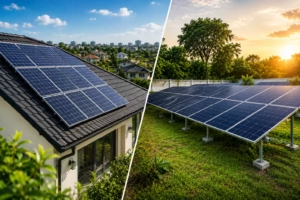
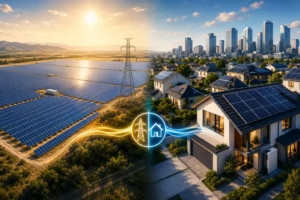
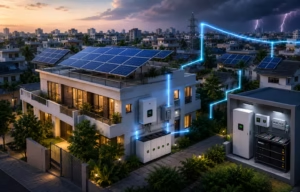
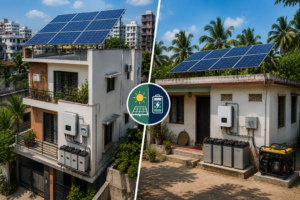
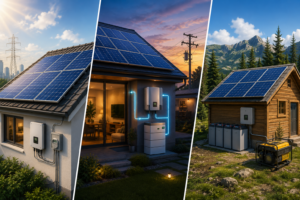
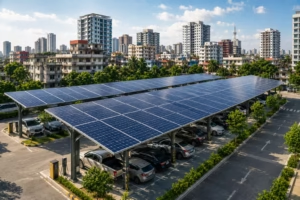
Net metering is a system that allows consumers to generate electricity using solar panels installed on rooftops and use that power for their own needs. Any excess electricity produced is automatically fed back into the national grid.

Sewage Treatment Plants (STPs) provide an effective solution by protecting public health, safeguarding the environment, and converting wastewater into a reusable resource.

Drip irrigation is a modern, water-efficient technology that can help Bangladesh’s agricultural sector move forward sustainably

Safety nets have emerged as an effective and essential safety measure for reducing risks while working at height

By Jahidul Islam Refat, Engineer, Operation (Muspana) Street lighting plays a vital role in shaping the safety, connectivity, and overall quality of life in both urban and rural areas.

The core function of a motion sensor is to identify changes in its surroundings. These changes may include variations in infrared radiation, sound waves, or microwave signals.

A cable is made of one or more conductors covered with insulation and protective layers to prevent electric shock, short circuit, and mechanical damage.

An effective LPS significantly reduces fire risk, prevents structural damage, and protects sensitive electrical and electronic equipment. It is not a luxury, but a risk-mitigation asset, especially essential for high-rise buildings, industrial facilities, and solar PV systems.