The power goes out for the third time this year, and your neighbor’s porch light is still on. That’s usually the exact moment people start Googling “microgrid solar system” at 11 p.m. with a flashlight in one hand and a phone in the other.
Maybe it was a hurricane that knocked the lines down for four days. Maybe it’s the rolling blackouts your utility keeps warning about every summer. Or maybe you just got a solar quote and the installer casually dropped the word “microgrid” like you were supposed to already know what that meant. Whatever got you here, you’re not looking for a textbook definition. You want to know if this thing actually solves your problem, and what it’s going to cost you to find out.
So let’s get into it — no sales pitch, no fear-mongering, just the straight version.
What Is a Microgrid Solar System?
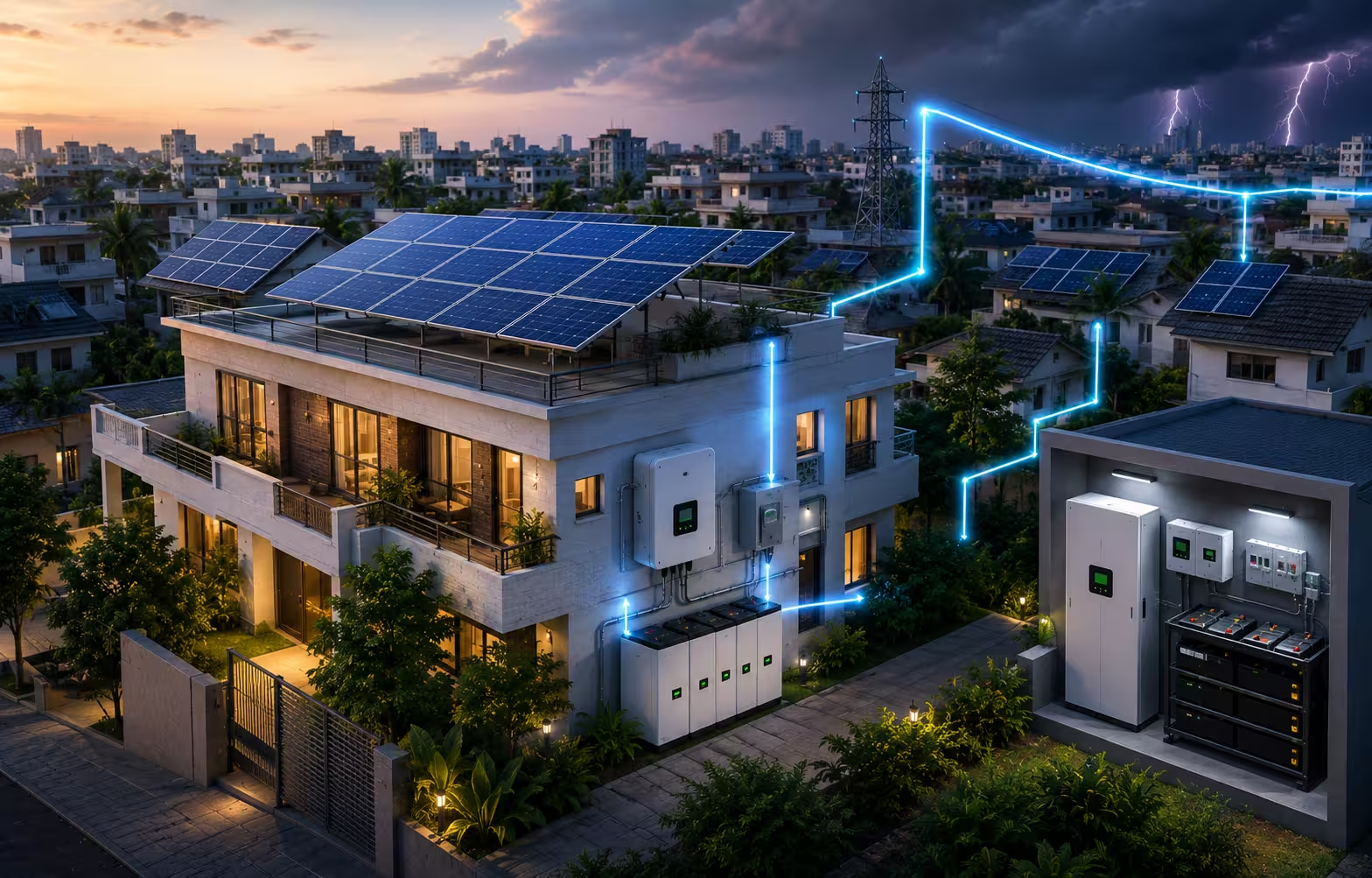
A microgrid solar system is a small, self-contained power network — usually built around rooftop solar panels, a battery bank, and a smart controller — that can generate, store, and manage its own electricity. It can run alongside the main utility grid or disconnect from it entirely during an outage, a process called “islanding,” so your home (or a cluster of homes) keeps the lights on independently.
That’s the whole idea in one breath. Everything else is detail.
If you’ve read up on the basics of how solar panels convert sunlight into electricity, you already understand half of this. A microgrid just adds a brain and a memory to that process — a way to store the power and decide intelligently when to use it.
How Does a Solar Microgrid Actually Work?
Strip away the marketing language and you’re left with four moving parts:
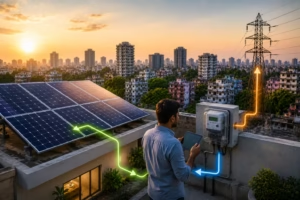
- Generation. Solar panels turn sunlight into electricity, most commonly DC power that gets converted to usable AC power for your home. This is the same basic sunlight-to-electricity process that powers any solar setup, microgrid or not.
- Storage. A battery bank — usually lithium-ion or lithium iron phosphate these days — stores whatever electricity you’re not using in real time. This is what’s technically called a Battery Energy Storage System, or BESS if you want to sound like you know the acronyms.
- Control. A smart controller (sometimes bundled into a “smart panel”) constantly decides where power should come from and go to. Solar first, battery next, grid last — or some version of that logic, depending on how it’s programmed.
- Islanding. If the main grid goes down, the controller disconnects your system from it and switches to “island mode.” Your home keeps running on solar and battery power alone, completely isolated from whatever’s happening on the utility’s lines.
That last part is really the whole point of calling it a “microgrid” instead of just “solar with a battery.” A microgrid is designed, from the ground up, to operate independently when it needs to. Plain grid-tied solar generally can’t do that — more on that in a second, because it trips people up constantly.
So How Is This Different From Regular Solar Panels?
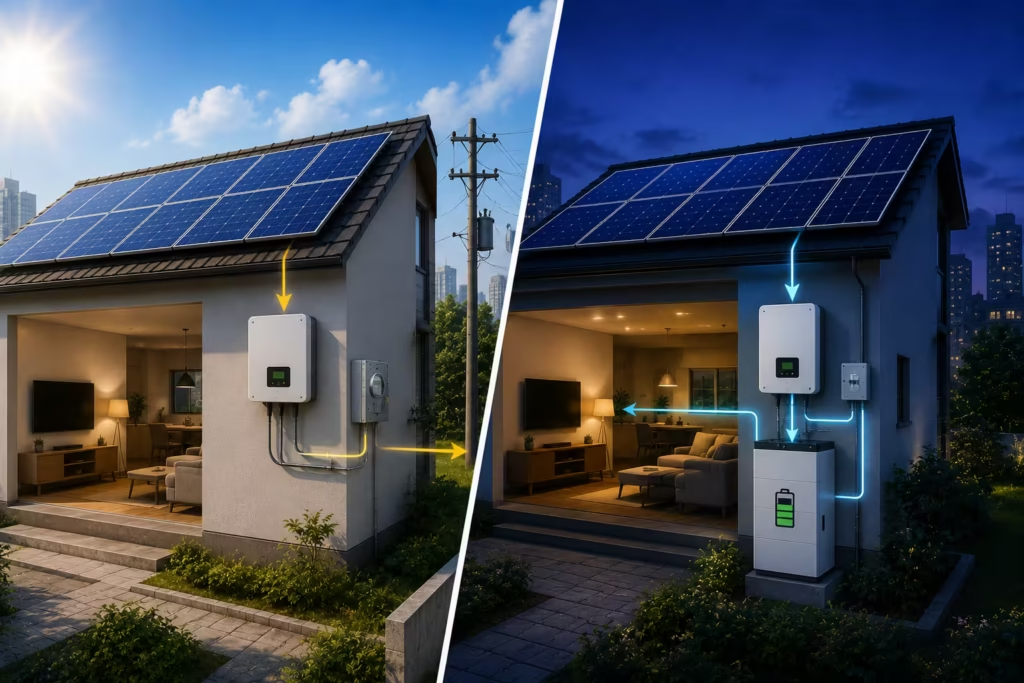
Here’s the part that catches a lot of people off guard: if you have standard grid-tied solar panels without battery storage, your system shuts off automatically during a power outage. It sounds backwards, but it’s a safety requirement — utilities don’t want your panels feeding electricity back into lines that repair crews might be working on.
So “I have solar panels” and “I have backup power during an outage” are not the same sentence, even though a lot of people assume they are.
A microgrid solar system solves that by pairing solar generation with battery storage and a controller smart enough to disconnect safely and keep running on its own. It sits somewhere between a fully off-grid solar system (which never connects to the utility at all) and a standard grid-tied setup. Most residential microgrids are actually built on what’s called a hybrid solar system architecture — connected to the grid for everyday use and net metering, but capable of cutting loose when things go sideways.
If you’re trying to map out which of these setups fits your situation, this breakdown of solar system types is worth a look before you go further.
What an Outage Actually Looks Like With One
Here’s a realistic scenario, not a brochure version of one.
Say you’ve got a 10 kW solar array and a 20 kWh battery bank — a pretty typical residential size. The grid goes down during a summer storm. Your smart panel immediately sheds non-essential loads — think the pool pump and the guest bedroom AC — and keeps your fridge, a few lights, your internet router, and your well pump or sump pump running. If it’s daytime, your panels keep topping off the battery while you’re using power, which stretches things out considerably. If it’s overnight or a stretch of cloudy days, you’re drawing down that battery, and depending on your usage, 20 kWh might get you through a day and a half of essential loads before you’re cutting things closer.
That’s the honest math. It’s not “your whole house runs like nothing happened for two weeks.” It’s “your essentials stay on, and you’re not standing in a dark kitchen wondering if the freezer’s still cold.”
The Real Benefits (Without the Fluff)
- You stay powered through outages — for your essential loads, at least, not necessarily your entire house at full capacity.
- You’re less dependent on the grid, which matters if your utility has been raising rates or if outages in your area have gotten more frequent.
- You’re using clean energy locally, which cuts down on the transmission losses that happen when electricity travels long distances from a power plant to your house.
- You get some insulation from rate hikes, since more of your usage comes from power you already generated and stored.
None of that requires an EMP attack or a doomsday scenario to be worth caring about. A regular Tuesday night thunderstorm is reason enough for most people.
What Does It Actually Cost?
This is where a lot of guides go vague on purpose, so let’s not do that.
Residential microgrid systems typically run somewhere in the range of $25,000 to $50,000 before incentives, for a system in the 5–20 kW solar range paired with 10–40 kWh of battery storage. Where you land in that range depends heavily on how much battery capacity you want, your roof or property layout, and local labor costs. The federal solar tax credit can knock a meaningful chunk off that upfront number, and it’s worth checking current incentive programs in your state before you assume the sticker price is final.
Payback periods for residential systems tend to run longer than commercial installations — often somewhere in the 8 to 15 year range — because you’re paying for both generation and resilience, not just electricity savings. If your main goal is purely cutting your power bill, a smaller solar-only setup might pay back faster. If your main goal is keeping the lights on during outages, that resilience is the thing you’re actually paying for, and it doesn’t show up as a line item on a savings spreadsheet.
A Rough Sizing Gut-Check
A quick way to think about sizing: figure out what you actually want to keep running during an outage — fridge, some lighting, internet, maybe a well pump or medical equipment — and add up the wattage. Most households find that 8–12 kWh of battery capacity comfortably covers essential loads for a day, while 20+ kWh starts giving you real breathing room for multi-day outages or a less conservative approach to what counts as “essential.” Your local peak sun hours also matter here, since they determine how quickly your panels can refill that battery once the sun’s out again.
Who Actually Needs One (And Who Should Skip It)
This is the part most articles on this topic skip entirely, probably because it doesn’t help sell anything.
A microgrid probably makes sense if:
- You live somewhere with frequent or extended outages — hurricane zones, wildfire-prone areas, or regions with an aging grid.
- You have medical equipment, a home office, or livestock/business needs that genuinely can’t tolerate downtime.
- You already have solar and are frustrated that it shuts off exactly when you need it most.
- You want long-term energy independence and are fine with a longer payback timeline.
A microgrid is probably overkill if:
- Your outages are rare and short — a battery backup alone might cover your needs without the added system complexity.
- You’re mainly trying to lower your monthly bill — standard grid-tied solar (or a hybrid system without a full microgrid setup) will usually get you there for less money.
- You’re not planning to stay in the home long enough to see the payback period through.
There’s no shame in a simpler setup. A well-sized battery backup or a standard generator handles a lot of situations just fine.
Microgrid vs. the Alternatives
| System | Works During Outages? | Typical Cost | Best For |
| Grid-tied solar (no battery) | No — shuts off automatically | $10,000–$20,000 | Lowering monthly bills, sunny regions |
| Solar + battery backup | Yes, for select circuits | $20,000–$35,000 | Backup for essentials without full independence |
| Microgrid solar system | Yes, full islanding capability | $25,000–$50,000+ | Frequent outages, energy independence, resilience |
| Gas/diesel generator | Yes, but fuel-dependent | $3,000–$15,000 | Occasional outages, lower upfront cost |
If you want a deeper look at how grid-tied and off-grid setups compare on their own terms before adding the microgrid layer, this grid-tied vs. off-grid comparison walks through it in more detail.
Worth Knowing Before You Get Quotes
A few things installers don’t always lead with:
- Permitting and interconnection take time. Depending on your utility and local jurisdiction, approval for a grid-interactive microgrid can add weeks or months to your installation timeline. Budget for that patience.
- Full self-sufficiency is rare. Even well-designed residential microgrids are usually built to cover essential loads during an outage, not run your entire house — pool heater, three ACs, and all — indefinitely.
- Not every installer has real microgrid experience. Standard solar installation and microgrid controller programming aren’t quite the same skill set. It’s fair to ask directly how many microgrid systems (not just solar installs) a company has actually completed.
None of this means don’t do it. It just means walk in with realistic expectations instead of the picture a sales brochure paints.
Frequently Asked Questions
Is a solar microgrid worth it?
For homes with frequent outages, high electricity rates, or a genuine need for backup power (medical equipment, remote work, etc.), yes — the resilience and independence usually justify the cost. If your main goal is just saving money on your monthly bill and outages are rare where you live, a simpler solar or battery setup will likely get you a faster payback.
How much does a residential microgrid cost?
Most residential systems run between $25,000 and $50,000 before incentives, depending on solar capacity (typically 5–20 kW) and battery size (typically 10–40 kWh). Federal and state incentives can reduce that upfront cost meaningfully.
What’s the difference between a microgrid and a regular grid-tied solar system?
Standard grid-tied solar shuts off automatically during a power outage for safety reasons and has no way to run independently. A microgrid solar system adds battery storage and a smart controller that can disconnect from the grid and keep powering your home on its own — a process called islanding.
Can a microgrid work without solar?
Yes. Microgrids can run on other generation sources — wind turbines, diesel or gas generators, or a mix of sources — but solar is by far the most common choice for residential setups because of its low ongoing operating cost and availability.
How long can a home microgrid run during an outage?
It depends entirely on your battery size, your usage, and whether the sun’s out to recharge the panels. A typical 10–20 kWh battery covering essential loads might last anywhere from one to three days without sun, and considerably longer if solar generation is topping it off during the day.