The Warranty Gap Nobody Mentions at the Sales Pitch
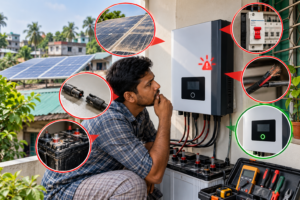
Ask most solar salespeople about warranty and they’ll tell you the panels are covered for 25 years. True. What they often leave out is that the inverter — the box quietly converting your panels’ DC output into the AC power your fridge and lights actually use — usually isn’t covered for anywhere near that long.
That’s not a scam or a hidden trick. It’s just how the technology works. But it’s the single most common surprise for solar buyers a few years into ownership, and it’s worth understanding before you sign anything, not after something stops working.
Why Inverters Wear Out Faster Than Panels
Solar panels are essentially static — no moving parts, no active electronics doing constant work, just silicon converting sunlight into current. Inverters are different. They’re running electronics, capacitors, and cooling components continuously, every single sunlit hour, for years. Heat is the main enemy, and heat is not exactly in short supply for a rooftop unit in Bangladesh for most of the year.
So while a panel can realistically outlive its 25-year warranty, an inverter is the part of the system most likely to need replacing at least once during that same period. That’s normal. It’s also the reason warranty terms on the inverter matter more than most buyers initially assume.
How Warranty Length Varies by Inverter Type
Not all inverters are built — or covered — the same way.
- Microinverters are attached to each individual panel, and manufacturers typically back them with the longest standard warranties, often around 25 years. Fewer moving parts stressed at any one time, and failure of one unit doesn’t take down the whole system.
- String inverters (the more common central-box setup) usually carry shorter standard coverage, commonly in the 5 to 12-year range, though many manufacturers let you pay to extend that closer to 20–25 years.
- Hybrid inverters (the type most relevant if you’re pairing solar with battery storage, which is increasingly common given how often the grid drops out) tend to follow similar terms to string inverters — moderate standard coverage, with paid extension options.
If you’re weighing microinverters against string inverters for other reasons — shading, budget, monitoring — the warranty difference is a genuine extra data point, not just a footnote.
What Major Manufacturers Typically Offer
| Brand | Standard Warranty | Extendable To | Labor Included? |
| Enphase (microinverter) | ~25 years | — | No (shipping only) |
| SolarEdge (string + optimizers) | ~12 years (optimizers ~25) | Up to 25 years | No |
| Fronius | ~10 years | Up to 20 years | No |
| SMA | ~5–10 years | Up to 20–25 years | Sometimes, case-by-case |
| Growatt | ~5 years | Varies | No |
| Huawei | ~10 years | Varies | No |
A necessary caveat: these are the manufacturers’ own general terms, and manufacturers do revise them over time. They can also differ by country depending on how a brand’s regional distributor structures its support. Before you treat any of these numbers as final, ask your installer for the specific documentation attached to the exact model you’re being quoted — not just the brand name.
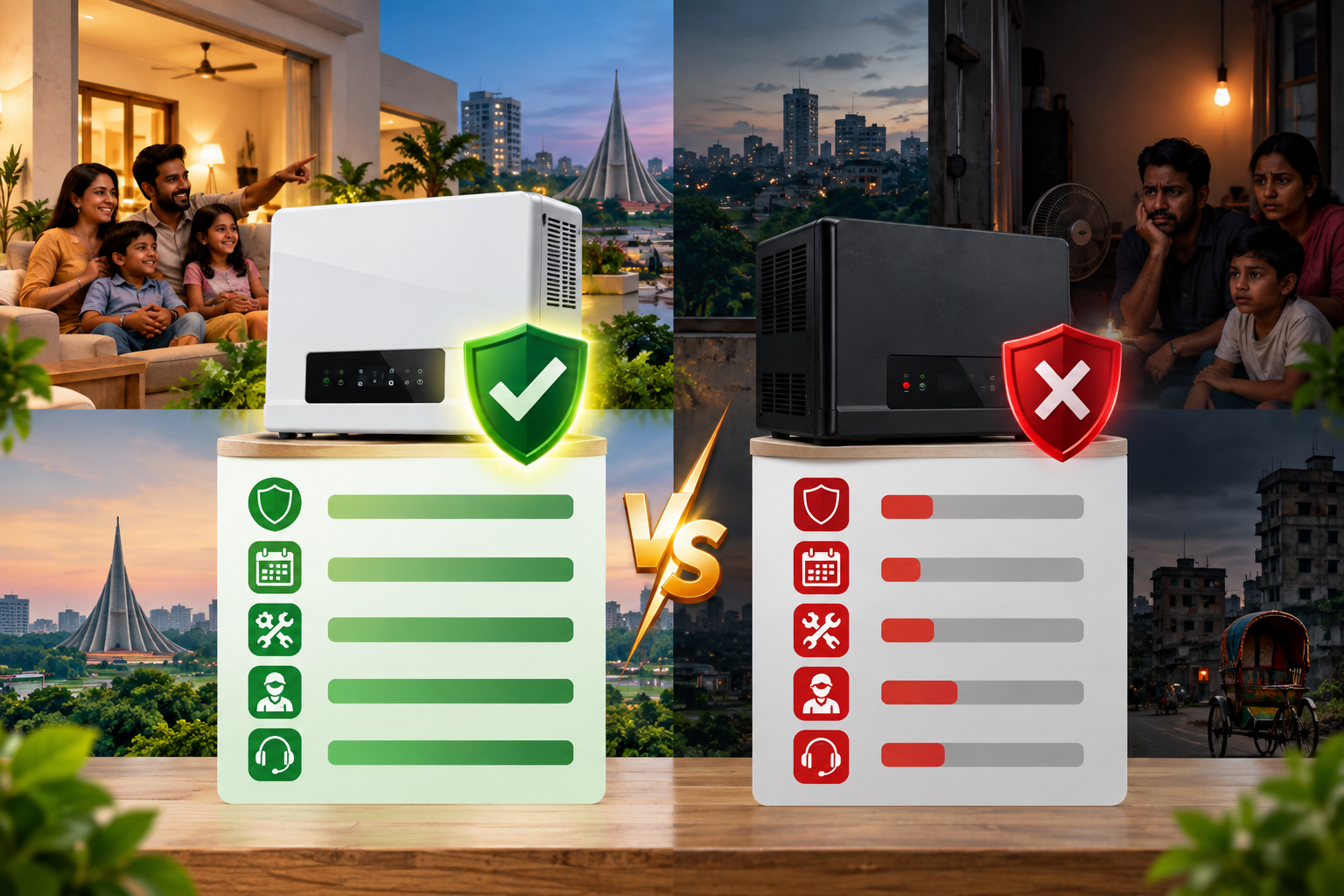
It’s also worth asking a more basic question upfront: is this brand actually supported locally, with someone in Bangladesh who can process a claim, or does a warranty issue mean shipping the unit abroad and waiting? That distinction matters more here than the number of years printed on the spec sheet.
What’s Actually Covered — And What Usually Isn’t
A warranty period sounds reassuring until you read what it excludes. Across almost every manufacturer, the pattern is similar:
- Covered: manufacturing defects, premature electronic failure under normal operating conditions.
- Typically excluded: labor costs to remove and reinstall the unit, shipping costs (though a few brands include this), damage from incorrect installation or wiring, and damage from external events like power surges or storms unless a specific rider covers it.
That labor exclusion is the part that catches people off guard. Even with a fully covered replacement inverter, you’re often still paying an electrician or your installer for the callout, the removal, and the reinstall. On a string or hybrid inverter, that labor charge is a real cost to budget for, warranty or not.
Given how often voltage fluctuates during load-shedding or grid instability, it’s also worth asking directly whether that kind of damage is treated as an “environmental” exclusion by the manufacturer you’re considering — the answer isn’t always obvious from the brochure.
Is an Extended Warranty Worth Paying For?
For microinverters, generally no — the standard coverage already stretches close to the system’s expected lifespan, so paying more on top adds little.
For string and hybrid inverters, it can be worth it, particularly if:
- The extension cost is a modest fraction of what a full replacement unit would cost (a commonly used rule of thumb is under roughly 20%, though that’s a guideline, not a guarantee of value — run the actual numbers for your quote).
- The extended plan includes labor, not just the part.
- You’re not planning to replace the inverter yourself around year 10 anyway as part of a system upgrade.
If the extension only covers the hardware and still leaves you paying for labor, its practical value shrinks considerably — factor that in before deciding.
What to Check Before You Buy in Bangladesh
A few honest questions to put to your installer or supplier, beyond the warranty years on the spec sheet:
- Who handles the actual claim — the local distributor, the installer, or do you deal with the manufacturer directly?
- How long has that distributor been operating here, and can they show you a past resolved claim?
- Does the quote separate parts warranty from labor warranty, and for how long?
- Is the inverter model being quoted actually the current version, or an older one nearing the end of its production life (which can complicate future part availability)?
None of this is meant to make solar sound risky — it’s a mature, reliable technology. It’s meant to help you buy with your eyes open, the same way you’d ask about parts and service before buying any other major appliance. If you’re at the quote-comparison stage generally, our guide on evaluating solar quotes covers the wider set of things worth checking beyond warranty terms, and choosing a solar installer goes into vetting the company standing behind the install itself.
If Your Inverter Ever Fails
Keep these on hand from day one, because you’ll need them if a claim ever comes up: the original invoice, the installation date, the inverter’s serial number, and the installer’s contact details. Most claims stall not because the manufacturer refuses coverage, but because the paperwork trail is incomplete years later. A simple photo of the installed unit’s serial number sticker, saved somewhere you won’t lose it, solves this in advance.
If the inverter is still within its monitored warning period, ongoing system monitoring often flags a failing inverter — dropping output, error codes — well before it stops completely, giving you time to start a claim rather than discovering the failure the hard way.
FAQs
Do solar inverters need replacing before the panels do?
Often, yes. Panels commonly carry 25-year warranties and can outlast that, while string and hybrid inverters typically carry standard warranties of 5–12 years. It’s common for a system to need one inverter replacement during the panels’ lifetime.
Is an extended inverter warranty worth buying?
Usually worth considering for string or hybrid inverters if the extension cost is a modest fraction of full replacement cost and includes labor. Rarely necessary for microinverters, since their standard coverage is already long.
What voids a solar inverter warranty?
Most manufacturers exclude damage from incorrect installation, improper wiring, and external events like power surges or storms, unless specifically covered. Manufacturing defects and normal-use electronic failure are typically what’s actually covered.
Does a solar inverter warranty cover labor costs?
Usually not. Most standard warranties cover the replacement part only — you or your installer typically still cover the cost of removing the old unit and installing the new one, unless the specific plan states otherwise.
How do I make a warranty claim on my solar inverter in Bangladesh?
Start with your installer or the local distributor rather than the manufacturer directly. Keep your original invoice, installation date, and the inverter’s serial number on hand — claims are usually delayed by missing documentation rather than refused coverage.