A farmer I read about last year had a choice sitting in front of him: lease his land to a solar company for twenty years, or keep farming it. Not both. That’s the trade a lot of landowners are forced into when energy companies come knocking, especially in places where land is already tight and every acre has to earn its keep.
Except that trade isn’t as fixed as it used to be. There’s a growing body of farms — some experimental, some fully commercial — where solar panels sit above the crops instead of instead of them. It’s called agrivoltaics, and it’s exactly what it sounds like: agriculture and photovoltaics sharing the same patch of ground.
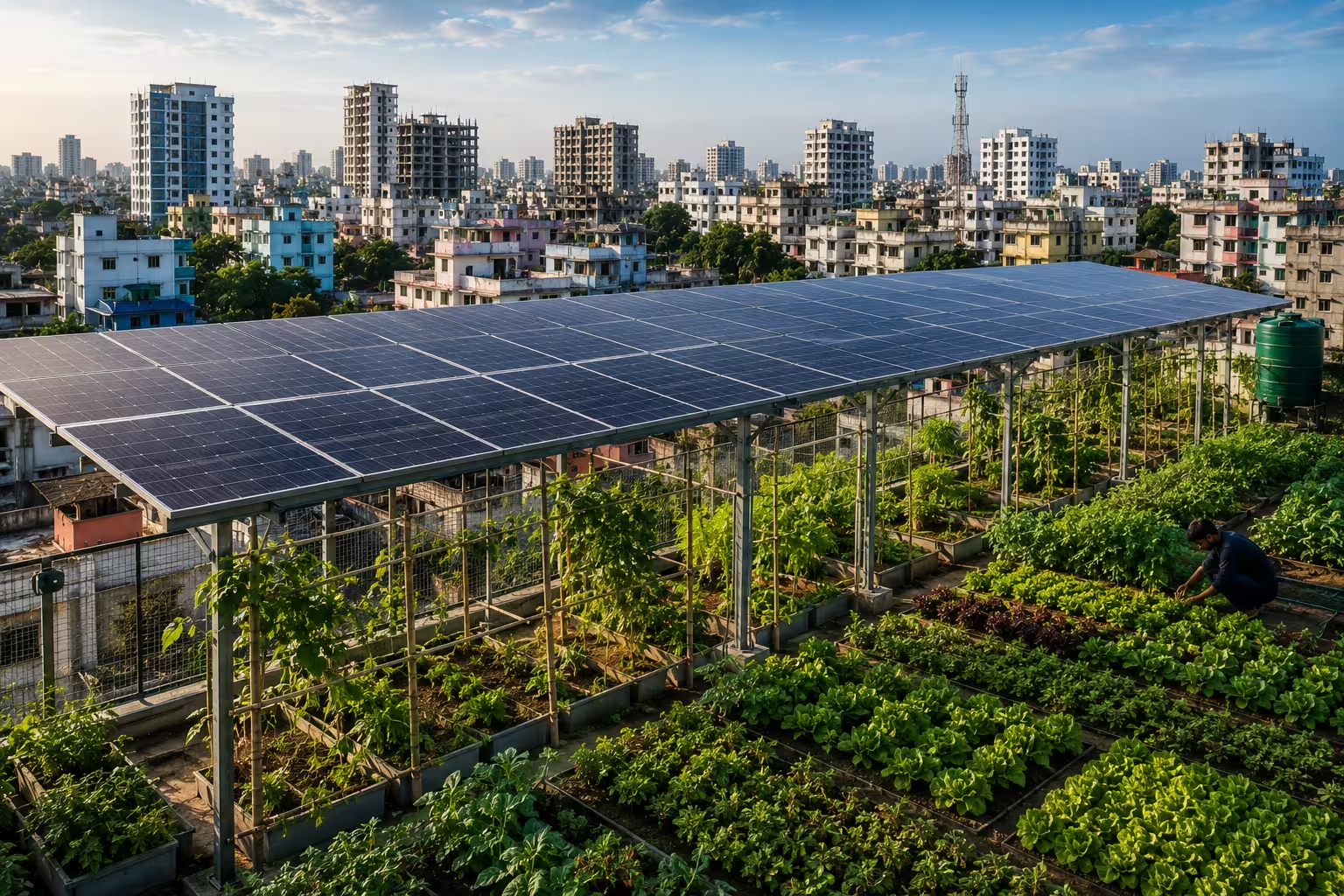
In plain terms, agrivoltaics means putting solar panels over farmland so the same acre produces electricity and food (or feed) at the same time. The panels are usually raised or spaced so light still reaches the plants underneath, just less of it, and in a way that turns out to help more than it hurts for a surprising number of crops.
That last part is the bit people don’t believe until they see it. Shade sounds like the enemy of farming. Turns out, for a lot of plants, a bit of shade is exactly what they needed.
How Shade From Solar Panels Actually Helps Crops
Here’s the mechanism, because “it just works” isn’t a satisfying answer.
Plants lose water constantly through their leaves, a process called evapotranspiration. The hotter and more exposed the soil and leaves are, the faster that water disappears — which means more irrigation, more stress on the plant during heat waves, and more crops that just give up in the middle of summer.
Solar panels placed above a field cut down on direct sun exposure during the hottest parts of the day. That drop in intensity does a few things at once: soil temperature comes down, water evaporates more slowly, and the plants underneath aren’t fighting heat stress on top of everything else they’re already dealing with. Farmers running these systems have reported soil that stays noticeably cooler and moister than open fields nearby, especially during peak afternoon heat.
The yield numbers you’ll see quoted — increases somewhere in the 20% to 60% range — come from trials in places like Mediterranean test plots and parts of Asia, and they’re not universal. They depend heavily on the crop, the panel spacing, and the local climate. Leafy greens and shade-tolerant vegetables tend to respond the best. Full-sun crops that need maximum light all day, less so. It’s not a blanket rule that shade equals better yield everywhere, and any article telling you otherwise is skipping the nuance on purpose.
Three Ways Agrivoltaics Setups Actually Get Built
There isn’t one design for this. Depending on the land, the crop, and the budget, an agrivoltaics system usually falls into one of three categories.
Raised array systems lift the panels well above the ground — often high enough for machinery and workers to move underneath freely. This is the setup most people picture, and it works well for row crops and mixed vegetable farming.
Inter-row farming spaces panels in strips across the field with crop rows planted in between, rather than directly underneath. Light exposure is more even here, which suits crops that need a bit more direct sun than the raised-array shade allows.
Greenhouse-integrated systems put solar panels directly on greenhouse roofing, generating power while the greenhouse structure itself manages light, humidity, and temperature. This is a more controlled (and more expensive) setup, but it pairs well with high-value crops that need precise growing conditions.
There’s also a fourth category worth mentioning separately, because it’s not about crops at all.
Solar Grazing: When Livestock Do the Work
Solar grazing pairs livestock — usually sheep — with solar farms instead of crops. The sheep graze on the vegetation growing under and around the panels, which keeps grass from overgrowing and shading out the panels themselves. In return, the animals get shade and shelter from the panel structures on hot days.
It’s a low-maintenance version of agrivoltaics that doesn’t need irrigation planning or crop rotation, which is part of why it’s spread so quickly across solar farms that would otherwise need regular mowing crews. It’s not a fit for every type of land or livestock, but where it works, it solves two maintenance problems at once.
What Crops Actually Do Well Under Panels — And What Doesn’t
This is where a lot of generic articles stay vague, so let’s not.
Lettuce, spinach, and other leafy greens tend to thrive under partial shade because they’re shallow-rooted and don’t need intense, all-day sun to grow well. The cooler soil actually works in their favor.
Peppers and tomatoes generally benefit too, mostly because the reduced heat stress means less wilting and fewer scorched fruits during the hottest stretches of the growing season.
Berries — strawberries especially — respond well to the microclimate, since they’re prone to heat damage in full, unshaded sun.
On the other end, grain crops like wheat, rice, and corn generally don’t do well under panel shade. They need consistent, high-intensity sunlight through most of their growth cycle, and the yield trade-off usually isn’t worth it. If you’re farming grains at scale, agrivoltaics probably isn’t your answer — and that’s worth saying plainly instead of pretending every crop fits.
The Part Nobody Likes Talking About: Cost and Complexity
Agrivoltaics isn’t a simple bolt-on. Raising panel height for machinery clearance, engineering the mounting structure to withstand wind loads at that height, and running the electrical infrastructure all add cost compared to a standard ground-mounted solar setup or rooftop-mounted system.
There’s also the technical learning curve. Farmers need to understand both agriculture and solar power generation, or work closely with someone who does — which isn’t always accessible in rural areas, especially where grid connection itself is still inconsistent. If you’re in a region without reliable grid access, it’s worth first understanding the difference between on-grid, off-grid, and hybrid solar systems before deciding how an agrivoltaics setup would even connect to power.
None of this makes agrivoltaics a bad idea. It just means it’s not a weekend project, and anyone selling it to you as a quick win is skipping the part where the upfront capital and technical planning are real.
Why This Matters More in Bangladesh Than Almost Anywhere Else
Land pressure in Bangladesh isn’t theoretical — it’s one of the most densely populated agricultural regions in the world, and every hectare is already stretched between food production, housing, and industry. The usual solar-versus-farming trade-off hits harder here than it does in places with more open land to spare.
Agrivoltaics offers something genuinely useful in that context: a way to add clean energy generation without taking farmland out of production. For a country where rural electrification is still uneven and monsoon-season flooding already complicates land use planning, a dual-use system that produces both food and power on the same footprint solves two problems that would otherwise compete for the same land.
The climate adds another layer. Bangladesh’s heat and humidity mean the cooling effect from panel shade isn’t just a nice bonus — it can be the difference between a crop surviving peak summer heat or not. Combined with the monsoon’s heavy rainfall, raised-array systems that also protect crops from intense direct rain exposure become doubly useful. Understanding peak sun hours and how tropical climates behave differently than temperate ones for solar generation matters a lot when planning a system meant to work through both dry and monsoon seasons.
Who Agrivoltaics Actually Makes Sense For (And Who It Doesn’t)
If you’re growing leafy greens, vegetables, berries, or running livestock on a small-to-mid-size plot, and you have — or can access — capital for the initial build, this is worth seriously exploring.
If you’re farming grain crops at scale, working land where machinery needs unrestricted access at standard heights, or don’t have a realistic path to financing the upfront infrastructure, agrivoltaics probably isn’t the right move right now. There’s no shame in that — plain ground-mounted solar or a floating solar setup on unused water bodies might be a better fit for generating power without touching your primary cropland at all.
Getting Started: What to Actually Check Before Committing
Before building anything, it’s worth working through a few practical questions:
- What’s your region’s peak sun hours, and how does seasonal shade affect your specific crop’s light requirements?
- Does your chosen crop tolerate partial shade, or does it need full, uninterrupted sun?
- What’s the realistic cost difference between raised-array, inter-row, and greenhouse-integrated setups for your land?
- Is your area better suited to grid-tied power, or would an off-grid/hybrid setup make more sense given local infrastructure?
- Are there local subsidies, NGO programs, or agricultural extension services that support agrivoltaics adoption in your area?
Answering these honestly upfront saves a lot of wasted money later. It’s also worth looking at broader solar adoption trends in your region — if solar infrastructure and support services are still emerging where you are, that changes the realistic timeline for a project like this.
Where This Fits Into the Bigger Solar Picture
Agrivoltaics is one specific application of a much larger shift happening in how land gets used for solar power generation. It sits alongside other space-efficient approaches like building-integrated photovoltaics and floating solar, all trying to solve the same underlying problem — getting more clean energy without sacrificing the land underneath it. Compared to choosing between solar and wind energy as separate land uses, agrivoltaics is unusual in that it doesn’t ask you to choose at all.
It’s not a miracle fix, and it’s not free. But for the specific mix of shade-tolerant crops, land scarcity, and rising energy demand that a lot of farmers are dealing with right now, it’s one of the more honest wins available — food and power, off the same ground, without pretending there’s no cost to getting there.
FAQs
What is agrivoltaics in simple terms?
Agrivoltaics is the practice of growing crops or raising livestock underneath or around solar panels on the same piece of land, so it produces both food and electricity at once.
Does shade from solar panels reduce crop yield?
Not always — for shade-tolerant crops like leafy greens, peppers, and berries, partial shade can actually improve yield by lowering heat stress and reducing water loss. Full-sun crops like grains generally do worse under panel shade.
What is solar grazing?
Solar grazing is when livestock, most commonly sheep, graze on the vegetation growing under and around solar panels, keeping the land maintained while getting shade and shelter in return.
How much land do you need for agrivoltaics?
There’s no fixed minimum — small farms and larger operations both use agrivoltaics, though the setup type (raised array, inter-row, or greenhouse-integrated) usually depends on the size and shape of the available land.
Is agrivoltaics expensive to set up?
Yes, generally more expensive upfront than a standard ground-mounted solar system, mainly due to raised mounting structures, engineering requirements, and electrical infrastructure. Costs vary significantly by setup type and region.
What crops grow best under solar panels?
Leafy greens, peppers, tomatoes, and berries tend to do well under partial shade. Grain crops like wheat, rice, and corn generally don’t benefit and often see reduced yields.