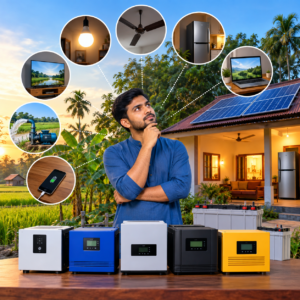
If you’ve ever sat through a load-shedding evening wondering whether your fridge is going to survive another day of on-off-on-off, you already understand why hybrid inverters exist. You don’t need a lecture on electricity — you need to know if this is the piece of equipment that finally solves your outage problem, and if so, which one.
That’s really what this comes down to. A hybrid inverter isn’t a solar accessory. It’s closer to an upgrade on the IPS or UPS box you probably already have sitting in a corner somewhere — except this one is charged by sunlight instead of just pulling from the grid, and it’s built to work with a proper battery bank instead of the small lead-acid unit that dies after two years.
Do You Actually Need a Hybrid Inverter?
Not everyone does. A standard grid-tied (on-grid) solar inverter is cheaper and simpler, and for a lot of households it’s the right call. Consider a hybrid inverter with battery storage if any of these sound like you:
- Your area loses power for more than an hour most days, and it’s not predictable enough to just “wait it out”
- You run something during outages that genuinely can’t go down — a home office setup, a small clinic, medical equipment, a server or POS system
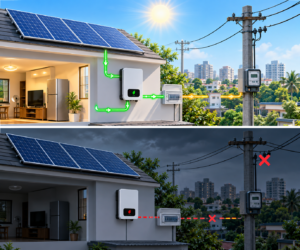
- You want your solar system to keep working for you even when the grid itself is down (a plain grid-tied system actually shuts off during a blackout, which surprises a lot of first-time buyers)
- You’re tired of running a diesel generator or replacing IPS batteries every couple of years
If none of that applies and your main goal is just lowering your electricity bill through net metering, a straightforward on-grid system will usually get you there for less money. Hybrid capability is for people solving a reliability problem, not just a cost problem.
What a Hybrid Inverter Actually Does
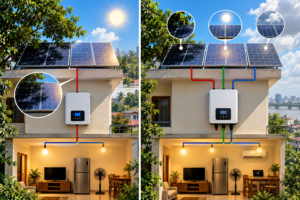
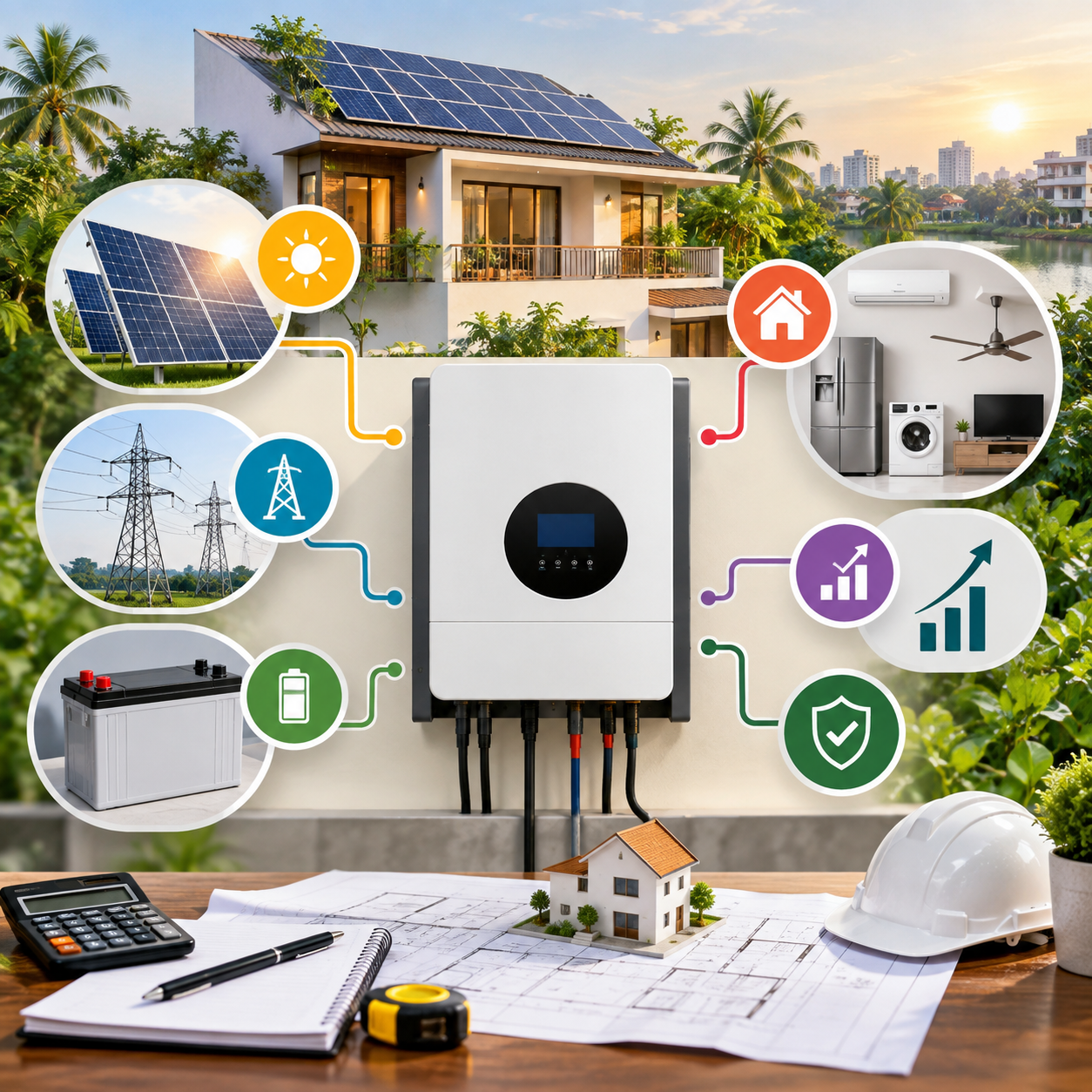
In plain terms: a hybrid inverter takes power from three possible sources — your solar panels, a battery, and the grid — and decides in real time which one to use, based on what’s available and what you’ve told it to prioritise. When the grid goes down, it switches your home over to battery power automatically, without you touching anything.
That’s the whole pitch. Everything else — the sizing, the battery chemistry, the certifications — exists to answer one practical question: will it actually do that reliably, for the loads you care about, for as long as you need it?
Sizing It Right (This Is Where Most Buyers Get Oversold or Underserved)
The number that matters isn’t your average daily consumption. It’s your peak simultaneous load — everything that might realistically run at the same time.
As an example (not a universal rule — every household is different): a mid-sized home running one AC unit, a refrigerator, lighting, and a few fans at once might need an inverter rated around 4–5 kW continuous output. A larger home with two AC units and heavier appliance use could need 6.5–8 kW. These are illustrative figures to help you think about it, not numbers to quote back to an installer as fact — your actual load list is what determines this.
Two things trip people up here:
DC oversizing. Your solar panel array’s total wattage is usually somewhat higher than the inverter’s rated AC output — commonly by roughly 10–25%. This is standard practice in high-irradiance, tropical climates (Bangladesh included), not a quirk of any one country’s market, and it helps the system perform better during hazy mornings and late afternoons when panels aren’t producing at their peak.
Surge capacity. Motors — the compressor in your AC, a water pump — draw a short burst of power well above their running wattage when they start up. If your inverter’s peak/surge rating can’t cover that spike, the AC simply won’t start on battery power, even if the “average” numbers looked fine on paper. Ask your installer specifically what surge load the unit can handle, not just its continuous rating.
(For a deeper walkthrough of how to calculate your own load list, see our inverter sizing guide and our piece on common solar sizing mistakes.)
Battery Compatibility: The Part Buyers Skip and Regret
This is genuinely the section where a bad decision costs you the most, because batteries are expensive and hard to reverse.
Chemistry. Modern hybrid systems are built around LiFePO4 (LFP) batteries — safer and longer-lasting than the lead-acid batteries most IPS units use. What matters is that the inverter and battery can actually talk to each other properly, through a communication protocol like CAN or RS485, so the battery’s management system (BMS) can report its real state of charge and health. An inverter that only reads battery voltage to guess capacity is a much cruder, less reliable setup — voltage alone doesn’t tell you much about an LFP battery’s actual charge level.
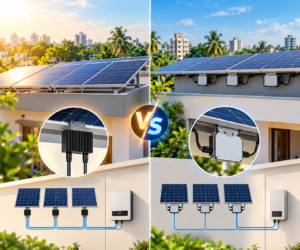
Coupling type. If you’re building a new system from scratch, a DC-coupled hybrid setup is generally more efficient — commonly in the 92–97% round-trip efficiency range — because the battery charges more directly from the panels with fewer conversion steps. If you already have a working grid-tied string inverter and don’t want to replace it, an AC-coupled battery inverter lets you add storage on top of your existing setup instead of ripping it out. This retrofit path is common in Bangladesh, where a lot of households added solar before backup was a priority and are now coming back to add a battery.
Charge current. After an outage, you want your battery to recharge reasonably fast so you’re not caught empty-handed by the next one. As a rule of thumb, look for a charge current of at least 1C relative to your battery’s capacity — meaning it can fully recharge in roughly an hour under good conditions, not half a day.
(More on this in our guides to battery bank sizing and why energy storage matters alongside generation.)
Performance and Safety: What Happens If the Specs Are Weak
It’s easy to skim past a spec sheet without realising what a “bad” number actually does to you in practice.
- Transfer time is how long it takes the inverter to switch your home to battery power when the grid drops. Under 20 milliseconds is fast enough that sensitive electronics won’t even notice. Above roughly 80 milliseconds, expect routers to reset, computers to blink or reboot, and some equipment to behave unpredictably. If you have anything genuinely critical running, ask for the transfer time in writing.
- MPPT efficiency (how well the inverter extracts maximum available power from your panels) above 98%, and overall conversion efficiency above 95%, are reasonable benchmarks to look for — treat these as general engineering guidance rather than numbers guaranteed by every product on the market.
- Certifications vary by market. In Bangladesh, the safe approach is to confirm with your installer that the equipment is approved for grid interconnection through your local DISCOM’s net metering process, rather than relying on certification labels designed for a different country’s regulatory system.
- IP rating matters if the unit will sit outdoors or somewhere exposed to Bangladesh’s humidity and monsoon conditions — IP65 or higher is a reasonable minimum for outdoor placement.
Quick Reference: Which Inverter Type Fits Your Situation
| Scenario | Recommended Inverter Type |
| Stable grid, mainly want net metering savings | On-grid (string) inverter |
| Frequent outages, critical loads to protect | Hybrid inverter with battery |
| New build, planning to add a battery | DC-coupled hybrid |
| Existing solar system, adding backup later | AC-coupled hybrid/battery inverter |
| Off-grid location or agricultural site | Off-grid or oversized hybrid inverter |
Treat this table as a starting point for a conversation with your installer, not a final answer — your actual load list, roof space, and budget will shift the recommendation.
(Compare the full range of system types in our guide to on-grid, off-grid, and hybrid solar systems, or read specifically about DC-coupled vs AC-coupled solar.)
Questions Worth Asking Your Installer
Before you sign anything, it’s worth putting these directly to whoever is quoting you:
- What’s my actual peak simultaneous load, based on the appliances I listed — not an average estimate?
- What’s the surge rating, and will it start my AC/pump on battery power?
- Which battery brands is this inverter certified to work with, and what communication protocol does it use?
- What’s the transfer time in milliseconds, tested — not just quoted from the datasheet?
- If I add a battery later instead of now, what does that cost and does it require any inverter changes?
This is roughly the sizing conversation Muspana walks customers through before recommending a system — it’s a useful checklist even if you’re getting quotes elsewhere.
The Trade-Offs Nobody Likes to Mention
A hybrid inverter costs more than a plain grid-tied unit, and the battery itself is usually the single biggest line item in the whole system — often more than the inverter and panels combined. It’s also worth knowing that buying a hybrid-capable inverter now and adding the battery later is a completely reasonable, common approach in Bangladesh — you get backup-ready infrastructure without the full upfront cost, as long as you confirm the inverter you buy now will actually support the battery you plan to add later.
None of this makes hybrid the wrong choice. It just means the decision should be based on how much an outage actually costs you — in comfort, in business downtime, in risk — weighed honestly against the extra spend.
FAQs
Can a hybrid inverter work without a battery installed?
Yes, most hybrid inverters will still function as a standard grid-tied inverter without a battery connected — you just won’t get backup power during an outage until a compatible battery is added. Many buyers in Bangladesh choose this route deliberately, adding the battery once budget allows.
How long does it take for a hybrid inverter to switch to battery power during a blackout?
Good hybrid inverters switch in under 20 milliseconds, fast enough that most electronics won’t even blink. Confirm the actual tested transfer time with your installer rather than relying on marketing claims.
Do I need a special battery for a hybrid inverter, or can I use any battery?
You need a battery the inverter is specifically compatible with, ideally LiFePO4 with proper BMS communication (CAN or RS485) so the inverter can read its actual state of charge. Mismatched or voltage-only setups tend to be less reliable and can shorten battery life.
Is a hybrid inverter worth it if my outages are short and rare?
Not necessarily. If your grid is fairly stable and your main goal is reducing your electricity bill through net metering, a standard on-grid inverter is usually cheaper and simpler, without the added cost of a battery you may rarely need.
Can a hybrid inverter run my air conditioner during a power cut?
It can, but only if it’s sized for the AC’s startup surge, not just its running wattage — this is the single most common sizing mistake. Confirm the inverter’s peak/surge rating covers your AC’s compressor start-up load before assuming it will work.