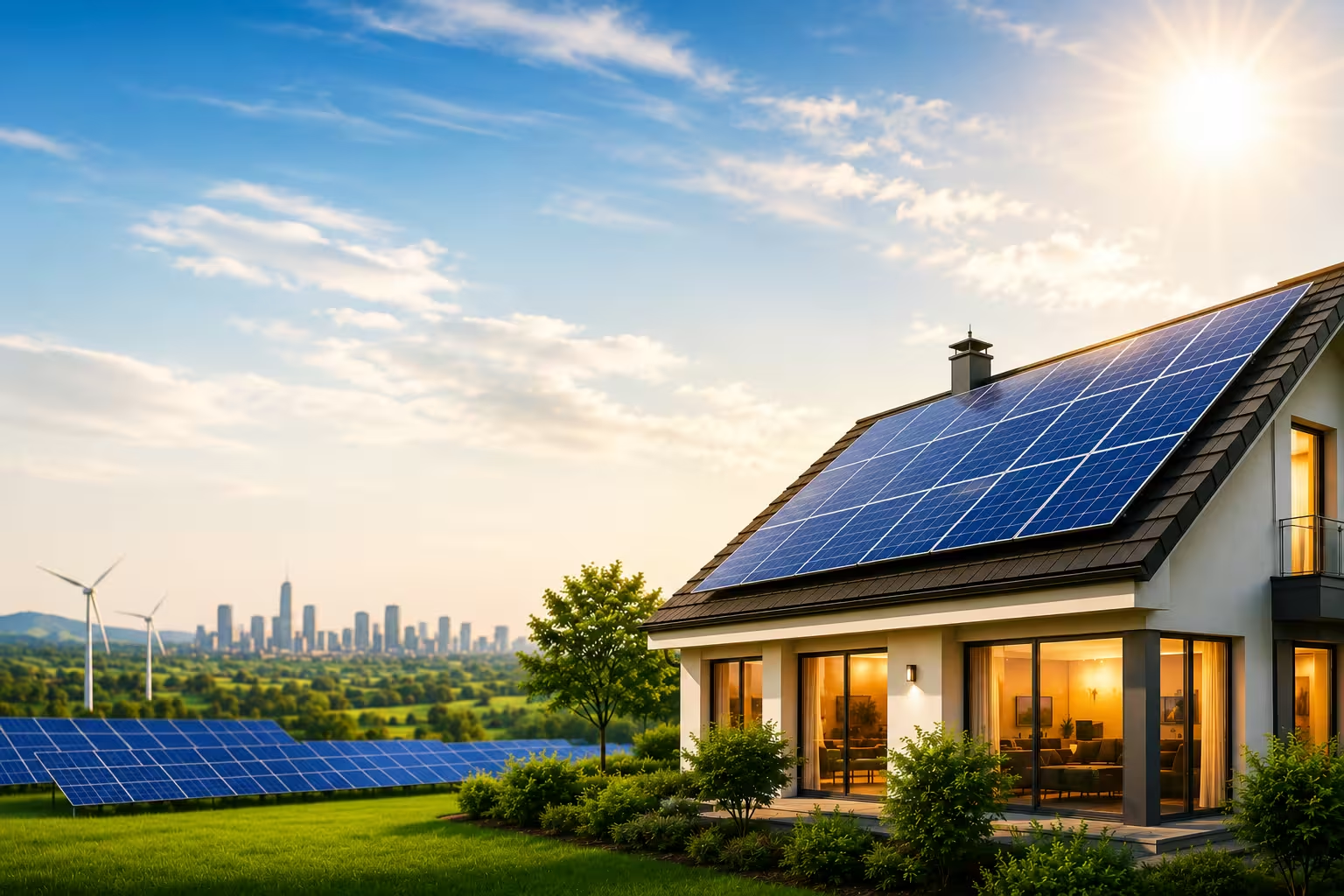
Here’s something that sounds made up but isn’t: the sunlight hitting Earth in about ninety minutes carries enough energy to power the entire planet for a full year. Not a city. Not a country. The whole planet.
That number stuck with me the first time I read it, because it reframes the whole conversation. We’re not short on energy. We’re short on ways to catch it.
So, what is solar energy? Put simply, it’s the light and heat that radiates from the sun, captured and converted into electricity or usable heat through technologies like photovoltaic panels, concentrated solar power systems, and solar thermal collectors. It’s renewable, it’s essentially limitless on a human timescale, and unlike coal or natural gas, it doesn’t run out because we used too much of it.
That’s the textbook answer. But the more interesting question — and the one most people actually care about — is how does solar energy work, and is it something worth paying attention to for your own home or just a talking point for the news?
Let’s get into it.
How Solar Energy Actually Works
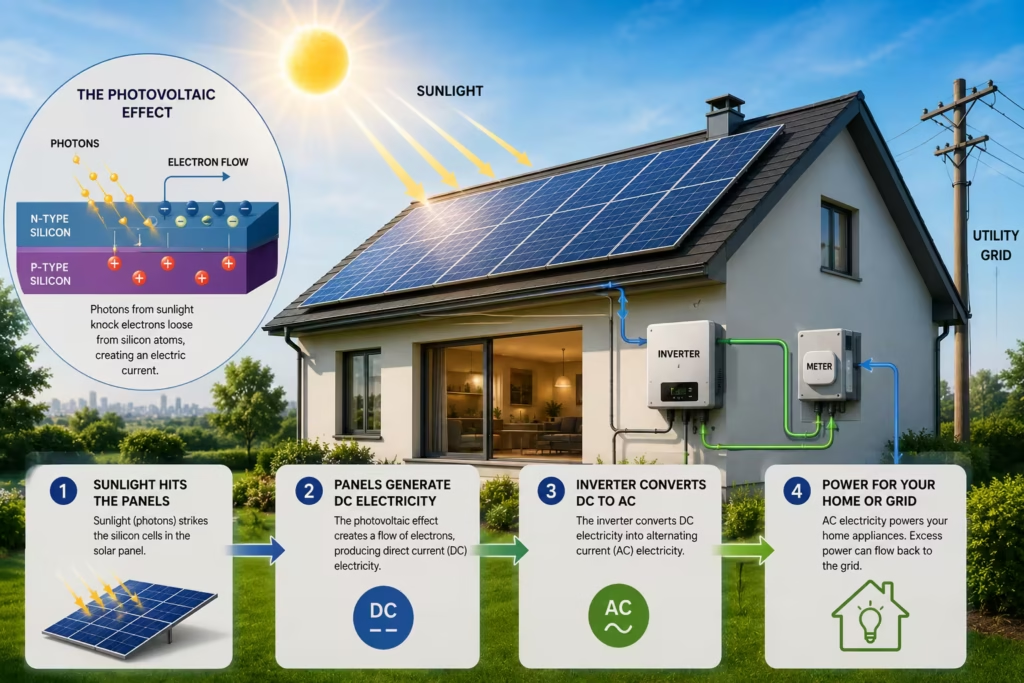
Sunlight is made up of tiny packets of energy called photons. When those photons hit certain materials — mostly silicon, which is the same stuff used in computer chips — they knock electrons loose. That movement of electrons is electricity. It’s called the photovoltaic effect, and it’s the quiet engine behind almost every rooftop solar panel you’ve ever seen.
Here’s the short version, in case you need the one-line answer: solar panels convert sunlight into electricity by using silicon cells to free up electrons when photons strike them, creating a flow of current that gets converted into power you can actually use.
That current comes out as direct current, or DC, which is fine for some devices but not what your house runs on. So there’s a piece of equipment called an inverter that converts it into alternating current, or AC — the same kind of electricity coming out of your wall outlets. Without the inverter, your solar panels would be collecting energy that your fridge couldn’t actually use.
It sounds more complicated than it is once you break it down. Sunlight hits panel. Panel makes DC power. Inverter turns it into AC power. Your house uses it just like grid electricity, except this batch came from your roof instead of a power plant miles away.
If you want the deeper mechanics of that electron-freeing process, the photovoltaic effect deserves its own explanation — it’s genuinely one of the more elegant bits of physics working quietly above your head.
The Three Ways We Actually Capture Solar Energy
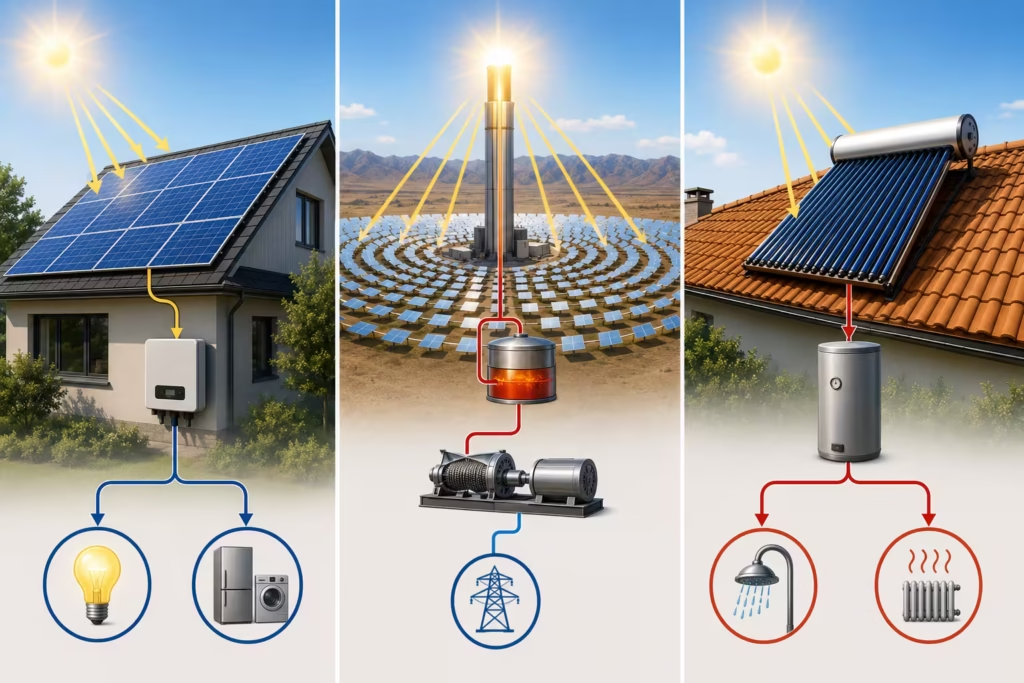
Most people think “solar energy” just means rooftop panels. That’s the biggest and most familiar piece, but it’s not the whole picture. There are three main ways solar energy gets captured:
- Photovoltaic (PV) systems — the panels most of us picture, using silicon cells to convert sunlight directly into electricity.
- Concentrated solar power (CSP) — mirrors or lenses focus sunlight onto a receiver, heating a fluid that produces steam to spin a turbine. Mostly used in large utility-scale plants, not homes.
- Solar thermal systems — instead of making electricity, these capture heat directly, usually for water heating or warming buildings.
Photovoltaic (PV): The One on Your Neighbor’s Roof
This is the technology behind almost every residential solar setup. Silicon solar cells are grouped into panels, panels are wired into arrays, and the whole system quietly converts sunlight into electricity all day, even on cloudy days — just less efficiently than under direct sun.
Concentrated Solar Power (CSP): Solar’s Industrial Cousin
CSP isn’t something you’ll find on a house. Picture massive fields of mirrors, all angled to funnel sunlight onto a single receiver point, heating up a fluid hot enough to produce steam and spin a turbine — basically a traditional power plant, except the “fuel” is sunlight instead of coal. Some CSP plants can even store thermal energy, which means they keep generating power after the sun goes down. That’s a real advantage over standard PV.
Solar Thermal: Skipping Electricity Entirely
Solar thermal systems don’t bother converting sunlight into electricity at all — they just use it to heat water or air directly. Think rooftop solar water heaters. It’s a more direct, often more efficient use of sunlight when electricity isn’t actually the goal, and it’s common in both homes and industrial processes.
Curious how these three actually stack up side by side? The full comparison between solar thermal and PV systems breaks down which one fits which situation — because the “best” option really does depend on what you’re trying to accomplish.
| Technology | What It Does | Best Used For |
|---|---|---|
| Photovoltaic (PV) | Converts sunlight directly into electricity | Homes, businesses, rooftop systems |
| Concentrated Solar Power (CSP) | Uses mirrors to heat fluid and drive a turbine | Large-scale utility power plants |
| Solar Thermal | Captures heat directly for water/space heating | Water heaters, industrial heat needs |
Why This Isn’t Just a Trend Piece
Solar has quietly become one of the cheapest and fastest-growing sources of new electricity, and that’s not marketing spin — it’s just where the numbers have landed as panel costs have fallen and installations have scaled up. It’s the kind of thing you don’t notice happening until you look at a chart of adoption over the last decade and realize how steep that curve actually is.
For context on how quickly this has shifted, solar adoption trends over the past few years tell a pretty striking story. This isn’t a niche hobby for environmentalists anymore. It’s infrastructure.
Part of why it’s grown so fast comes down to how much usable sunlight actually reaches the ground in the first place — a concept worth understanding if you’re weighing whether solar makes sense where you live. Solar radiation and insolation is the technical term for that, and it varies more by region than most people expect.
The Real Advantages (Without the Hype)
- It’s genuinely renewable. The sun isn’t running out anytime soon, and neither is your access to it — unlike coal or gas reserves.
- No emissions during operation. Once a solar system is up and running, it generates electricity without burning anything or releasing greenhouse gases.
- It’s flexible. Solar scales from a single calculator to an entire utility-scale power plant.
- It reduces dependence on the grid. For homeowners, that means some insulation from rising utility rates.
- Panels are getting cheaper and more efficient. What was a luxury purchase a decade ago is increasingly a mainstream one.
None of that is exaggerated. It’s also not the whole story.
The Part Most Articles Skip: Real Limitations
I’ll be honest — a lot of solar content reads like it was written by someone trying to sell you a rooftop system, and that always makes me a little skeptical. So here’s the less flattering side, because it matters just as much.
Solar is weather- and time-dependent. Panels still generate some power on cloudy days, but nowhere near as much as under full sun, and they produce nothing at night without battery storage. That intermittency is real, and it’s the main reason solar can’t fully replace baseload power on its own — at least not yet.
Upfront costs are still meaningful. Even with prices dropping, installing a residential system is a real investment, and payback periods vary a lot depending on where you live and how much sun you actually get.
Not every roof or region is a good fit. If you’re in a heavily shaded area, renting rather than owning, or living somewhere with low average sun exposure, the math doesn’t always work in your favor. Comparing how tropical versus temperate regions capture solar energy makes it obvious this isn’t a one-size-fits-all technology.
Manufacturing has an environmental cost too. Producing solar panels involves mining and processing materials, and that part of the lifecycle isn’t emissions-free either — it’s just far smaller than the footprint of fossil fuels over the system’s lifetime.
None of this cancels out solar’s benefits. It just means the honest answer to “should I get solar” is “it depends,” not “obviously yes.”
What a Home Solar Setup Actually Looks Like
If you’re picturing this in the abstract, here’s the plain-English version of what’s actually sitting on a house with solar:
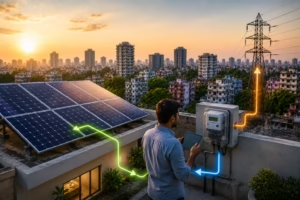
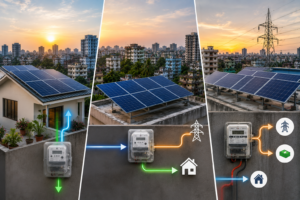
Panels on the roof, angled to catch as much sun as possible throughout the day. Wiring running down to an inverter, usually mounted in a garage or utility closet, quietly converting DC to AC. From there, it feeds directly into your home’s electrical panel, powering your appliances the same way grid electricity would. Any extra your system generates either gets stored in a battery, if you have one, or sent back to the grid — sometimes earning you credit on your utility bill, depending on where you live.
It’s less mysterious once you see the pieces laid out. It’s really just a slightly different starting point for electricity that ends up doing the exact same job.
Is Solar Energy Right for You?
That depends on a few honest questions: How much direct sun does your roof actually get? Do you own the property, or are upgrades even an option? What’s your electricity rate, and how long are you planning to stay put? Solar tends to make the most financial sense for homeowners in sunnier regions with higher electricity rates and long-term plans to stay in the home.
If that’s not your situation, solar can still make sense — it just might take longer to pay off, or a community solar program might be a better fit than rooftop panels. If you’re weighing solar against other renewable options, it’s also worth understanding how solar stacks up against wind energy and how it compares to fossil fuels on cost and reliability — the answer isn’t always as clear-cut as either technology’s fans would like it to be.
For anyone wanting the deeper technical roots of how sunlight becomes usable power, it’s worth reading about how solar radiation itself is classified and what peak sun hours actually mean for real-world panel output — those two concepts explain a lot of the variation in solar performance between locations that otherwise seem similar.
FAQs
Is solar energy renewable?
Yes. Solar energy comes from the sun, which will keep producing usable energy for billions of years, making it one of the most renewable resources available.
How efficient is solar energy?
Most residential solar panels convert roughly 15-22% of sunlight into usable electricity. That number keeps climbing as panel technology improves.
What are the disadvantages of solar energy?
The main drawbacks are weather and time dependence, upfront installation costs, and the fact that not every roof or region gets enough consistent sun to make it worthwhile.
Does solar energy work on cloudy days?
Yes, but at reduced output. Panels still generate electricity from diffused sunlight on overcast days — just noticeably less than under direct, clear-sky sun.
How long do solar panels last?
Most solar panels are built to perform efficiently for 25-30 years, with a gradual, slow decline in output rather than a sudden drop-off.