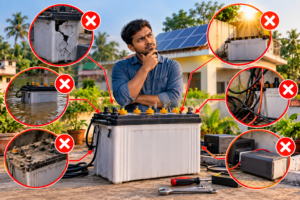
A friend of mine in Dhaka once had his home battery die in under two years. He wasn’t running anything unusual — a fridge, a few lights, a fan or two during load-shedding. The shopkeeper who sold it to him had called it a “heavy-duty battery.” It was, technically. Just not the type meant for what he was actually doing with it.
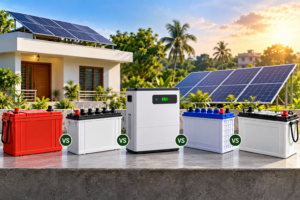
That’s the whole problem with tubular vs. flat plate batteries. Both are lead-acid. Both get sold side by side in the same shops. And most buyers have no idea the internal design is different enough to mean the difference between a battery that lasts two years and one that lasts eight.
What’s the actual difference between tubular and flat plate batteries?
The difference comes down to how the positive plate — the part that wears out fastest — is built.
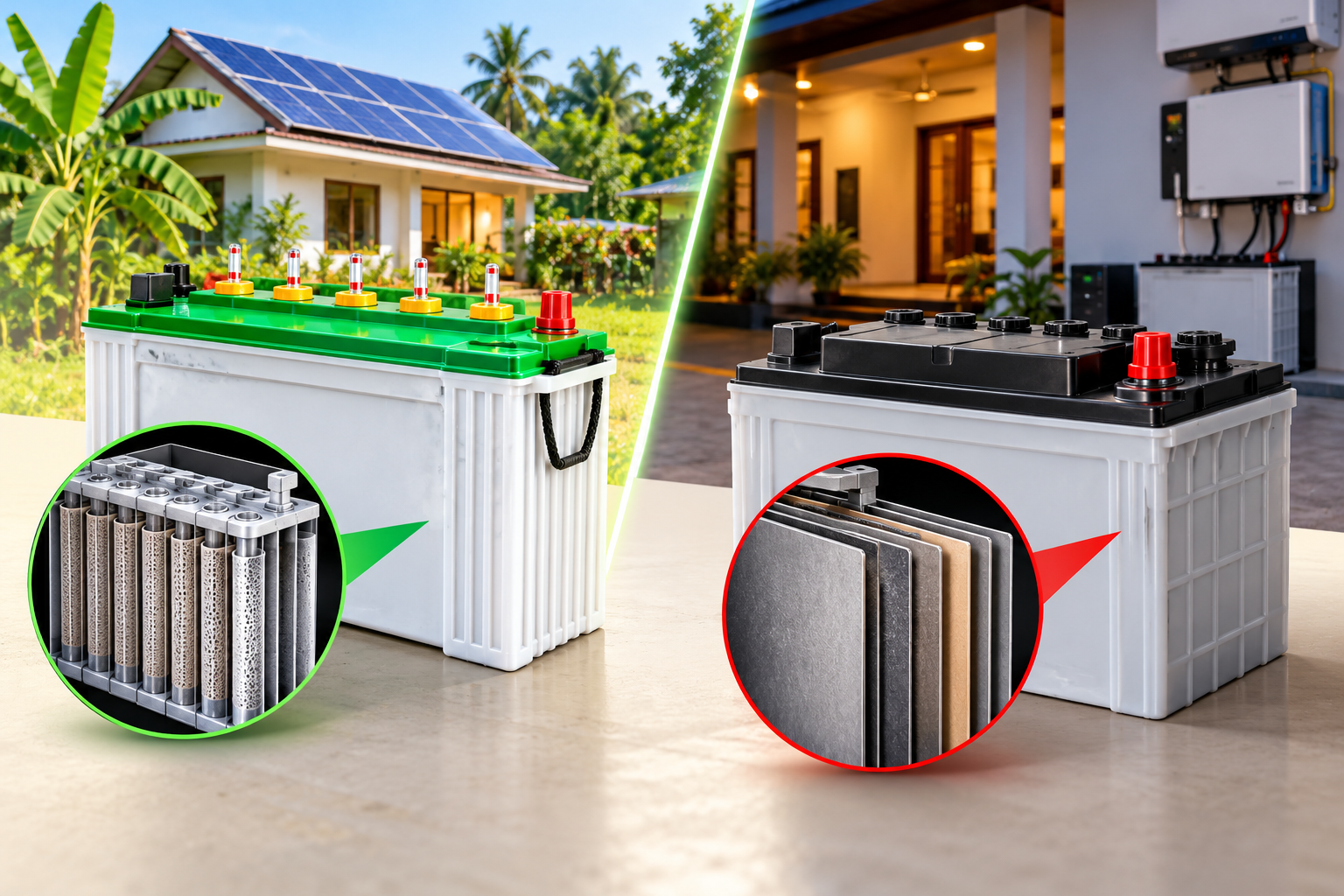
Flat plate batteries use a simple flat grid coated with active material. It’s cheap to manufacture and gives a strong burst of current quickly, which is exactly why it’s the standard choice for car starter batteries. But that same flat, exposed design means the active material sheds off gradually every time the battery cycles, and it can’t take deep, repeated discharging without wearing out fast.
Tubular batteries take a different approach. The active material is packed inside porous fabric tubes (sometimes called a “gauntlet” design) around a central metal rod. That casing holds everything in place, dramatically slows down shedding and corrosion, and lets the battery handle much deeper, more frequent cycling without falling apart.
In short: flat plate is built for a quick jolt of power now and then. Tubular is built for daily, sustained cycling — exactly what a solar system or an IPS unit demands.
Why this matters more in Bangladesh than the spec sheet suggests
If you’ve priced out an IPS or solar backup system here, you’ve probably already noticed almost every serious brand — Rahimafrooz, Hamko, Volvo, Navana, and others — pushes tubular batteries for home backup. That’s not a coincidence or a sales gimmick. It’s because Bangladeshi households cycle their batteries daily, sometimes more than once a day during heavy load-shedding, which is exactly the punishing use case flat plate batteries weren’t designed for.
There’s a second, less-talked-about reason tubular tends to win here: heat and humidity. Flat plate batteries lose water through evaporation and internal corrosion faster in hot conditions, which means more frequent topping up and a shorter effective life if maintenance slips — and let’s be honest, most households don’t check water levels on schedule. Tubular batteries hold up noticeably better under that kind of neglect, simply because their design sheds less material and manages heat more evenly.
None of this means flat plate is a bad battery. It just means it’s the wrong battery for this job.
Tubular vs. flat plate: quick comparison
| Flat Plate | Tubular | |
| Best for | Car starting, occasional short backup | Solar storage, daily IPS backup, heavy loads |
| Cycle life | Roughly 500–800 cycles (manufacturer-typical) | Roughly 1,200–1,500 cycles (manufacturer-typical) |
| Typical lifespan | 3–5 years | 5–10 years |
| Recommended depth of discharge | Around 50% | Up to 80% |
| Maintenance | More frequent water topping, especially in heat | Less frequent, but not zero |
| Upfront cost | Lower | Higher |
| Cost over time | Higher — replaced more often | Lower — fewer replacements |
A note on those numbers: cycle life and lifespan figures vary by manufacturer, build quality, and how well the battery is maintained. Treat these as general ranges you’ll see quoted across the industry, not a guarantee for any specific battery you buy.
So which one should you actually choose?
- Running a solar system, whether on-grid, off-grid, or hybrid? Go tubular. Solar storage means daily charge-discharge cycles, and that’s precisely where flat plate falls apart early. If you’re still sizing out your storage needs, it’s worth reading up on battery bank sizing before you commit to a capacity.
- Running a home IPS for daily load-shedding backup? Tubular, for the same reason. This is a deep-cycle job, not an occasional-use job.
- Need a car or generator starter battery? Flat plate. You genuinely don’t need — or want — a tubular battery here. Starter batteries need a quick, high burst of current, which is flat plate’s actual strength.
- Occasional, light backup (a few hours, a few times a year)? Flat plate can be perfectly reasonable if the upfront cost matters more than longevity, since you won’t be cycling it hard enough to expose its weak point.
The maintenance reality nobody mentions
“Tubular needs less maintenance” doesn’t mean it needs none. Flooded (non-sealed) tubular batteries still need periodic water topping, just less often than flat plate. What actually matters day to day:
- Check electrolyte levels every few months, more often in peak summer heat
- Keep the battery in a ventilated space — this matters more than people think in smaller apartments where the battery ends up tucked in a closet
- Watch for slower charging, reduced backup time, or unusual heat during use — these are early warning signs, not something to ignore until the battery won’t hold charge at all
How to make sure you’re actually getting what you’re paying for
Here’s the part that catches a lot of buyers out: “tubular” gets used loosely by some sellers as a marketing word, not always an accurate spec. Before you buy:
- Ask for the actual datasheet, not just a verbal claim
- Check the nameplate for the C10 or C20 rating and cycle life figures — a genuine tubular battery will have these clearly listed
- If a deal looks unusually cheap for a “tubular” label, that’s worth a second look, not a reason to celebrate
If you’re sizing a battery bank for a solar system specifically, it’s worth working through evaluating solar quotes so you’re comparing apples to apples between installers — battery type is one of the easiest places for a quote to look cheaper than it actually is.
Getting this decision right the first time is usually the difference between a battery bank that pays for itself and one you’re replacing sooner than you budgeted for. If you’re not sure which setup fits your household or business load, it’s worth getting your system properly sized rather than guessing — that’s exactly the kind of thing Muspana can walk through with you before you buy anything.
FAQs
Is tubular battery better than flat plate for solar?
For solar and daily deep-cycle use, yes — tubular batteries handle repeated deep discharging far better and typically last longer under that kind of load.
Can I use a flat plate battery for my solar system?
You can, but it’s generally not recommended. Flat plate batteries aren’t built for daily deep cycling and tend to wear out much faster in solar or IPS use.
How long does a tubular battery last?
Manufacturers commonly cite 5–10 years, though real-world lifespan depends on maintenance, depth of discharge, and build quality.
Do tubular batteries need water top-up?
Flooded tubular batteries still need periodic water topping, just less often than flat plate batteries. Sealed/maintenance-free versions exist but cost more.
Why do IPS batteries in Bangladesh use tubular design?
Because home backup usage here typically means daily, sometimes multiple, deep discharge cycles from load-shedding — exactly the kind of use tubular batteries are designed to withstand.
How do I know if a battery labeled “tubular” is genuine?
Ask for the datasheet and check the nameplate for the C10/C20 rating and cycle life specification rather than relying on the seller’s description alone.