Solar PV Systems

Central Inverter for Utility Solar

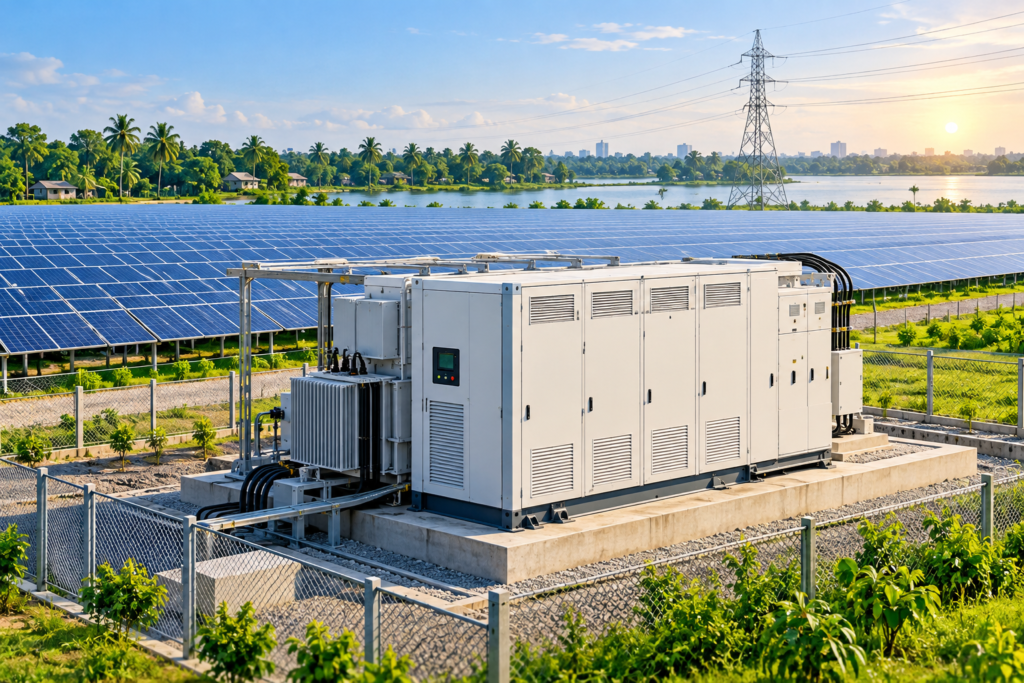
Central Inverters for Utility-Scale Solar: How They Work and When to Use Them

One Big Inverter, or Many Small Ones? Every utility-scale solar project eventually runs into this question. Do you convert DC power to AC in one large, centralized unit, or spread that job across dozens of smaller string inverters scattered across the site? For a 5 MW or 50 MW plant on flat land, the answer […]

Central Inverters for Utility-Scale Solar: How They Work and When to Use Them Read More »
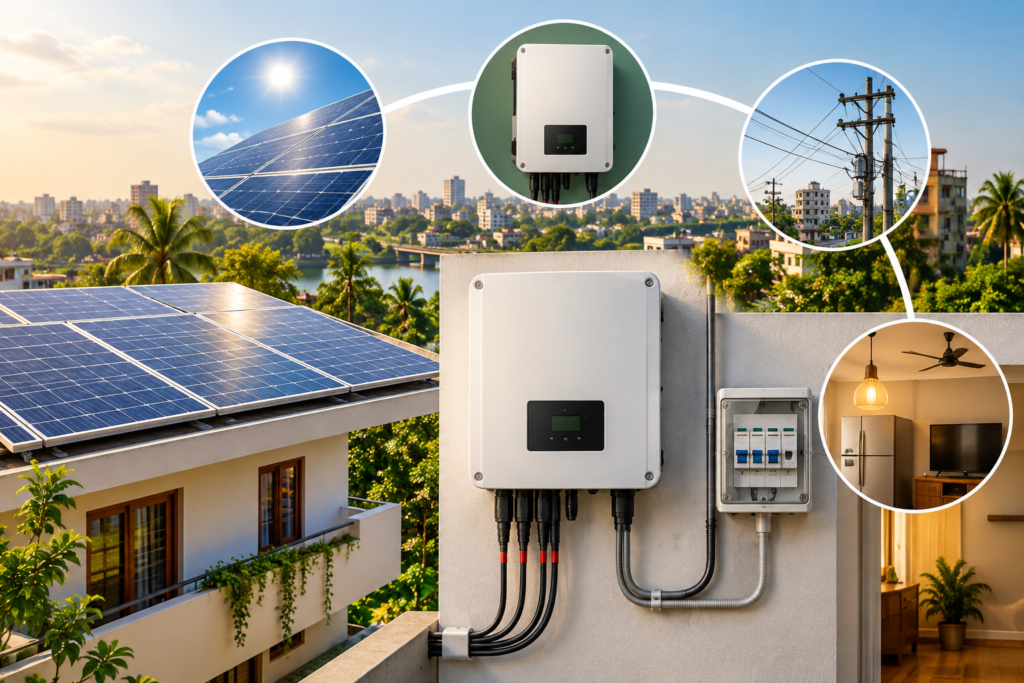
String Inverter Complete Guide

What Is a String Inverter? A Practical Guide for Bangladesh Homes and Businesses

Your installer mentioned a “string inverter” — now what? If you’ve gotten even one solar quote in Bangladesh, you’ve probably run into this term without much explanation attached to it. Someone hands you a proposal, points at a line item, and moves on to the panel brand instead. That’s a problem, because the inverter is

What Is a String Inverter? A Practical Guide for Bangladesh Homes and Businesses Read More »

STC vs NOCT vs PTC Ratings Explained

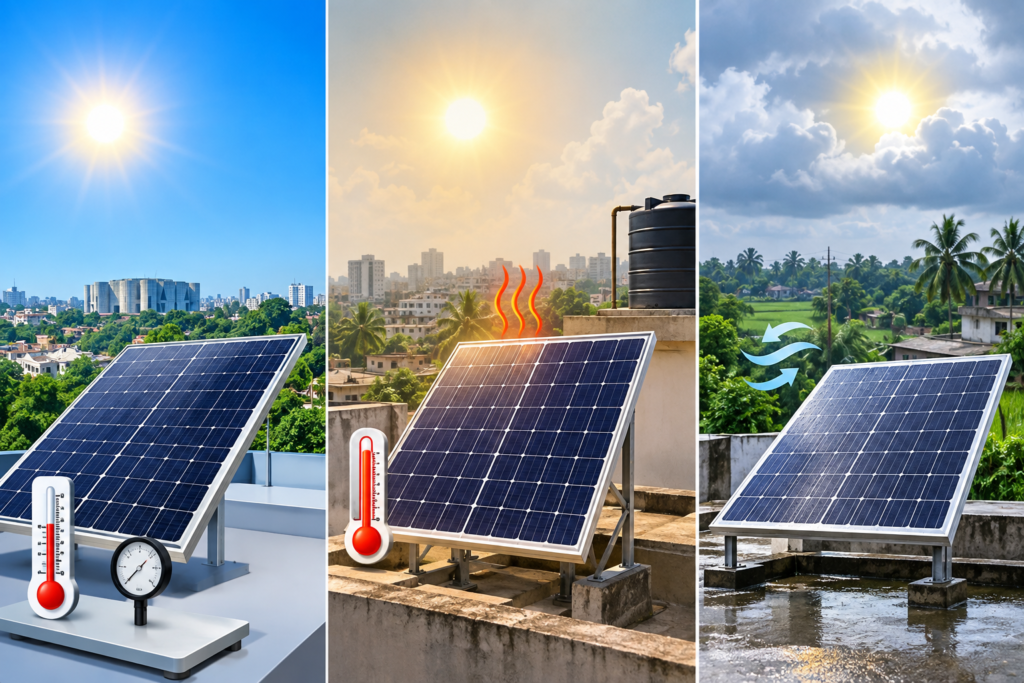
STC vs NOCT vs PTC: Why Your Solar Panel Never Hits Its Rated Wattage

You bought a panel rated at 450 watts. On a bright afternoon, your monitoring app shows something closer to 380. Nothing is broken. Nothing is wrong with your installer’s work. You’ve just run into the gap between a lab test and a rooftop in Bangladesh. Solar panels carry three different power ratings, and manufacturers rarely

STC vs NOCT vs PTC: Why Your Solar Panel Never Hits Its Rated Wattage Read More »

Temperature Coefficient Why It Matters

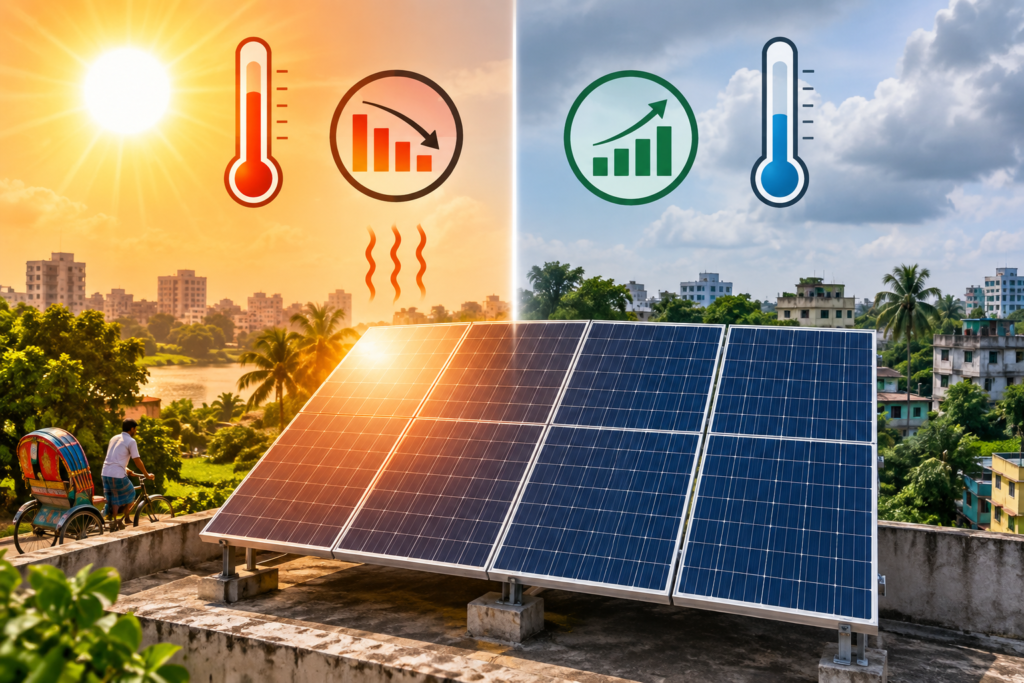
Solar Panel Temperature Coefficient Explained: What It Means for Your Bill in Bangladesh

Why Your 450W Panel Won’t Give You 450W on a Hot Afternoon Every quote you get for a rooftop solar system lists a wattage number in big, bold type — 450W, 550W, whatever the panel is rated. What most quotes don’t explain is that this number was measured in a lab at 25°C, and your

Solar Panel Temperature Coefficient Explained: What It Means for Your Bill in Bangladesh Read More »

How to Read a Solar Panel Datasheet

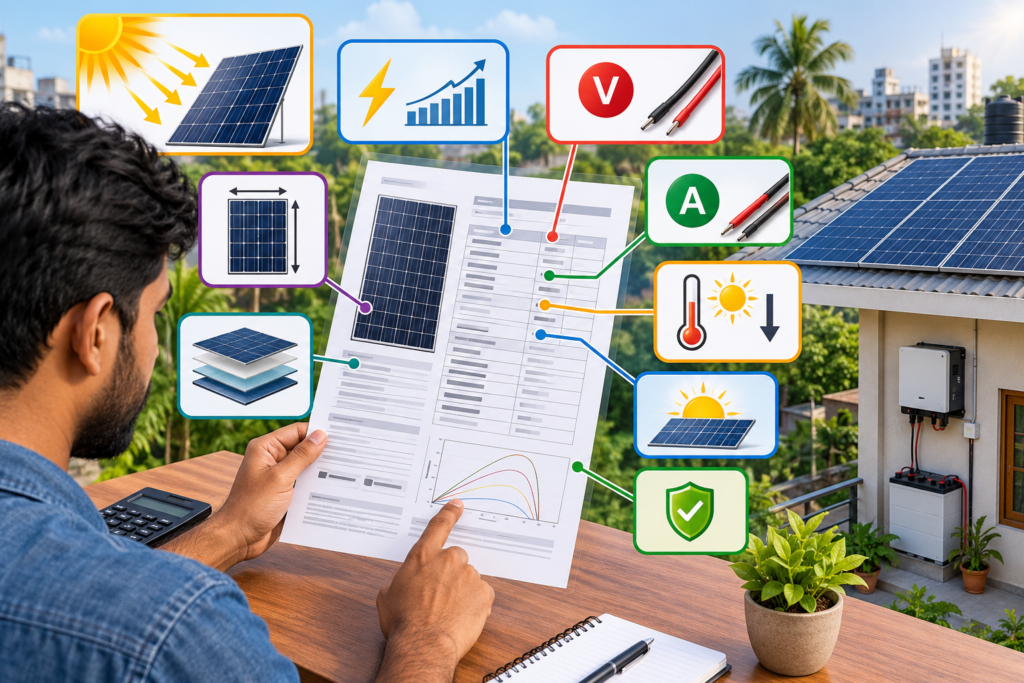
Solar Panel Datasheet Explained: What Every Number Actually Means

You’ve got a quote in hand, and somewhere in the paperwork is a one-page PDF crammed with numbers — Pmax, Voc, Isc, a temperature coefficient, a table of certifications. It looks technical enough that most people just skim past it and trust the salesperson’s summary. That’s a mistake. A solar panel’s datasheet is the one

Solar Panel Datasheet Explained: What Every Number Actually Means Read More »

Tier 1 vs Tier 2 vs Tier 3 Solar Panels

Tier 1 vs Tier 2 vs Tier 3 Solar Panels: What the Label Actually Means

Open almost any solar panel listing in Bangladesh right now — a marketplace page, a distributor’s Facebook post, a printed quotation — and you’ll see the same word stamped across it: Tier 1. It shows up so often that it’s stopped meaning much to most buyers. It’s just there, like “genuine” or “original,” a word

Tier 1 vs Tier 2 vs Tier 3 Solar Panels: What the Label Actually Means Read More »

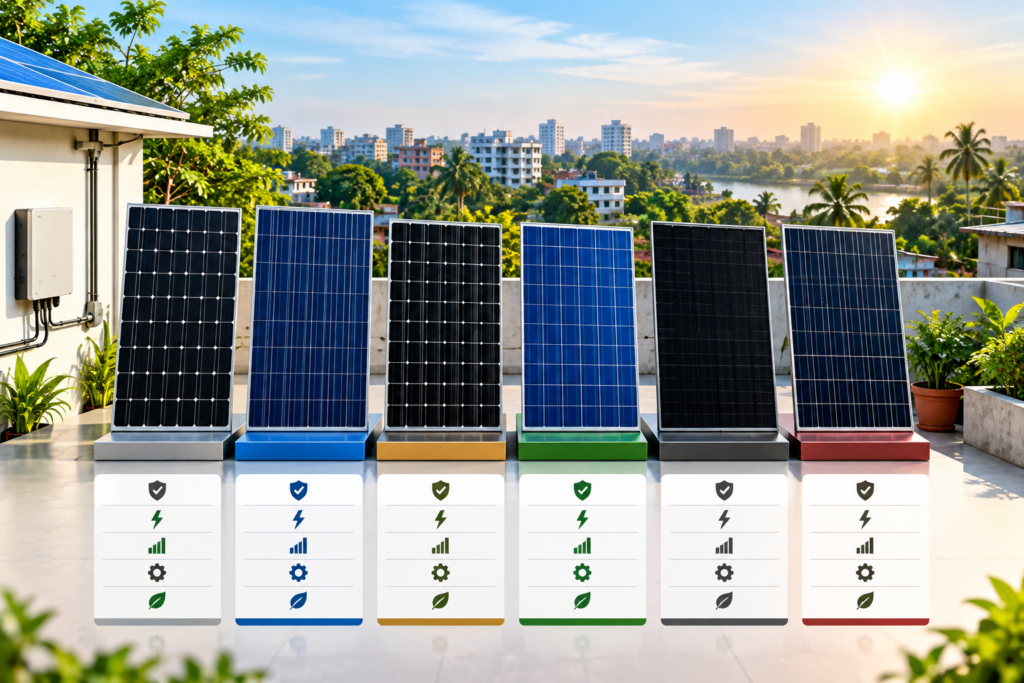
Top Solar Panel Brands Compared

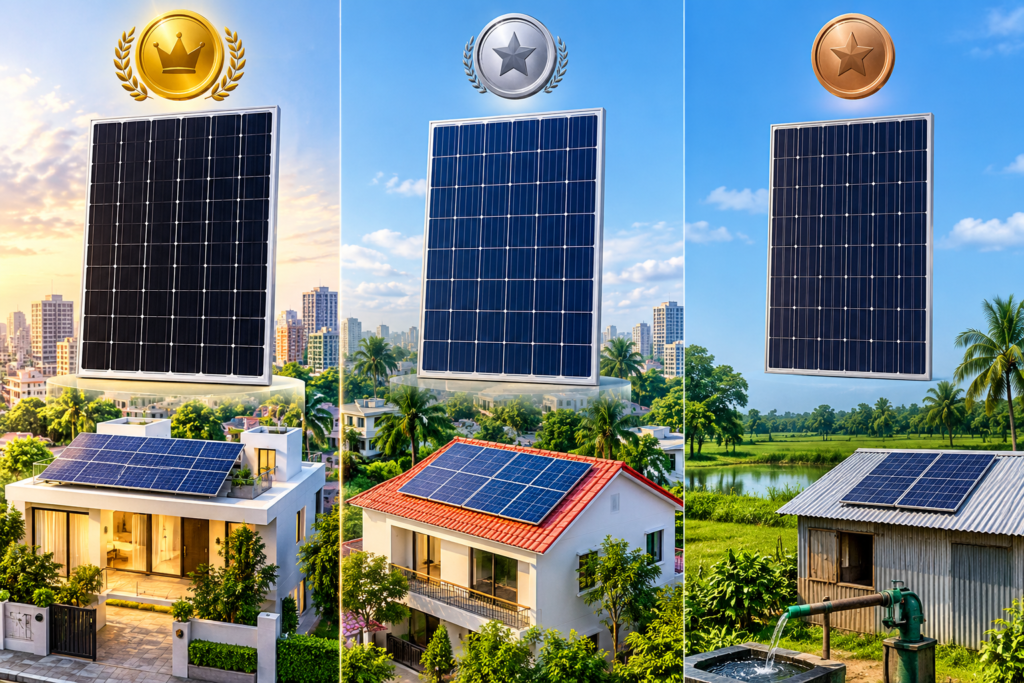
Top Solar Panel Brands Compared: Which One Actually Makes Sense for Bangladesh?

Every solar brand’s website says the same thing: theirs is the best. Highest efficiency, longest warranty, most trusted name. So how do you actually pick one, especially when half the brands showing up in global “best of” lists aren’t even sold here? Short answer first: if you want the strongest overall balance of efficiency and

Top Solar Panel Brands Compared: Which One Actually Makes Sense for Bangladesh? Read More »

Solar Module Wattage Bins Explained

Solar Module Wattage Bins: The Sorting Trick Manufacturers Don’t Advertise

Why Two “Same Wattage” Solar Panels Aren’t Always Identical Say you get two quotes for the same solar project. Both list “400W monocrystalline panels.” One supplier’s price is noticeably higher. You ask why, and the answer you get is vague — something about “better quality cells.” That’s not a satisfying answer, and it’s a fair

Solar Module Wattage Bins: The Sorting Trick Manufacturers Don’t Advertise Read More »

Junction Box Function and Types

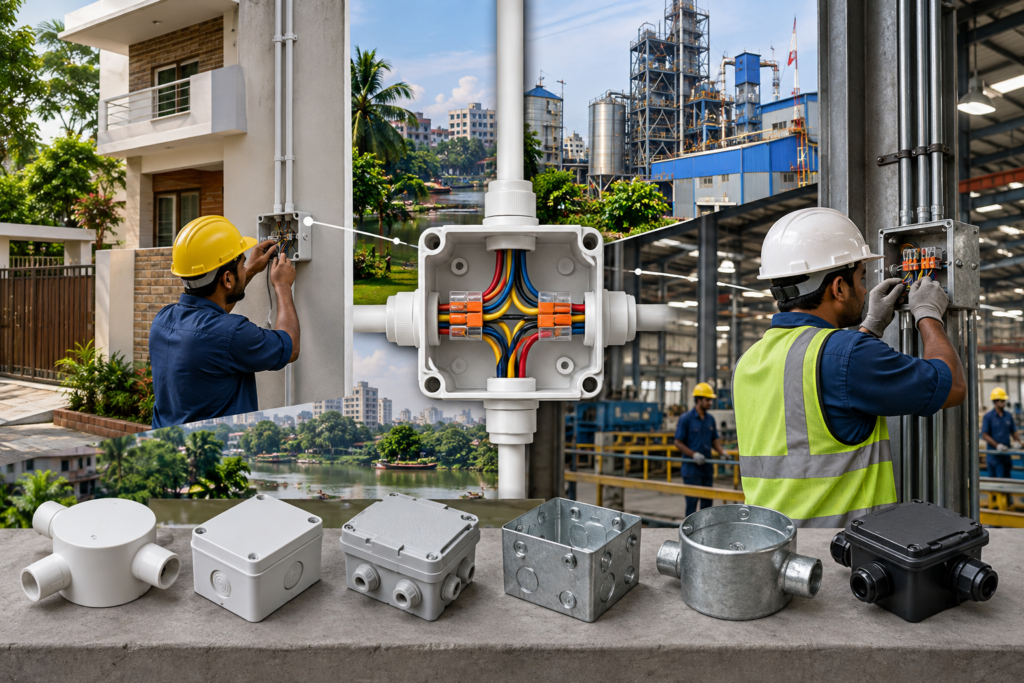
Junction Box Functions and Types: A Practical Guide for Homes and Industry

Touch a loose wire behind a wall socket and you’ll understand instantly why junction boxes exist. That little metal or plastic enclosure isn’t just a formality — it’s the thing standing between a normal wire splice and a fire hazard. A junction box is a protective enclosure that houses wire splices, terminals, and branch connections.

Junction Box Functions and Types: A Practical Guide for Homes and Industry Read More »

Scroll to Top