![Government Subsidies for Solar in [CountryState]](https://muspana.com/wp-content/uploads/2026/07/Government-Subsidies-for-Solar-in-CountryState.avif)
Your electricity bill goes up again, the load-shedding starts right when you need power most, and somewhere in the back of your mind you start wondering: didn’t the government say something about solar subsidies? Maybe a neighbor mentioned it. Maybe an installer’s ad caught your eye. Either way, you’re here because you want a straight answer, not a press release dressed up as a blog post.
So here it is, in plain terms: yes, Bangladesh does offer real financial incentives for solar right now, and some of them are genuinely worth paying attention to. But there’s a gap between what’s written in policy and what actually happens when you try to use it — and that gap matters more than most articles let on.
Let’s walk through it properly.
What Solar Subsidies Does Bangladesh Actually Offer?
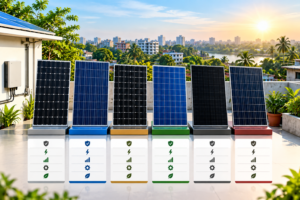
At the moment, there are five main incentives worth knowing about: zero import duty on solar equipment through 2031, a 10-year tax holiday for renewable energy projects, 0% tax on solar generation until 2035, net metering at 100% of your sanctioned load, and a mandatory rooftop solar rule for large new buildings. Together, these are meant to bring down upfront costs and shorten the time it takes for a solar system to pay for itself.
That’s the one-paragraph version. Now let’s get into what each one actually means for you.
Zero Import Duty on Solar Equipment
Solar panels, inverters, batteries, and balance-of-system (BOS) components — the wiring, mounting structures, charge controllers, and the rest of the hardware that doesn’t get talked about enough — can currently be imported without duty. This exemption runs through 2031.
Why does this matter more than it sounds? Because BOS equipment quietly makes up a bigger chunk of your total system cost than most people expect. Panels get all the attention, but the racking, cabling, and inverter setup can be 30–40% of the bill. Duty relief on the whole package, not just the panels, is what actually moves the needle on your upfront cost.
If you’re pricing out a system now, this is one thing worth confirming directly with your installer — ask them to show you what’s duty-free versus what isn’t, because not every accessory automatically qualifies.
The 10-Year Tax Holiday for Renewable Projects
If you’re setting up a renewable energy project — this applies more to commercial and industrial-scale solar than to a homeowner putting panels on their roof — you get a 10-year tax holiday. That’s a decade where the profits from the project aren’t taxed, which changes the math considerably for developers and businesses running the numbers on a larger installation.
For a homeowner, this incentive is less directly relevant. It’s really aimed at the companies and investors building out solar capacity at scale, which indirectly benefits everyone by pushing more solar into the grid and (in theory) bringing equipment costs down over time as demand grows.
0% Tax on Solar Generation Until 2035
Separate from the project tax holiday, there’s a 0% tax rate specifically on solar power generation itself, running until 2035. This is a longer runway than the import duty exemption, which tells you the government is treating generation-side incentives as a longer-term play than equipment-side relief.
Practically, this means the income or savings generated from your solar setup — whether you’re a business selling excess power back or a household reducing your grid draw — isn’t taxed on the generation side during this window.
Net Metering in Bangladesh — How It Actually Works
Here’s a quick, direct answer first: net metering lets you send excess solar power back into the grid and get credited for it, up to 100% of your sanctioned load. In simple terms, your meter can run in both directions — you draw from the grid when your panels aren’t producing enough, and you feed back in when you’re producing more than you use.
That 100% figure matters. It means, in theory, you can size a system large enough to offset your entire sanctioned load, not just a fraction of it. That’s a meaningfully generous cap compared to some regional policies that limit net metering to a smaller percentage.
Here’s where it gets a little more complicated, though: which utility you’re connected to affects how smoothly this actually works. DESCO and DPDC serve different zones in Dhaka, REB covers rural connections, and NESCO and WZPDCL handle other regions. Each has its own process, paperwork, and — in practice — its own pace. Some readers report faster turnaround with one utility and a slower, more paperwork-heavy experience with another. It’s worth asking your installer directly which utility serves your area and what their typical net metering approval timeline looks like right now, because “it depends” is genuinely the honest answer here.
A basic net metering setup usually looks like this:
- You install a grid-tied solar system sized to your sanctioned load
- Your installer or you apply to the local utility (DESCO, DPDC, REB, NESCO, or WZPDCL depending on your area) for net metering approval
- A bidirectional meter gets installed, replacing your standard one
- Excess generation during the day gets credited against your consumption at other times
- Billing reflects the net of what you drew versus what you fed back in
It’s not instant, and it’s not always painless. But it is functional, and for grid-tied systems, it’s the single biggest factor in getting a reasonable payback period.
Is Rooftop Solar Mandatory in Bangladesh?
Direct answer: yes, for large new buildings and for existing buildings undergoing a load increase, rooftop solar installation is mandatory under current policy.
This one tends to catch people off guard, especially those managing commercial buildings, apartment complexes, or industrial facilities. If you’re constructing a new large building, or applying to increase your sanctioned load on an existing one, expect rooftop solar to be a requirement rather than an option.
In practice, enforcement here has been uneven. The rule exists clearly on paper, but how strictly it gets checked depends on your local utility and building approval authority. That inconsistency cuts both ways — it means some building owners have gotten away without complying, but it also means the ones who do comply sometimes feel like they’re the only ones following the rules. If you’re in this category, it’s worth building the rooftop solar requirement into your planning early rather than treating it as a last-minute compliance box to tick, since retrofitting later usually costs more than designing for it upfront.
What Does This Actually Save You? A Rough Example
Numbers here are illustrative, not a quote — your actual costs depend on system size, roof condition, local installer pricing, and your specific electricity usage. But here’s a general shape of how it plays out.
Say a mid-sized residential system before any duty relief might run higher on the equipment side alone. With import duty removed on panels, inverters, batteries, and BOS components, the upfront hardware cost drops meaningfully — often somewhere in the range of 15–20% lower than it would be with standard import duties applied, though this varies by system size and what components you’re sourcing.
From there, net metering is what determines your ongoing savings. A system sized close to your sanctioned load, feeding excess power back during the day and drawing less at night, can meaningfully shrink your monthly bill — how much depends heavily on your usage pattern, roof orientation, and how many peak sun hours your location actually gets.
Payback periods you’ll see quoted online (anywhere from 4 to 8 years) should be treated as a range, not a promise. Roof orientation, shading, local utility approval speed, and your household or business’s actual consumption pattern all shift that number. Anyone who gives you a single precise payback figure without asking about your roof and your bill first is probably rounding a lot of corners.
Incentive Comparison at a Glance
| Incentive | What It Covers | Timeline | Who It’s For |
| Import duty exemption | Solar panels, inverters, batteries, BOS equipment | Through 2031 | Residential, commercial, industrial |
| Tax holiday | Renewable energy project profits | 10 years from project start | Primarily commercial/industrial developers |
| 0% generation tax | Tax on solar power generation | Through 2035 | All solar generators |
| Net metering | Grid credit for excess solar fed back | Up to 100% of sanctioned load | Grid-tied residential and commercial systems |
| Rooftop mandate | Required rooftop solar installation | Ongoing | Large new buildings, load-increase applicants |
What to Check Before You Commit
Before you sign anything with an installer, a few things are worth confirming for yourself rather than taking on faith:
- Ask which specific components qualify for the duty exemption — don’t assume every accessory is covered
- Confirm which utility serves your address and ask about their current net metering processing time
- If you’re required to install rooftop solar under the mandate, get that requirement in writing from your local authority so there’s no ambiguity later
- Get a payback period estimate based on your actual roof and usage, not a generic industry average
- Verify current incentive details directly with SREDA or the National Board of Revenue (NBR) before finalizing a large investment, since policy details can shift and it’s worth confirming you’re working from the latest version
None of this is meant to make solar sound risky — it’s meant to help you go in with your eyes open, which is honestly the difference between a smooth installation and a frustrating one.
Where the Real Friction Is
If you want the honest version: the policies themselves are solid on paper. Zero import duty, a long tax holiday, a generous net metering cap — this is a genuinely supportive package compared to a lot of markets still figuring out their renewable policy. The friction is almost entirely in the implementation. Utility-by-utility inconsistency in net metering approval, uneven enforcement of the rooftop mandate, and the general gap between “the rule exists” and “the rule is smoothly applied on the ground” — that’s what trips people up, not the incentives themselves.
Understanding the underlying technology also helps you make better decisions here — knowing how solar panels actually convert sunlight into electricity or how many peak sun hours your region realistically gets will shape what system size actually makes sense for your sanctioned load, rather than just going with whatever an installer quotes first. It’s also worth knowing the difference between on-grid, off-grid, and hybrid solar setups before you commit, since net metering only applies meaningfully to grid-tied systems — an off-grid setup won’t benefit from it the same way.
If you’re weighing solar against other options for dealing with load-shedding, it’s also worth looking at how solar stacks up against fossil fuel power in terms of cost and reliability before deciding your system size and whether battery backup makes sense for your situation.
FAQs
Is there import duty on solar panels in Bangladesh?
No — solar panels, inverters, batteries, and balance-of-system equipment are currently exempt from import duty through 2031.
What is net metering in Bangladesh?
Net metering lets a grid-tied solar system send excess power back to the utility in exchange for credit, up to 100% of the owner’s sanctioned load, reducing the net amount billed.
Is rooftop solar mandatory in Bangladesh?
Yes, for large new buildings and for existing buildings applying for a load increase, installing rooftop solar is currently a requirement rather than optional.
How long is the tax holiday for renewable energy projects in Bangladesh?
Renewable energy projects currently qualify for a 10-year tax holiday, primarily benefiting commercial and industrial-scale developments.
Is solar actually profitable in Bangladesh right now?
For most residential and commercial setups sized appropriately to sanctioned load, yes — though the real payback period depends on roof orientation, local peak sun hours, utility-specific net metering speed, and actual usage patterns, so treat any single quoted number as a rough range rather than a guarantee.
Which utility handles net metering approval?
It depends on your location — DESCO and DPDC cover different zones within Dhaka, REB serves rural connections, and NESCO or WZPDCL handle other regions. Each has its own application process and typical turnaround time.